Trading dengan multiple timeframe untuk pemula
Summary
TLDRThis video teaches the concept of multiple time frame (MTF) trading and how to execute entries effectively. It explains how to identify trends across different time frames—daily, H4, H1, and smaller—distinguishing between bullish, bearish, and consolidation patterns. The instructor emphasizes using the larger time frame for trend direction and smaller time frames for precise entry points, employing a simple break-and-retest technique. Practical examples demonstrate when to buy or sell depending on the alignment of trends across time frames. Viewers are encouraged to practice repeatedly to master MTF trading, as it requires careful observation and understanding of market movements.
Takeaways
- 📊 Multiple Time Frame (MTF) trading involves analyzing different chart time frames to make better trading decisions.
- ⏱️ Each candle represents a specific period: Daily (D) = 1 day, H4 = 4 hours, H1 = 1 hour, M30 = 30 minutes, with options for custom time frames.
- 📈 There are three main market trends: bullish (uptrend), bearish (downtrend), and consolidation (sideways).
- 🔍 Always identify the trend on the larger time frame first to determine the overall market direction.
- 💡 Use smaller time frames to find precise entry points, especially during corrections in the larger trend.
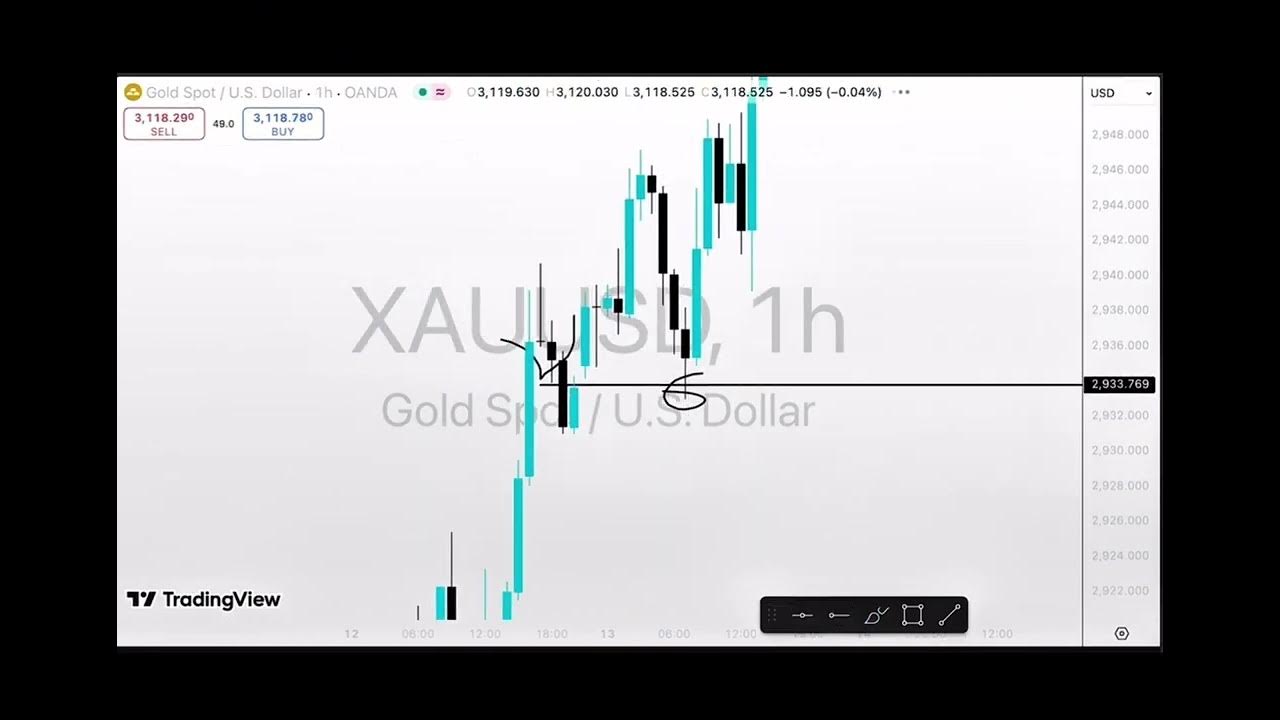
- ⚡ The break and retest method is a simple and effective strategy for entering trades.
- 📌 If the larger time frame is bullish, look for buy opportunities in smaller time frames; if bearish, look for sell opportunities.
- ⚖️ Multiple time frames may show different trends simultaneously; decisions should follow the larger trend while timing entries on smaller time frames.
- -
- 🔄 Market moves in a zigzag pattern (up-down-up-down); waiting for confirmations like lower highs or higher lows is crucial.
- 🛠️ Practicing and repeating analysis across multiple time frames is essential to understand and effectively trade MTF setups.
- 🚫 Avoid entering trades if key trend lines or support/resistance areas on larger time frames are broken.
- 🎯 Combining simple techniques with MTF analysis improves accuracy and helps manage risk during trading.
Q & A
What is the concept of multiple time frame analysis in trading?
-Multiple time frame analysis involves using different time frames (e.g., daily, hourly, 15 minutes) to gain a broader understanding of market trends. It helps traders confirm the overall market direction and refine their entry points for better decision-making.
What are the three main trends in trading that the video highlights?
-The three main trends are bullish (upward trend), bearish (downward trend), and consolidation (sideways movement). Understanding these trends is crucial for determining the direction in which to trade.
How can time frames influence your trading decisions?
-Different time frames provide different perspectives on market movement. A larger time frame (e.g., daily) shows the overall trend, while a smaller time frame (e.g., hourly or 15 minutes) helps identify precise entry points. A trader can use these insights to align their trades with the broader market trend.
How does the concept of 'trend line' come into play during trading?
-Trend lines are used to identify the direction of the market. For a bullish trend, a trend line would be drawn below the price action, showing upward movement. When the price breaks this line and retests it, it can signal a potential entry point.
What is the 'break and retest' strategy in trading?
-The 'break and retest' strategy involves waiting for the price to break through a significant level (like a trend line or support/resistance), then observing whether it retests the level. If the price holds and continues in the expected direction, this is considered a valid entry point.
What should you do when the daily time frame shows a bullish trend and the smaller time frames show consolidation?
-When the daily time frame is bullish and smaller time frames show consolidation, you can look for opportunities to buy once the price breaks out of the consolidation zone. The key is to align your trades with the dominant trend while waiting for a breakout from consolidation.
What are the different ways to enter a trade depending on multiple time frames?
-To enter a trade, you first identify the trend on a larger time frame (e.g., daily). Then, you check smaller time frames for confirmation of entry points, like breakouts or retests. If the large time frame shows a bullish trend and the smaller time frame shows a pullback or correction, you may look to buy once the price resumes its upward movement.
Why is it important to use multiple time frames when trading?
-Using multiple time frames helps confirm the market's overall direction and improves the precision of entry and exit points. A single time frame might miss out on important information, but by combining them, you can make more informed and accurate decisions.
How do you know when to sell based on multiple time frame analysis?
-To know when to sell, you need to observe the overall trend on the larger time frame (e.g., daily). If the larger time frame shows a bearish trend and a smaller time frame shows a potential retracement or resistance, this could be a good point to enter a sell position.
What happens if you follow a smaller time frame without considering the larger time frame?
-Following only a smaller time frame without considering the larger time frame can lead to trading against the broader market trend. This could result in higher risk and less profitable trades because the overall market direction is not aligned with the trade's entry point.
Outlines

このセクションは有料ユーザー限定です。 アクセスするには、アップグレードをお願いします。
今すぐアップグレードMindmap

このセクションは有料ユーザー限定です。 アクセスするには、アップグレードをお願いします。
今すぐアップグレードKeywords

このセクションは有料ユーザー限定です。 アクセスするには、アップグレードをお願いします。
今すぐアップグレードHighlights

このセクションは有料ユーザー限定です。 アクセスするには、アップグレードをお願いします。
今すぐアップグレードTranscripts

このセクションは有料ユーザー限定です。 アクセスするには、アップグレードをお願いします。
今すぐアップグレード関連動画をさらに表示

ICT MMXM Trading Strategy That Works Every Time! (Highly Profitable)
95% WINRATE MULTITIMEFRAME CONFRIMATION ( GUARANTEED )

Anda Bisa Profit Berkali-Kali dengan Strategi 1 Area Trading Ini!

SMC Entry Plan | Advance Entry Plan 🔥

How to Time Expansions Using External & Internal SMT | Full Breakdown

How To Improve Day Trading Entries (Timeframe Alignment)
5.0 / 5 (0 votes)

