Crude Oil Distillation
Summary
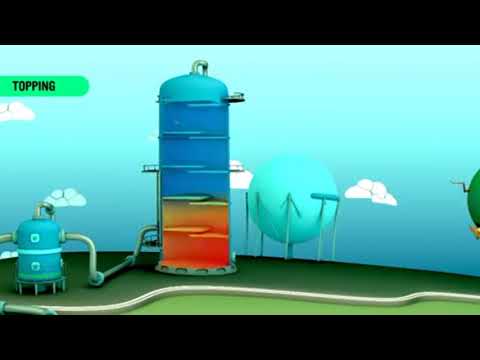
TLDRThis video explores the essential process of refining crude oil into usable products. It begins with fractional distillation, separating crude oil into groups of hydrocarbons based on boiling points, using fractionating columns with trays and vapor-liquid interactions. Heavier fractions undergo vacuum distillation to prevent molecular cracking, while catalytic cracking converts heavy oils into high-octane gasoline using fluidized catalysts. Further, catalytic reforming upgrades straight-run gasoline into higher-octane fuel through multi-stage reactions with platinum catalysts. The video highlights the continuous and intricate nature of refining, producing gasoline, diesel, turbine fuel, hydrogen, and other valuable petroleum products, showcasing the chemical transformations behind everyday fuels.
Takeaways
- 😀 Distillation is a crucial process in refining crude oil, converting it into usable products like gasoline, diesel, and turbine fuel.
- 😀 The distillation process relies on boiling and cooling to separate liquids based on their boiling points.
- 😀 Molecules with larger sizes tend to have higher boiling points, while smaller molecules have lower boiling points.
- 😀 A fractionating column is used to separate different fractions of crude oil by cooling vaporized liquids at different levels of the column.
- 😀 The crude distillation process involves separating crude oil into lighter fractions like gasoline, diesel, and heavier fractions like asphalt and industrial oils.
- 😀 Vacuum distillation helps separate heavier fractions at lower temperatures to prevent molecules from cracking apart.
- 😀 Cracking is a refining process that breaks down large, heavy molecules into smaller, high-octane gasoline molecules using high heat and a catalyst.
- 😀 Catalysts speed up chemical reactions without being consumed in the process, such as in catalytic cracking and reforming.
- 😀 Catalytic reforming upgrades low-octane straight-run gasoline into high-octane gasoline through a multi-stage heating and reaction process with platinum catalysts.
- 😀 Refining processes not only produce fuels like gasoline and diesel, but also contribute to raw materials for the chemical industry and other products.
- 😀 Other refining processes, such as cracking and reforming, enhance the quality of gasoline and other petrochemical products to meet demand.
Q & A
What is distillation and why is it important in an oil refinery?
-Distillation is the process of separating liquids based on their different boiling points. It is crucial in oil refineries as it is the first step in turning crude oil into usable products like gasoline, diesel fuel, and other refined petroleum products.
How does the boiling point of a liquid affect its separation during distillation?
-The boiling point determines when a liquid will vaporize. During distillation, liquids with lower boiling points vaporize first, while those with higher boiling points remain liquid. This allows for their separation based on temperature differences.
What is a fractionating column, and how does it work in distillation?
-A fractionating column is a vertical column used to separate liquids based on their boiling points. As the mixed vapors rise through the column, they are cooled at various levels, causing liquids to condense at different heights, separating the fractions.
What role do bubble cap trays play in a fractionating column?
-Bubble cap trays facilitate the interaction between vapor and liquid in the column. The vapor rises through the bubble caps, which allows for better contact between the vapor and liquid, ensuring efficient condensation and separation of fractions.
What is crude distillation, and how does it differ from vacuum distillation?
-Crude distillation is the first stage of separating crude oil into different fractions, where vaporized liquids condense at different temperatures. Vacuum distillation is a secondary process that reduces pressure inside the distillation column to allow for the distillation of heavier fractions at lower temperatures, preventing molecule breakdown.
Why does crude oil need to undergo vacuum distillation after crude distillation?
-Vacuum distillation is used to separate the heaviest fractions in crude oil that boil at extremely high temperatures. By lowering the pressure, it allows these fractions to boil at lower temperatures, preventing them from cracking and breaking down chemically.
What is cracking, and how does it improve the quality of gasoline?
-Cracking is a process where large, heavy molecules in oil are broken into smaller, more valuable molecules, like high-octane gasoline. It helps turn heavy oils into lighter, more useful products by using heat and catalysts to break apart large hydrocarbon chains.
How does catalytic cracking work, and what is the role of the catalyst?
-In catalytic cracking, heavy oil is mixed with a catalyst, which speeds up the breaking of large molecules into smaller ones without being consumed in the process. The catalyst, often made of silica and alumina, allows for more efficient production of high-octane gasoline and other products.
What is the significance of catalytic reforming in producing high-octane gasoline?
-Catalytic reforming upgrades low-octane, straight-run gasoline into high-octane gasoline by reshaping the molecular structure. This process uses heat and platinum as a catalyst to facilitate the chemical reaction in multiple stages.
How does the presence of hydrogen during catalytic reforming benefit the refinery process?
-Hydrogen plays a crucial role by preventing the formation of carbon on the catalyst, which would reduce its effectiveness. Additionally, hydrogen is a valuable byproduct in other refinery processes and can be used for further reactions.
Outlines

このセクションは有料ユーザー限定です。 アクセスするには、アップグレードをお願いします。
今すぐアップグレードMindmap

このセクションは有料ユーザー限定です。 アクセスするには、アップグレードをお願いします。
今すぐアップグレードKeywords

このセクションは有料ユーザー限定です。 アクセスするには、アップグレードをお願いします。
今すぐアップグレードHighlights

このセクションは有料ユーザー限定です。 アクセスするには、アップグレードをお願いします。
今すぐアップグレードTranscripts

このセクションは有料ユーザー限定です。 アクセスするには、アップグレードをお願いします。
今すぐアップグレード




5.0 / 5 (0 votes)

