Pengertian Wakaf, Wakif, Mauquf Alaih, dan Peluangnya dalam Pemberdayaan Masyarakat
Summary
TLDRThis video explains the concept of wakaf (Islamic endowment), detailing its meaning, legal framework, and significance in society. It covers the roles of wakif (the donor) and maukuf alaih (the beneficiary), including their conditions and responsibilities. The script highlights wakaf as a form of ongoing charity supported by Quranic verses and Hadith, emphasizing its potential to provide lasting benefits. Additionally, it discusses how wakaf can empower communities by developing productive assets, supporting social welfare, and ensuring sustainable utilization of resources. The video encourages proper management and adaptation of wakaf for maximum societal impact, while remaining compliant with Islamic principles.
Takeaways
- 😀 Wakaf refers to the act of donating assets or property for public benefit in Islamic law, with the ownership permanently transferred for charitable use.
- 😀 The word *wakaf* is derived from the Arabic root *waqafa*, which means to stop, restrain, or hold, reflecting the permanent dedication of assets.
- 😀 According to Indonesia's Law No. 41 of 2004, wakaf involves separating part of one's wealth for religious or public welfare purposes, either temporarily or indefinitely.
- 😀 Islamic jurisprudence (Mazhab Shafi'i) defines wakaf as holding and dedicating durable property for public benefit, permanently severing ownership for charitable use.
- 😀 A *wakif* (the donor) must be an adult, mentally sound, and free from coercion. Children, mentally ill individuals, and coerced people cannot give wakaf.
- 😀 Non-Muslims are allowed to make wakaf as long as they meet the legal requirements, differing from other religious acts like *Nazar* that are exclusive to Muslims.
- 😀 *Maukuf Alaih* refers to the beneficiaries of wakaf, who can be specific (mu'ayan) or general (mu'ayyad), such as the poor or places of worship.
- 😀 It is crucial that wakaf be directed to beneficiaries who will use it for beneficial and lawful purposes in alignment with Islamic principles.
- 😀 Wakaf can be a tool for community empowerment, providing a sustainable source of resources that addresses issues like wealth inequality and government neglect.
- 😀 In Indonesia, unproductive or poorly located wakaf assets may be repurposed or sold and replaced with more strategically useful properties to ensure their effective use.
- 😀 Wakaf serves as a long-term solution for community development, benefiting both Muslims and non-Muslims by promoting collective welfare and wealth redistribution.
Q & A
What is the linguistic origin of the word 'wakaf' and what does it signify?
-The word 'wakaf' originates from the Arabic root 'waqafa yaqifu wqfan', which has multiple meanings: 'rodidah' (returned), 'alahbis' (restrained), 'alasbil' (captured), and 'almanu' (prevented). It signifies that the property is withheld from the owner and cannot be personally used.
How do fuqoha (Islamic scholars) define wakaf?
-Fuqoha define wakaf as the act of transferring durable property from private ownership to another party for public benefit, with the intention of gaining Allah’s pleasure.
According to Indonesian law (UU No. 41/2004), what constitutes a wakaf?
-Under UU No. 41/2004, wakaf is a legal act by which a wakif separates or transfers part of their property to be used forever or for a specific period for purposes of worship or general welfare in accordance with Sharia.
What is the perspective of the Shafi'i school of thought on wakaf?
-The Shafi'i school describes wakaf as retaining ownership of a property that can still be used durably, by relinquishing personal ownership rights and redirecting it for permissible benefits.
Which Quranic verse and Hadith are commonly cited to support the concept of wakaf?
-Quran, Surah Ali Imran verse 92, emphasizes spending for goodness from what one loves. A Hadith mentions that deeds continue after death only through continuous charity (like wakaf), beneficial knowledge, or righteous children who pray for the deceased.
Who qualifies as a wakif and what are the conditions?
-A wakif is someone who donates property as wakaf. Conditions include being of sound mind, adult (baligh), not coerced, and capable of legal transactions. Both Muslims and non-Muslims may serve as wakif, but not children, the insane, or those under duress.
What is meant by maukuf 'alaih and how is it classified?
-Maukuf 'alaih refers to the beneficiary of wakaf. It is classified as 'specific' (muayyan), where recipients are clearly identified, or 'unspecified' (ghair muayyan), where beneficiaries are general, such as the poor or public institutions.
What are the criteria for someone to be a legitimate maukuf 'alaih?
-The recipient must be able to use the wakaf for good, benefiting themselves and others in ways that bring them closer to Allah. Wakaf must serve Islamic purposes and be directed for legitimate needs.
How can wakaf contribute to social and economic empowerment?
-Wakaf can develop productive assets in society, counter personal greed and government arbitrariness, and support public welfare initiatives. Proper management can maximize benefits for both current and future generations.
Is it permissible to repurpose or sell wakaf property, and under what conditions?
-Yes, wakaf property that is underutilized or unproductive may be repurposed or sold to purchase more productive land, provided the action is done with the intention of benefiting the community and in accordance with Sharia principles.
Can non-Muslims benefit from wakaf in Indonesia?
-Wakaf can benefit non-Muslims in general social terms, but if the beneficiaries are descendants, they must be Muslim to legitimately receive the benefits, ensuring compliance with Sharia.
Outlines

このセクションは有料ユーザー限定です。 アクセスするには、アップグレードをお願いします。
今すぐアップグレードMindmap

このセクションは有料ユーザー限定です。 アクセスするには、アップグレードをお願いします。
今すぐアップグレードKeywords

このセクションは有料ユーザー限定です。 アクセスするには、アップグレードをお願いします。
今すぐアップグレードHighlights

このセクションは有料ユーザー限定です。 アクセスするには、アップグレードをお願いします。
今すぐアップグレードTranscripts

このセクションは有料ユーザー限定です。 アクセスするには、アップグレードをお願いします。
今すぐアップグレード関連動画をさらに表示
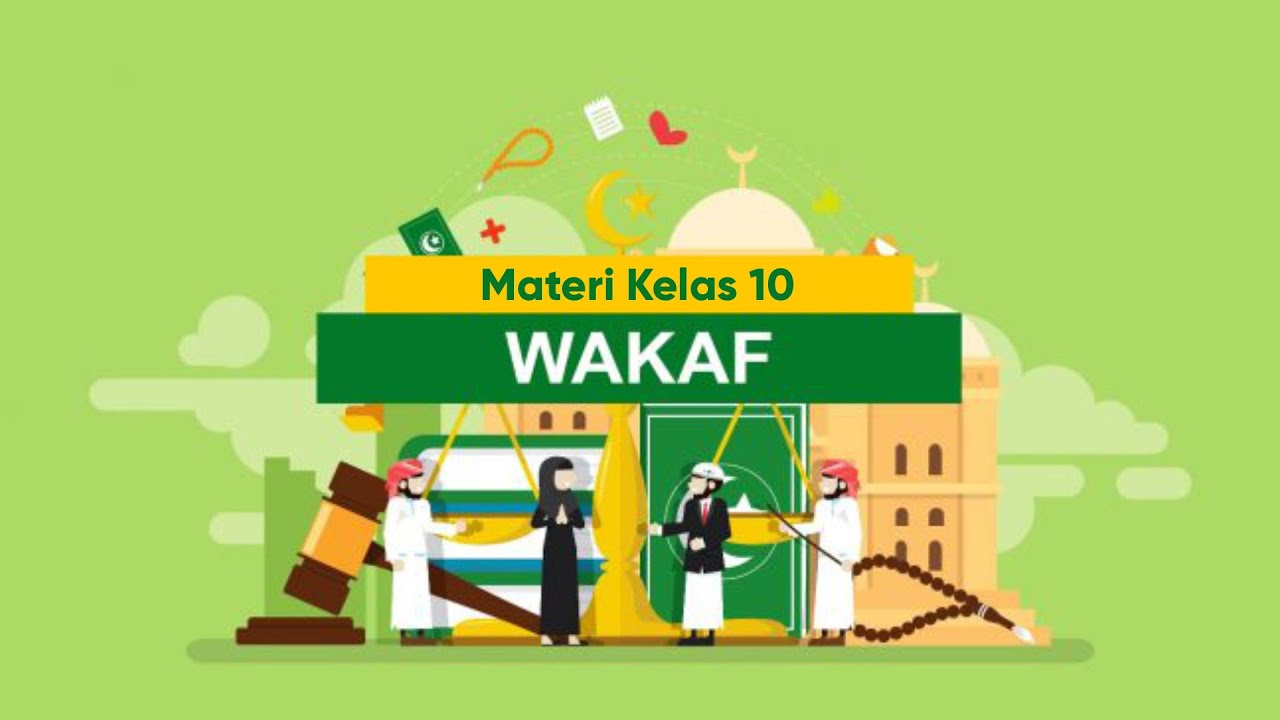
Ketentuan Wakaf Dalam Islam - Materi PAI Kelas 10

Literasi Ekonomi Islam

MATERI PAI KELAS X | BAB 4 ASURANSI SYARIAH

(Part 2 of 4) WAKAF 4.0 My Professorship speech, (create legacy)
Istihsan: Pengertian, Dasar Hukum, Pembagian serta contoh
Ahkam Dan Klasifikasinya (Bag 1) | Ushul Fiqih / Ushul Fiqih Keuangan | Ahmad Muhaisin
5.0 / 5 (0 votes)

