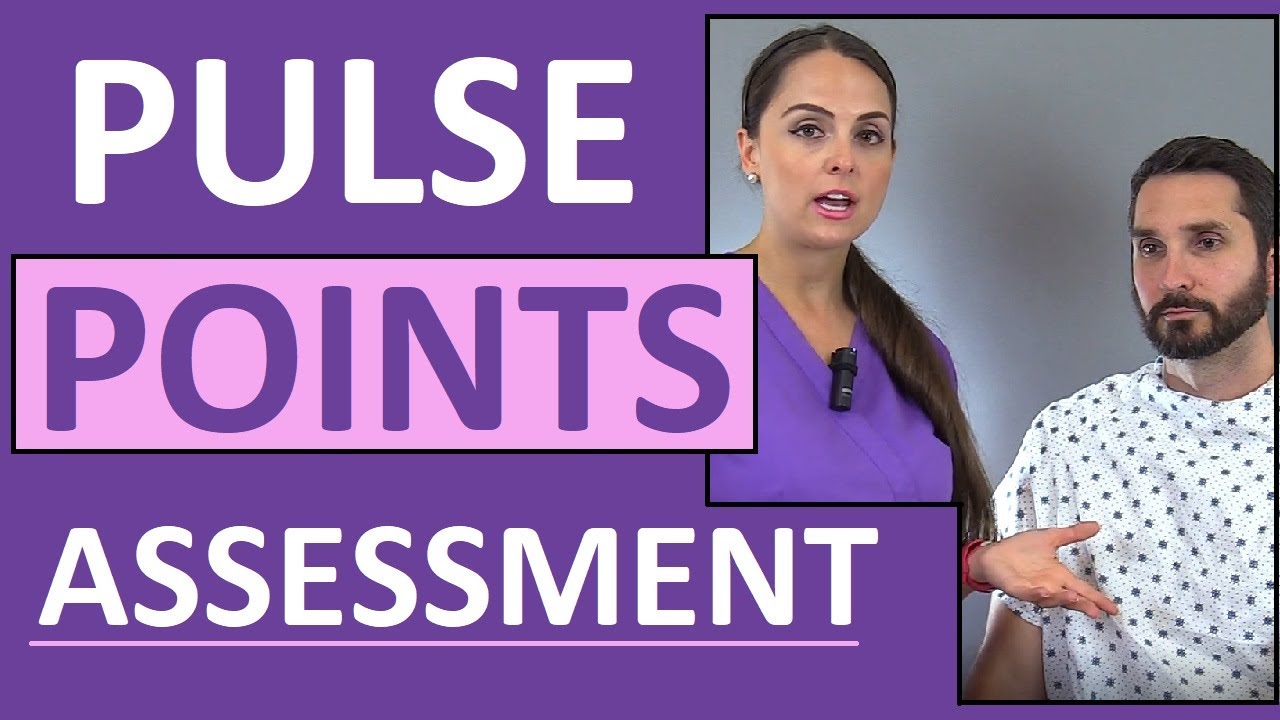
Assessment of Pulse and Respiratory Rate Demonstration #nursingskills #nursingstudent
Summary
TLDRThis video explains the process of assessing respiratory and pulse rates in nursing. The technique involves counting the radial pulse for 30 seconds, then observing the chest rise and fall to count respirations for another 30 seconds. Both counts are then multiplied by two to calculate the one-minute heart rate and respiratory rate. The script emphasizes the importance of performing these assessments discreetly to avoid altering the patient's natural rates. It also highlights the need to record the findings and follow appropriate care steps based on the patient's condition.
Takeaways
- 😀 Always assess pulse and respiratory rate together to provide a comprehensive evaluation of the patient's condition.
- 😀 Count pulse and respirations for 30 seconds each to avoid patient altering their breathing or pulse due to awareness of the assessment.
- 😀 Do not inform the patient that you are assessing their respiratory rate, as it may cause them to alter their breathing pattern.
- 😀 Use your index and middle fingers to assess the radial pulse, applying enough pressure to feel the pulse but not obstruct it.
- 😀 If you cannot feel the pulse right away, gently adjust your fingers to find the correct spot.
- 😀 Multiply the number of pulses counted in 30 seconds by 2 to get the pulse rate for one minute.
- 😀 Similarly, multiply the number of respirations counted in 30 seconds by 2 to calculate the respiratory rate for one minute.
- 😀 A slower-than-normal heart rate (like 48 beats per minute) may be normal for some patients, depending on their specific health status.
- 😀 A respiratory rate of 12 breaths per minute is within normal limits, but individual patient norms should always be considered.
- 😀 Always record the results accurately and follow the next steps in the patient's care based on these assessments.
- 😀 Keep your focus on patient care and comfort throughout the assessment, ensuring that it is done efficiently and respectfully.
Q & A
Why do we measure both respiratory rate and pulse together for 30 seconds instead of one minute?
-Measuring both for 30 seconds helps prevent patients from altering their breathing or pulse patterns due to awareness of the assessment, ensuring a more accurate result.
What is the significance of using the radial pulse for counting the heart rate?
-The radial pulse is easily accessible on the wrist and provides a reliable measure of the heart rate, making it an ideal location for assessing pulse in most patients.
Why should the fingers be placed with moderate pressure when assessing the radial pulse?
-The pressure should be firm enough to feel the pulse but not so firm that it obstructs blood flow. Too much pressure can block the pulse, leading to inaccurate readings.
What does it mean if the pulse rate is counted as 48 beats per minute?
-A pulse rate of 48 beats per minute is considered on the slower side, but it may be normal for certain individuals. The nurse notes this based on their knowledge of the patient's baseline pulse.
How is the respiratory rate measured during the assessment?
-The respiratory rate is measured by observing the patient's chest rise and fall for 30 seconds. This is done while maintaining the hand on the patient's radial pulse to avoid patient awareness.
What is the reason behind multiplying the 30-second count for both pulse and respiratory rate by 2?
-Multiplying the 30-second count by 2 gives the heart rate and respiratory rate over a full minute, which is the standard time interval for recording these vital signs.
What is the significance of understanding the patient's baseline pulse and respiratory rate?
-Knowing the patient's baseline allows the nurse to assess whether the current pulse or respiratory rate is abnormal for that individual, helping with accurate clinical decision-making.
What should be done after measuring the pulse and respiratory rates?
-The findings should be recorded accurately in the patient's medical records, and appropriate care steps should be taken based on the results.
What are the potential risks if the patient is aware that their respiratory rate is being measured?
-If the patient is aware, they may consciously alter their breathing rate or depth, leading to inaccurate measurements of their respiratory rate.
Why is it important to use both the index and middle fingers when assessing the radial pulse?
-Using both fingers helps to better feel and locate the pulse, ensuring a more accurate count. The two fingers are sensitive and work together to detect the pulse more effectively.
Outlines

このセクションは有料ユーザー限定です。 アクセスするには、アップグレードをお願いします。
今すぐアップグレードMindmap

このセクションは有料ユーザー限定です。 アクセスするには、アップグレードをお願いします。
今すぐアップグレードKeywords

このセクションは有料ユーザー限定です。 アクセスするには、アップグレードをお願いします。
今すぐアップグレードHighlights

このセクションは有料ユーザー限定です。 アクセスするには、アップグレードをお願いします。
今すぐアップグレードTranscripts

このセクションは有料ユーザー限定です。 アクセスするには、アップグレードをお願いします。
今すぐアップグレード



5.0 / 5 (0 votes)

