Why did Saddam fall so quickly? | Iraq Invasion, 2003
Summary
TLDRThe 2003 invasion of Iraq, launched under the pretext of eliminating Saddam Hussein's weapons of mass destruction, was a complex and controversial military operation. While Coalition forces quickly captured Baghdad, the invasion's true challenges lay in unexpected resistance, flawed intelligence, and a lack of post-war planning. Iraq's paramilitary forces, including the Fedayeen Saddam, staged fierce counterattacks, and the aftermath saw widespread looting and civil unrest. Despite initial successes, the fall of Saddam’s regime set the stage for a prolonged insurgency and chaos, as Coalition forces struggled to stabilize the country.
Takeaways
- 😀 The 2003 invasion of Iraq was a complex military operation, not the quick and easy victory that many expected.
- 😀 The Coalition's main justification for the war was the fear of Saddam's weapons of mass destruction, which were never found.
- 😀 Despite international protests, including millions of people globally, the U.S. and a small coalition of countries went ahead with the invasion.
- 😀 Saddam's regime was weaker than it appeared, and his forces were largely demoralized, with minimal communication among military branches.
- 😀 The U.S. underestimated the potential for an Iraqi insurgency, assuming Saddam's conventional forces would be the main threat.
- 😀 The Coalition's initial strategy of bypassing Iraqi cities to quickly capture Baghdad was hindered by unexpected resistance from paramilitary groups like the Fedayeen Saddam.
- 😀 A disastrous helicopter attack on the Republican Guard highlighted the weaknesses in Coalition planning and execution.
- 😀 The biggest flaw in the Coalition's invasion plan was the lack of preparation for post-invasion governance, leading to chaos and instability after Saddam's regime fell.
- 😀 While Saddam's leadership was overthrown within weeks, the invasion left a power vacuum, leading to looting, insurgency, and ongoing conflict in Iraq.
- 😀 The fall of Saddam's regime led to celebratory moments, but also exposed the serious consequences of the war, including civilian casualties, destruction of infrastructure, and a growing insurgency that continued well after the official 'mission accomplished' declaration.
Q & A
What was the main argument used by the US and UK to justify the invasion of Iraq in 2003?
-The main argument used by the US and UK was the presence of Iraqi weapons of mass destruction (WMDs), which they feared Saddam Hussein was hiding. This fear was based on the belief that Iraq was non-compliant with UN resolutions and could use these weapons against international targets.
Why did the US not receive direct support from the United Nations in their bid to invade Iraq?
-The UN Security Council draft resolution to authorize the use of force against Iraq was withdrawn because France, Germany, and Russia were set to veto it, preventing the US from gaining direct UN support for the invasion.
How did Saddam Hussein perceive the potential for an American invasion?
-Saddam Hussein did not believe that the invasion would actually happen until the very last moment. He continued to downplay the US threat, relying on outdated intelligence and believing that the US could not handle heavy casualties like in Somalia in 1994.
What was one of the major flaws in the Coalition's planning for the invasion?
-One of the major flaws was the lack of preparation for post-invasion Iraq. There was insufficient planning for reconstruction and governance, leading to confusion over who was responsible for rebuilding Iraq after Saddam's removal.
What was the 'shock and awe' strategy used by the Coalition during the invasion?
-'Shock and awe' was a military strategy involving overwhelming air and ground force campaigns intended to break the will of the Iraqi forces quickly and decisively. The goal was to demoralize the enemy and destroy their ability to fight.
How did the Iraqi forces initially respond to the Coalition's advance into Iraq?
-The Iraqi forces offered minimal resistance, with many positions abandoned or easily overtaken. However, urban areas like Nazaria saw significant resistance from Iraqi paramilitary groups, such as the fedayeen Saddam, who launched ambushes and used guerrilla tactics.
What was the significance of the helicopter attack on the 101st Airborne Division?
-The helicopter attack, where the Apaches were ambushed by Iraqi anti-aircraft fire, was a significant setback for the Coalition. It demonstrated the vulnerability of their forces and forced a reassessment of their strategy.
What was the role of Special Forces during the invasion?
-Special Forces played a crucial role in the invasion, conducting a large-scale operation alongside Kurdish forces in northern Iraq to prevent Iraqi forces from engaging Coalition troops in the south. They also helped create confusion about the Coalition’s main effort by attacking from various directions.
What was the 'Thunder Run' tactic, and why was it used?
-The 'Thunder Run' was a high-speed armored raid through Baghdad aimed at overwhelming Iraqi defenses and asserting Coalition control over key areas. The tactic was designed to quickly penetrate urban defenses and demoralize Iraqi forces by showing the Coalition's overwhelming military superiority.
How did the fall of Saddam Hussein lead to chaos in Iraq?
-Saddam Hussein’s fall created a power vacuum in Iraq, which led to widespread looting, the destruction of public infrastructure, and a lack of order. The Coalition's failure to intervene effectively during the looting and their lack of clear plans for post-Saddam governance contributed to growing resentment and the eventual insurgency.
Outlines

このセクションは有料ユーザー限定です。 アクセスするには、アップグレードをお願いします。
今すぐアップグレードMindmap

このセクションは有料ユーザー限定です。 アクセスするには、アップグレードをお願いします。
今すぐアップグレードKeywords

このセクションは有料ユーザー限定です。 アクセスするには、アップグレードをお願いします。
今すぐアップグレードHighlights

このセクションは有料ユーザー限定です。 アクセスするには、アップグレードをお願いします。
今すぐアップグレードTranscripts

このセクションは有料ユーザー限定です。 アクセスするには、アップグレードをお願いします。
今すぐアップグレード関連動画をさらに表示
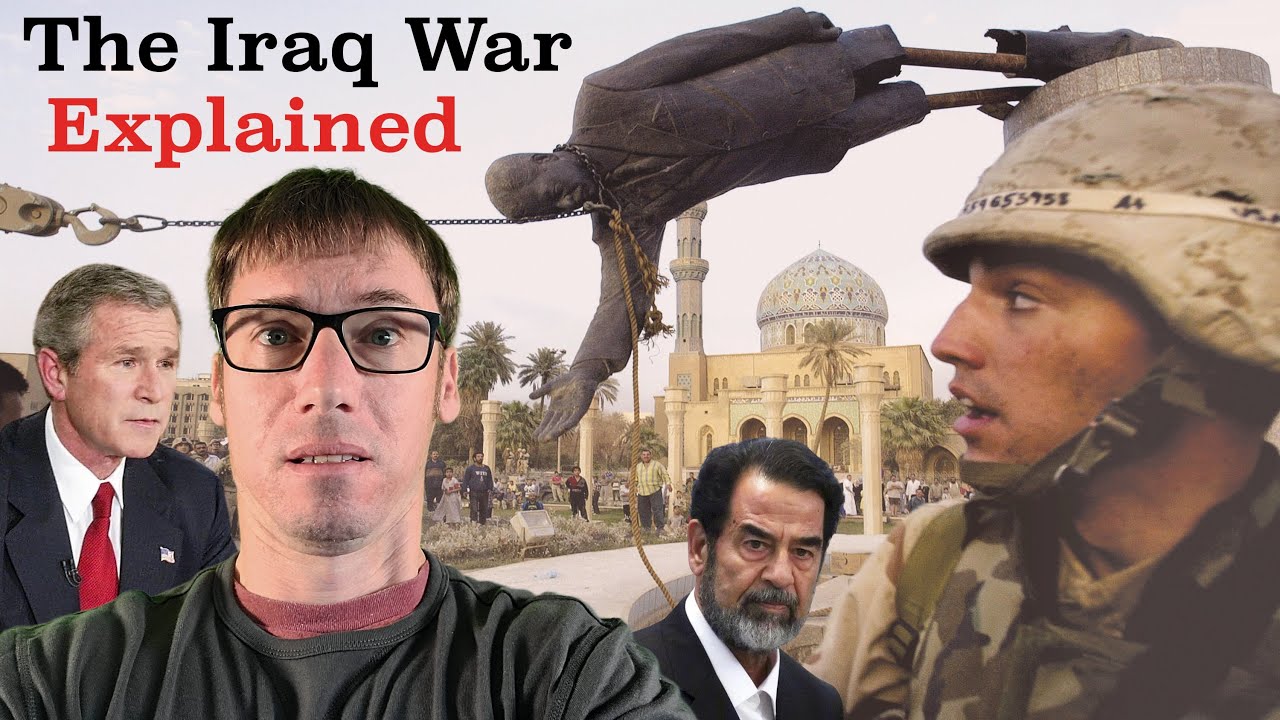
The Iraq War Explained
What Happened in the Persian Gulf War? | History

Sejarah Baghdad, Pusat Peradaban Pada Zamannya

QUEM FOI SADDAM HUSSEIN?
La prima Guerra del Golfo: Saddam e l'invasione irachena del Kuwait

Gara-gara Kelakuan AS, Satu Dunia Hancur! Gimana Perang iraq Mengubah Dunia? | Learning By Googling
5.0 / 5 (0 votes)

