GERAK LURUS BERATURAN (GERAK BENDA PADA LINTASAN LURUS PART 1)
Summary
TLDRThis educational video introduces high school students to the fundamentals of motion along a straight path. It explains key concepts such as distance and displacement, emphasizing the difference between scalar and vector quantities. Through a practical example involving a character named Andi, the video demonstrates how to calculate total distance traveled and net displacement. It then explores speed, velocity, and average velocity, illustrating their relationships with time. The lesson also covers interpreting distance-time and velocity-time graphs for uniform motion, showing how to derive speed, displacement, and direction from graphical data. Clear explanations and visual aids make complex concepts accessible and engaging.
Takeaways
- 📘 The lesson explains straight-line motion concepts for 10th-grade physics students.
- 📏 Distance is defined as the total length of the path traveled by an object.
- 🧭 Displacement is defined as the change in position from the starting point to the ending point.
- 👦 In the example, Andi moves 2 meters to the right and then 4 meters to the left.
- ➕ The total distance traveled by Andi is 6 meters because all traveled paths are added together.
- ⬅️ Andi’s displacement is 2 meters to the left because his final position is 2 meters left of the starting point.
- 📍 Positive directions on a Cartesian diagram are right and upward, while left and downward directions are negative.
- 🧮 Distance is a scalar quantity because it only has magnitude and no direction.
- 🧭 Displacement is a vector quantity because it includes both magnitude and direction.
- ⚡ Speed is calculated using the formula distance divided by time.
- 🚀 Velocity is calculated using the formula displacement divided by time.
- 📊 Average velocity is obtained by adding initial velocity and instantaneous velocity, then dividing by two.
- ⏱️ Initial velocity refers to velocity when time equals zero.
- 🎯 Instantaneous velocity refers to velocity at a particular moment in time.
- 📈 In a distance-time graph for uniform motion, the slope of the graph represents velocity.
- 📐 The tangent of the angle in a distance-time graph can also be used to determine velocity.
- 🔄 Uniform straight-line motion (GLB) occurs when velocity remains constant over time.
- 📉 In a velocity-time graph for uniform motion, the graph forms a horizontal line because velocity is constant.
- 🟦 The area under a velocity-time graph represents displacement or distance traveled.
- 🧠 To calculate displacement from a velocity-time graph, multiply velocity by time, such as 20 m/s × 3 s = 60 meters.
Q & A
What is the difference between distance and displacement?
-Distance is the total path length traveled by an object and is a scalar quantity, while displacement is the change in position from the initial to the final point and is a vector quantity, meaning it has both magnitude and direction.
In the example of Andi moving on a straight line, how is the total distance calculated?
-Andi first moves 2 meters to the right and then 4 meters to the left. The total distance is the sum of the absolute values of each segment, which is 2 + 4 = 6 meters.
How is Andi's displacement calculated in the example?
-Displacement is calculated as the final position minus the initial position. If Andi ends up 2 meters to the left of the starting point, the displacement is -2 meters, indicating direction to the left.
Why is displacement considered a vector while distance is a scalar?
-Displacement is a vector because it considers both magnitude and direction. Distance only measures the total path length without regard to direction, making it a scalar quantity.
What is the formula for speed and how is it different from velocity?
-Speed is the distance traveled divided by the time taken (v = s/t) and is a scalar quantity. Velocity is displacement divided by time (v = Δs/t) and is a vector quantity because it includes direction.
What does 'average velocity' mean and how is it calculated?
-Average velocity is the mean value of velocity over a time interval. It can be calculated as the average of the initial velocity (v₀) and final velocity (vₜ) if motion is uniform: v_avg = (v₀ + vₜ)/2.
How is the speed of an object represented on a distance-time (s-t) graph?
-On a distance-time graph, speed is represented by the slope of the line. A steeper slope indicates higher speed, and a straight line indicates constant speed.
How can velocity be determined from a velocity-time (v-t) graph?
-For a velocity-time graph, the area under the curve between two time points represents the displacement. For constant velocity, the area is simply the rectangle's width (time) multiplied by its height (velocity).
In uniform linear motion, how does the velocity-time graph appear?
-In uniform linear motion (constant velocity), the velocity-time graph is a horizontal line because velocity does not change over time.
How does the sign of displacement indicate direction?
-In a coordinate system, positive displacement usually indicates movement to the right or upward, while negative displacement indicates movement to the left or downward. The sign tells you the direction relative to the chosen origin.
What are the units of distance, displacement, speed, and velocity in SI units?
-Distance and displacement are measured in meters (m). Speed and velocity are measured in meters per second (m/s). Time is measured in seconds (s).
Why is it important to understand both scalar and vector quantities in motion?
-Understanding scalar and vector quantities helps distinguish between simple measurements of magnitude and quantities that also include direction. This is crucial for accurately describing motion and solving physics problems involving forces and trajectories.
Outlines

Cette section est réservée aux utilisateurs payants. Améliorez votre compte pour accéder à cette section.
Améliorer maintenantMindmap

Cette section est réservée aux utilisateurs payants. Améliorez votre compte pour accéder à cette section.
Améliorer maintenantKeywords

Cette section est réservée aux utilisateurs payants. Améliorez votre compte pour accéder à cette section.
Améliorer maintenantHighlights

Cette section est réservée aux utilisateurs payants. Améliorez votre compte pour accéder à cette section.
Améliorer maintenantTranscripts

Cette section est réservée aux utilisateurs payants. Améliorez votre compte pour accéder à cette section.
Améliorer maintenantVoir Plus de Vidéos Connexes

Gerak Lurus • Part 1: Gerak Lurus Beraturan (GLB) dan Gerak Lurus Berubah Beraturan (GLBB)

FISIKA KELAS X: GERAK LURUS (PART 1) Jarak, Perpindahan, Kelajuan, Kecepatan, Percepatan
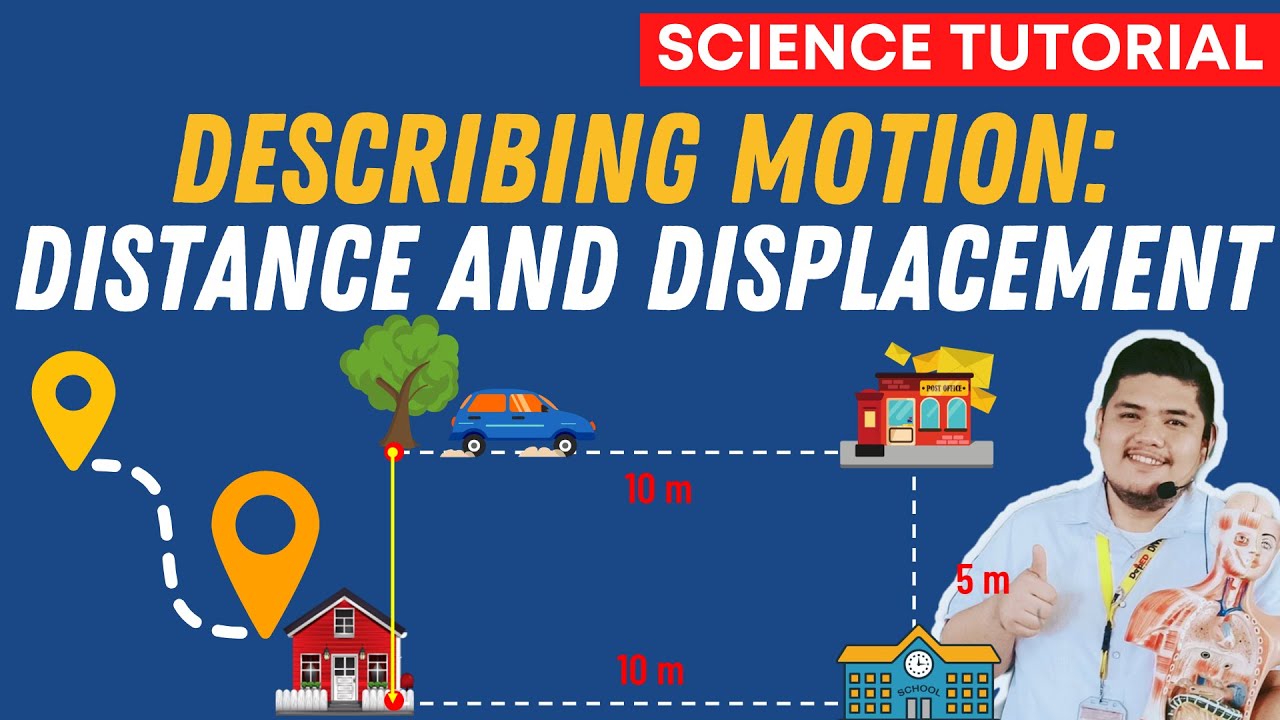
DESCRIBING MOTION: DISTANCE AND DISPLACEMENT | SCIENCE 7 QUARTER 3 MODULE 1

P3 Fisika 1
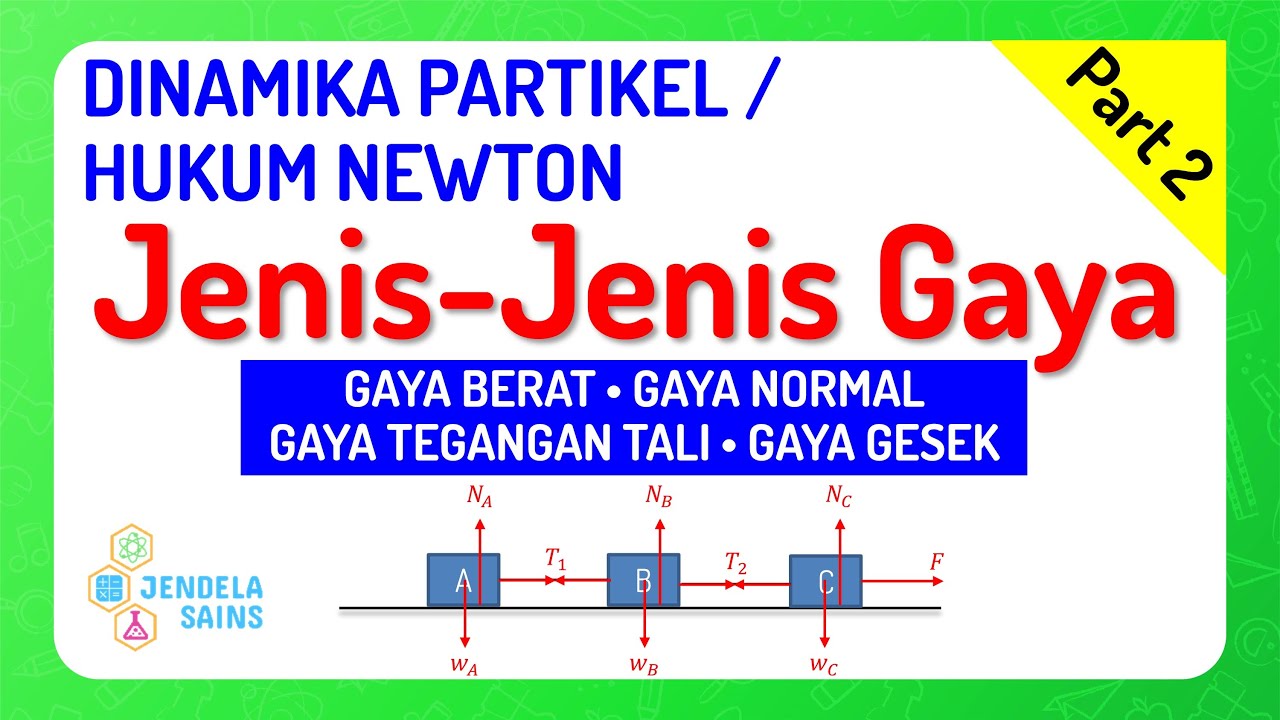
Dinamika Partikel • Part 2: Gaya Berat, Gaya Normal, Gaya Tegangan Tali, Gaya Gesek

BAB 4 GETARAN | Getaran, gelombang dan cahaya IPA kelas 8 kurikulum merdeka #ipakelas8 #getaran
5.0 / 5 (0 votes)

