DIFRAKSI CAHAYA CELAH TUNGGAL - Gelombang Cahaya Fisika Kelas XI Kurikulum Merdeka
Summary
TLDRThis video explores the concept of single-slit diffraction in light, explaining how light waves spread and create alternating bright and dark patterns when passing through a narrow slit. It introduces key parameters such as slit width, wavelength, distance to the screen, and diffraction order, along with formulas for calculating positions of minima and maxima. The video walks viewers step-by-step through multiple example problems, including calculating slit width, distances of dark and bright fringes, and determining wavelength, while emphasizing unit conversions and practical calculations. Engaging illustrations and clear explanations help learners understand and apply the principles of light diffraction effectively.
Takeaways
- 😀 Single-slit diffraction occurs when light passes through a narrow slit, causing the waves to spread and form alternating bright and dark patterns on a screen.
- 😀 The central bright fringe is the most intense, with subsequent bright and dark fringes appearing symmetrically on either side.
- 😀 Key quantities in single-slit diffraction include D (slit width), L (distance from slit to screen), λ (wavelength of light), and P (distance from the central maximum to a specific fringe).
- 😀 For dark fringes (minima), the formula is D * sin(θ) = n * λ, where n is the order of the minimum (1, 2, 3…).
- 😀 For bright fringes (maxima), the formula is D * sin(θ) = (n - 1/2) * λ.
- 😀 Wavelengths given in units like Angstroms or nanometers must be converted to meters for calculations using SI units.
- 😀 To calculate distances on the screen, the relationship D * P / L = n * λ (for dark fringes) or D * P / L = (n - 1/2) * λ (for bright fringes) is used.
- 😀 Example problems include finding the slit width for a given diffraction angle, calculating the distance of the third dark or bright fringe from the central maximum, and determining the wavelength from a measured fringe angle.
- -
- 😀 Converting units carefully and handling powers of ten correctly is essential to obtain accurate results in diffraction calculations.
- -
- 😀 Understanding the order number (n) is crucial, as it identifies which fringe is being measured from the central maximum.
- -
- 😀 The video encourages practice and problem-solving to master the concepts of single-slit diffraction.
Q & A
What is single-slit diffraction in light?
-Single-slit diffraction is the phenomenon where light waves spread out or bend when passing through a narrow slit, creating an interference pattern of alternating bright and dark regions on a screen.
What pattern is observed on the screen in single-slit diffraction?
-A series of alternating dark and bright bands is observed, with the central maximum being the brightest and widest, followed by secondary maxima and minima on either side.
What are the key parameters in single-slit diffraction?
-The key parameters are D (slit width), L (distance from the slit to the screen), λ (wavelength of the light), n (diffraction order), and P (distance of a diffraction band from the central maximum).
What is the formula to calculate the position of a dark fringe (minimum) in single-slit diffraction?
-The position of the dark fringe is given by D * sin(θ) = n * λ or, for small angles, P = (n * λ * L) / D, where n = 1, 2, 3, ….
What is the formula to calculate the position of a bright fringe (maximum) in single-slit diffraction?
-The position of the bright fringe is given by D * sin(θ) = (n - 1/2) * λ or P = ((n - 1/2) * λ * L) / D.
How do you convert wavelengths given in Ångströms or nanometers to meters?
-To convert Ångströms to meters, multiply by 10^-10. To convert nanometers to meters, multiply by 10^-9.
How do you convert the slit width from millimeters to meters?
-Multiply the slit width in millimeters by 10^-3 to convert it into meters.
How would you calculate the slit width if the second dark fringe occurs at 30° for light of 7000 Å?
-First, convert 7000 Å to meters: 7 × 10^-7 m. Then use D * sin(θ) = n * λ with n = 2 and θ = 30°, solving for D. The result is D ≈ 2.8 × 10^-6 m.
How can you find the distance from the central maximum to the third dark fringe for D = 0.10 mm, λ = 650 nm, and L = 40 cm?
-Convert all units to meters: D = 1 × 10^-4 m, λ = 6.5 × 10^-7 m, L = 0.4 m. Use P = (n * λ * L) / D with n = 3. The distance is P ≈ 7.8 × 10^-4 m (0.78 mm).
How do you calculate the wavelength if the second dark fringe appears at 60° for a slit width of 0.01 mm?
-Convert slit width to meters: D = 1 × 10^-5 m. Use D * sin(θ) = n * λ with n = 2 and θ = 60°. Solve for λ to get λ ≈ 2.5 × 10^-6 * √3 m.
Why is it important to convert all quantities to SI units before calculations in diffraction problems?
-Converting all quantities to SI units ensures consistency, simplifies calculations, and prevents errors due to unit mismatches when applying diffraction formulas.
How do you determine the diffraction order (n) for maxima and minima?
-For dark fringes (minima), n = 1, 2, 3, … starting from the first minimum next to the central maximum. For bright fringes (maxima), n = 1, 2, 3, … but the formula is adjusted as (n - 1/2) * λ.
Outlines

Cette section est réservée aux utilisateurs payants. Améliorez votre compte pour accéder à cette section.
Améliorer maintenantMindmap

Cette section est réservée aux utilisateurs payants. Améliorez votre compte pour accéder à cette section.
Améliorer maintenantKeywords

Cette section est réservée aux utilisateurs payants. Améliorez votre compte pour accéder à cette section.
Améliorer maintenantHighlights

Cette section est réservée aux utilisateurs payants. Améliorez votre compte pour accéder à cette section.
Améliorer maintenantTranscripts

Cette section est réservée aux utilisateurs payants. Améliorez votre compte pour accéder à cette section.
Améliorer maintenantVoir Plus de Vidéos Connexes

F358-Difraksi cahaya , difraksi celah tunggal ,interferensi cahaya,teori plus contoh soal
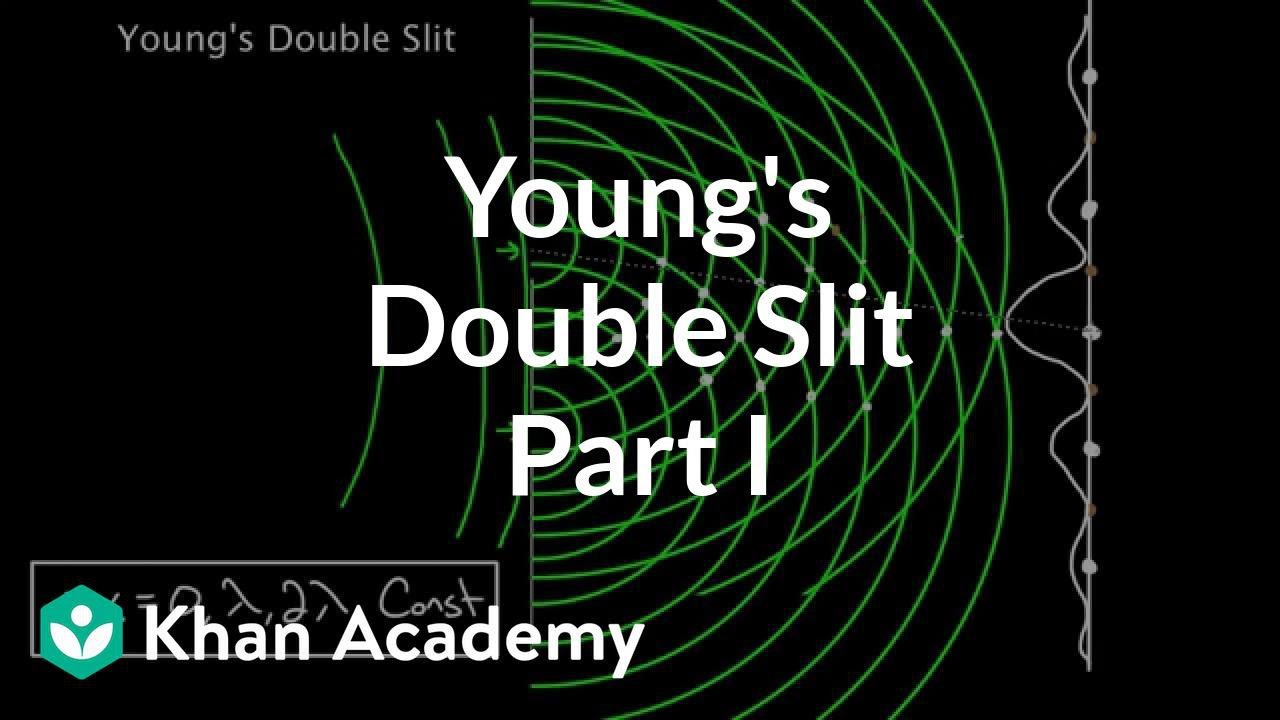
Young's double slit introduction | Light waves | Physics | Khan Academy

Praktikum Difraksi Dan Interferensi Cahaya | SMAN 1 Wonogiri
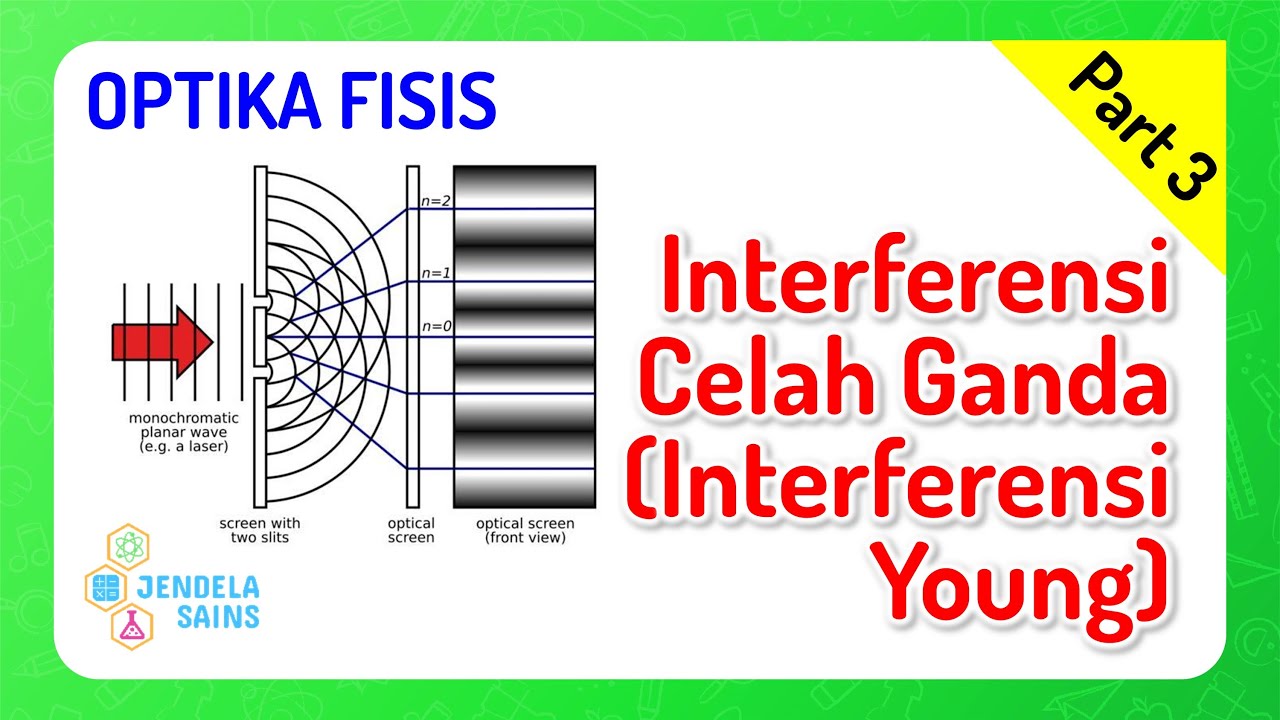
Gelombang Cahaya / Optika Fisis • Part 3: Interferensi Celah Ganda Young
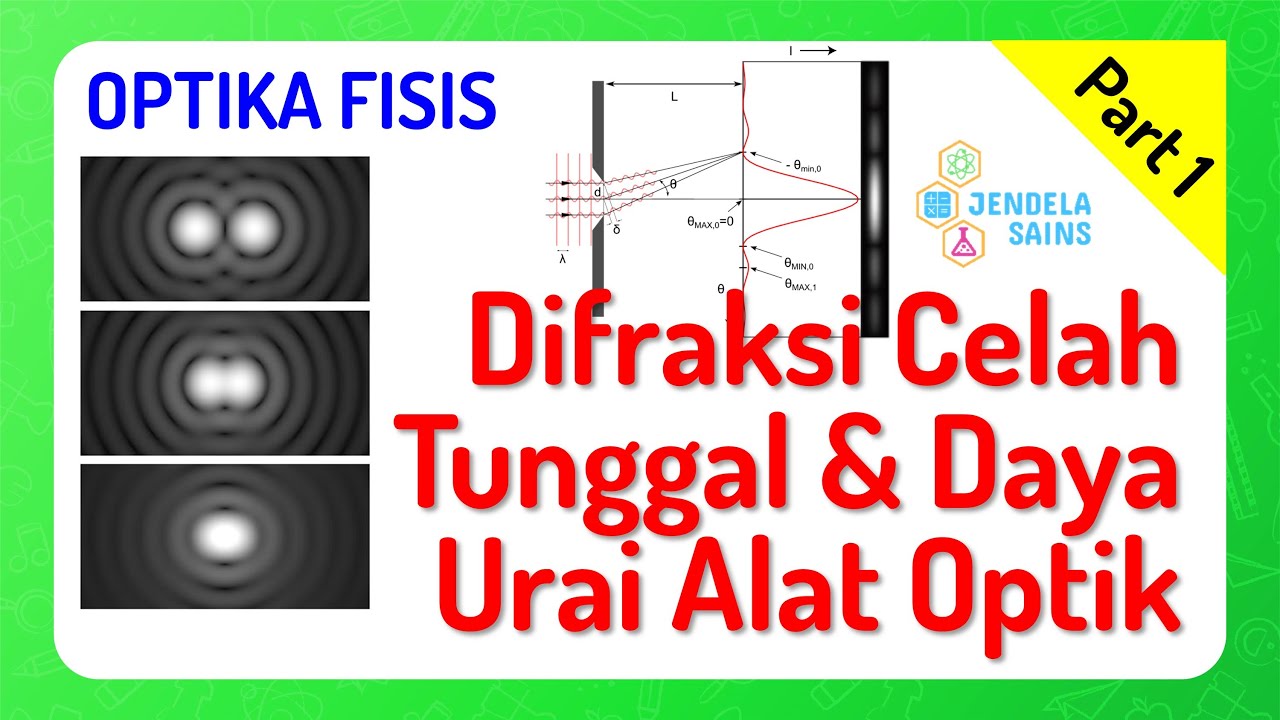
Gelombang Cahaya / Optika Fisis • Part 1: Difraksi Celah Tunggal, Daya Urai Alat Optik
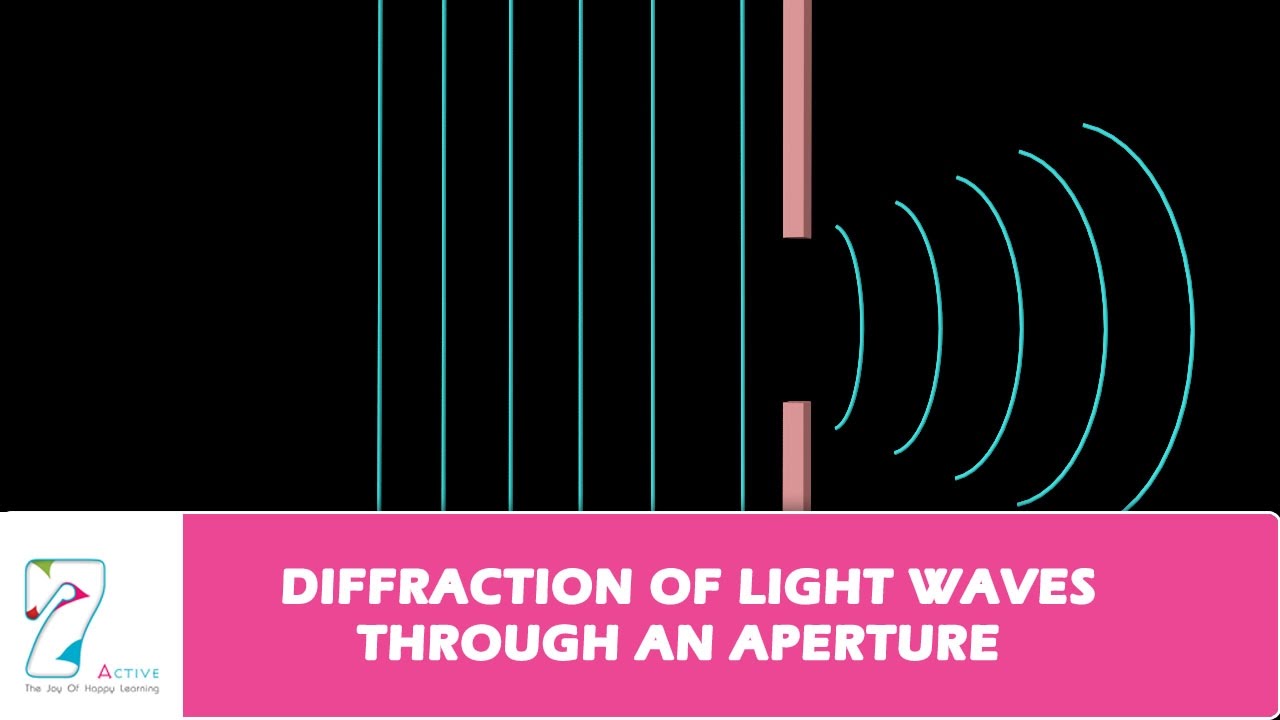
DIFFRACTION OF LIGHT WAVES THROUGH AN APERTURE
5.0 / 5 (0 votes)

