Kemajuan Daulah Ayyubiyah di berbagai Bidang
Summary
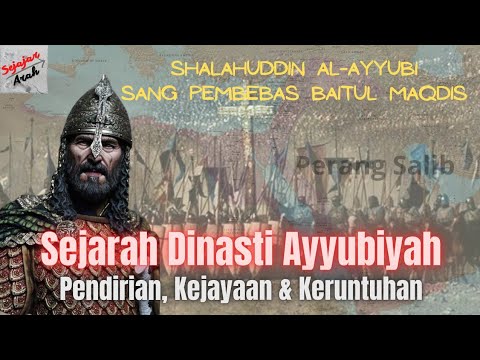
TLDRThe video discusses the rise and achievements of the Ayyubid dynasty under Salahuddin al-Ayyubi. It covers the dynasty's founding in 1171, Salahuddin's consolidation of power in Egypt, and territorial expansion across Yemen, Syria, Hijaz, and Palestine, including the recapture of Jerusalem in 1187. The summary highlights advancements in education, religion, healthcare, architecture, military, and economy. Salahuddin promoted Sunni Islam, established schools and hospitals, constructed significant architectural works, strengthened the military, and enhanced trade and industry. Despite ongoing Crusades, the Ayyubid dynasty thrived culturally and economically, leaving a lasting legacy in the Islamic world.
Takeaways
- 📖 The lesson discusses the rise and development of the Ayyubid Dynasty, particularly under Salahuddin Al-Ayyubi.
- 🕌 The Ayyubid Dynasty was established in 1171 after the decline of the Fatimid Dynasty in Egypt.
- ⚔️ Salahuddin Al-Ayyubi rose to power after serving under Shirkuh and eventually became the ruler of Egypt.
- 🌍 The Ayyubid territory expanded beyond Egypt to include regions such as Yemen, Syria, Hijaz, and فلسطين (Palestine).
- 🏰 Salahuddin successfully recaptured Baitul Maqdis (Jerusalem) from the Crusaders in 1187.
- ⚔️ The era was marked by the Crusades, where European forces attempted to seize Muslim territories, especially Jerusalem.
- 📚 In education and religion, Salahuddin promoted Sunni Islam and replaced the Shiite Fatimid influence.
- 🏫 Institutions like madrasas and mosques were developed, and Damascus became a major center of learning.
- 🏥 Advances in healthcare included the construction of hospitals and medical schools, producing notable physicians.
- 👨⚕️ Prominent scholars and doctors such as Musa bin Maimun (Maimonides) and Ibn al-Baytar contributed to medical knowledge.
- 🏗️ Architectural achievements included structures like the Al-Firdaus Mosque and the Citadel of Cairo.
- 🛡️ Military strength was reinforced through diverse armies and improved weapons to defend against Crusaders.
- 💰 Economic growth was seen in agriculture, crafts, and industry, including textiles, ceramics, and glass production.
- 🚢 Trade expanded through Mediterranean and Indian Ocean routes, enhancing economic prosperity.
- 💱 Financial systems improved with the introduction of copper currency and early forms of credit systems.
Q & A
What is the historical context of the Ayyubid Dynasty in the transcript?
-The transcript discusses the rise of the Ayyubid dynasty, which began when the Fatimid Caliphate in Egypt sought help from Nur ad-Din Zangi to resolve internal conflicts. Salah ad-Din (Saladin) eventually rose to power and established the Ayyubid dynasty in 1171 after the Fatimid Caliphate collapsed.
Who were the main figures in the establishment of the Ayyubid dynasty?
-The main figures mentioned in the transcript are Salah ad-Din (Saladin) and his uncle Shirkuh. Salah ad-Din's leadership solidified the Ayyubid dynasty after the death of the last Fatimid Caliph.
What significant military victories did Salah ad-Din achieve during the Crusades?
-Salah ad-Din is particularly noted for recapturing Jerusalem (Baitul Maqdis) from the Crusaders in 1187. This victory was a key moment during the Crusades, as Jerusalem was considered a sacred city by Christians.
What was the impact of Salah ad-Din's rule on religious and cultural policies in Egypt?
-Salah ad-Din, being a Sunni Muslim of the Shafi'i school, reversed the religious policies of the preceding Fatimid Caliphate (which promoted Shi'ism). He made Sunni Islam the official creed and worked to suppress Shi'a influence, notably by closing Al-Azhar University, which had been a center for Shi'a teachings.
How did the Ayyubid dynasty contribute to education and religious institutions?
-Salah ad-Din and his successors promoted Sunni education by establishing Sunni madrasas and universities, especially in cities like Damascus, Cairo, and Jerusalem. Al-Azhar University was closed for a period, but new institutions were built to support Sunni learning.
What advancements in healthcare were made during the Ayyubid era?
-During the Ayyubid period, hospitals were established, and their design was modeled after the Nurian hospitals of Nur ad-Din Zangi in Damascus. Notable medical figures, including Musa bin Maimun (Maimonides), a Jewish physician, emerged during this time.
What were some key architectural achievements of the Ayyubid dynasty?
-Key architectural contributions of the Ayyubid dynasty included the construction of significant buildings like the Al-Azhar Mosque, the Citadel of Cairo, and the Masjid Firdaus in Aleppo. These structures demonstrated their military, cultural, and religious significance.
How did Salah ad-Din manage economic development in his empire?
-Salah ad-Din focused on strengthening the economy by increasing agricultural production, promoting trade, and establishing new industries such as textile and carpet production. He also implemented a more sophisticated taxation system, which included the use of copper currency.
What role did the Ayyubid military play during the Crusades?
-The Ayyubid military, under Salah ad-Din, played a crucial role in resisting the Crusaders. Their forces were strengthened by a diverse army, including Turks, Berbers, and Africans, and they were instrumental in recapturing Jerusalem and defending Islamic territories against European Crusader armies.
How did Salah ad-Din's diplomatic approach contribute to his successes?
-Salah ad-Din was not only a skilled military leader but also a diplomat. His ability to unite different Muslim factions, manage diverse religious groups, and secure alliances with local rulers helped him consolidate power and strengthen the Ayyubid dynasty during the Crusades.
Outlines

Cette section est réservée aux utilisateurs payants. Améliorez votre compte pour accéder à cette section.
Améliorer maintenantMindmap

Cette section est réservée aux utilisateurs payants. Améliorez votre compte pour accéder à cette section.
Améliorer maintenantKeywords

Cette section est réservée aux utilisateurs payants. Améliorez votre compte pour accéder à cette section.
Améliorer maintenantHighlights

Cette section est réservée aux utilisateurs payants. Améliorez votre compte pour accéder à cette section.
Améliorer maintenantTranscripts

Cette section est réservée aux utilisateurs payants. Améliorez votre compte pour accéder à cette section.
Améliorer maintenantVoir Plus de Vidéos Connexes

SOSOK KHALIFAH-KHALIFAH DAULAH AYYUBIYAH -- Lengkap

Latihan Soal Penilaian Akhir Semester (PAT) Mapel SKI Kelas 8 MTs Semester Genap /+ Kunci Jawaban

Pembelajaran SKI kelas VIII: Kemajuan Daulah Ayyubiyah dalam Bidang Ekonomi, Militer dan Pertanian

SKI 8 (PEMIMPIN BESAR DAN ILMUWAN ISLAM MASA DAULAH AYYUBIYAH)

sumbangsih Ilmuwan Muslim Daulah Ayyubiyah
Sejarah Dinasti Ayyubiyah, Dinasti yang didirikan Salahuddin Al-Ayyubi
5.0 / 5 (0 votes)

