Die Französische Revolution – Verlauf, Verfassung, Republik und die Terrorherrschaft der Jakobiner
Summary
TLDRThis video explains the course of the French Revolution from 1789 to the end of the Jacobin rule. It covers key events such as the National Assembly's reforms, the king's flight, the rise of the Jacobins, and the terror that followed. The narrative explores the political shifts, economic struggles, and military challenges that shaped the revolution. It details the rise of radical factions, the fall of the monarchy, and the consequences of the king's execution, culminating in the Reign of Terror under Robespierre and the Jacobins' grip on power.
Takeaways
- 🇫🇷 The French Revolution began in 1789 with the Third Estate declaring itself the National Assembly, marking a key shift from absolute monarchy.
- 📜 Early reforms abolished feudal privileges, confiscated church property, ended serfdom, and established citizens' rights.
- 💰 The National Assembly attempted to solve financial crises by issuing Assignats, a form of paper money backed by church lands, which eventually led to inflation.
- 🏛️ The 1791 Constitution transformed France into a constitutional monarchy with legislative power in the National Assembly and executive power shared with the king.
- 👑 King Louis XVI's attempted escape in 1791 (Flight to Varennes) eroded trust in the monarchy and fueled republican sentiments.
- ⚔️ In 1792, France declared war on Austria, beginning the First Coalition War, initially suffering military setbacks due to emigration of aristocratic officers.
- 🏰 Radical urban groups, the Sans-culottes, played a pivotal role in pushing the revolution toward republicanism and influencing the National Assembly.
- ✂️ Louis XVI was tried and executed for treason on January 21, 1793, shocking Europe and escalating foreign opposition against France.
- ⚖️ The Jacobins, backed by the Sans-culottes, rose to power by suppressing moderate Girondins and other political rivals, initiating the Reign of Terror.
- 🪓 During the Reign of Terror, thousands were executed via the guillotine, and the revolutionary government implemented strict controls to maintain power and stabilize France.
- 🥖 Jacobins used both fear (terror) and concessions (price controls on food) to manage the population and prevent uprisings.
- 👥 Internal divisions within the Jacobins later emerged, exemplified by the conflict between Hébertists advocating for more extreme measures and Dantonists favoring moderation.
Q & A
What significant event happened in 1789 during the French Revolution?
-In 1789, the Third Estate declared itself the National Assembly, and much of the clergy and nobility joined it. This decision allowed the National Assembly to pass laws for France, although these still needed approval from King Louis XVI, who had already lost much of his absolute power.
What were some key reforms implemented in 1789?
-In 1789, significant reforms included the abolition of the privileges of the nobility and clergy, the confiscation and nationalization of church property, the end of feudalism and serfdom, and the declaration of human and civil rights.
How did the National Assembly try to solve France's financial crisis?
-The National Assembly issued Assignats, state bonds backed by the expected revenue from selling church lands. However, the overproduction of these bonds led to inflation and a loss of confidence in the currency.
What was the role of the King in the constitutional monarchy established by the 1791 Constitution?
-Under the 1791 Constitution, the King had the executive power, but his role was limited. He had a suspensive veto, meaning he could delay laws, and shared military command with the National Assembly. The legislative power was vested in the National Assembly, which was elected by active citizens.
What were the consequences of King Louis XVI's attempted escape in 1791?
-Louis XVI's flight to the Austrian Netherlands in June 1791 was a pivotal moment in the revolution. It led many to question the need for a monarchy. His capture and return to Paris sparked greater division, especially between monarchists and republicans, eventually leading to the abolition of the monarchy.
What was the impact of the Declaration of Pillnitz in 1791?
-The Declaration of Pillnitz, issued by Austria and Prussia, supported the French monarchy. It provoked a war declaration by France in April 1792, starting the first Coalition War, which aimed to suppress the revolution.
How did the war with foreign powers affect France in 1792?
-The first months of the war were disastrous for France, as many officers had emigrated, leaving the military disorganized. However, mass mobilization of National Guardsmen helped stabilize the situation. A key victory at the Battle of Valmy in September 1792 secured France’s position and led to the occupation of parts of the Austrian Netherlands and Rhineland.
How did economic hardship influence the political climate in France in 1792?
-Severe economic hardship, especially rising food prices and widespread poverty, led to protests by the Sans-Culottes, particularly in Paris. The National Assembly’s inability to resolve these issues contributed to radicalization and the push for the abolition of the monarchy.
What event marked the official end of the French monarchy?
-On September 21, 1792, the National Convention formally abolished the monarchy and declared the French Republic after the king’s capture and the storming of the royal palace by the Sans-Culottes.
What was the outcome of King Louis XVI's trial and execution?
-King Louis XVI was found guilty of high treason and sentenced to death. He was executed by guillotine on January 21, 1793, an event that had significant political and military repercussions, leading to increased international opposition to the revolution.
Outlines

Cette section est réservée aux utilisateurs payants. Améliorez votre compte pour accéder à cette section.
Améliorer maintenantMindmap

Cette section est réservée aux utilisateurs payants. Améliorez votre compte pour accéder à cette section.
Améliorer maintenantKeywords

Cette section est réservée aux utilisateurs payants. Améliorez votre compte pour accéder à cette section.
Améliorer maintenantHighlights

Cette section est réservée aux utilisateurs payants. Améliorez votre compte pour accéder à cette section.
Améliorer maintenantTranscripts

Cette section est réservée aux utilisateurs payants. Améliorez votre compte pour accéder à cette section.
Améliorer maintenantVoir Plus de Vidéos Connexes
French Revolution Explained
REVOLUSI PERANCIS - Runtuhnya Monarki Absolut Perancis [Materi Sejarah Kelas XI Peminatan SMA/MA]
7 Key Causes of the French Revolution
French Revolution in 15 minutes
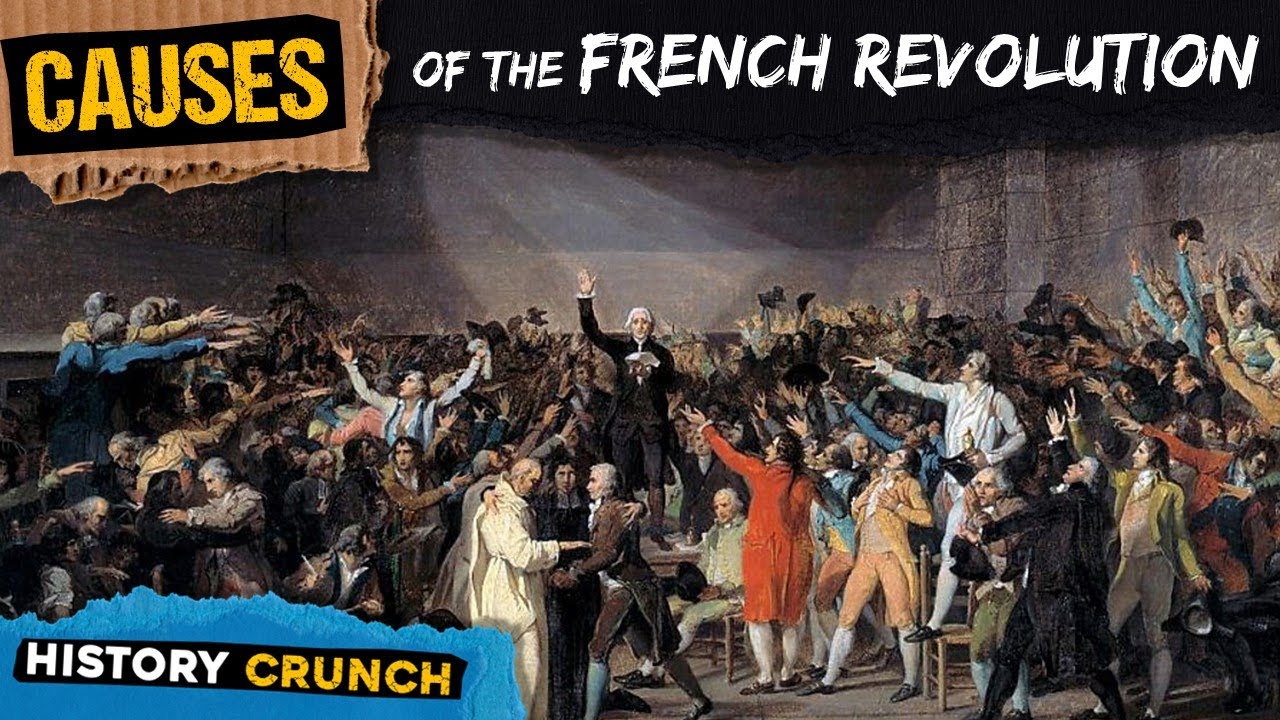
Causes of the French Revolution - Video Infographic

Một số vấn đề chung về cách mạng tư sản (Tiết 1) | Lịch sử 11 (Cánh diều) | Giáo viên: Lê Thị Thu
5.0 / 5 (0 votes)

