Sistem Penyimpanan Arsip Sistem Abjad
Summary
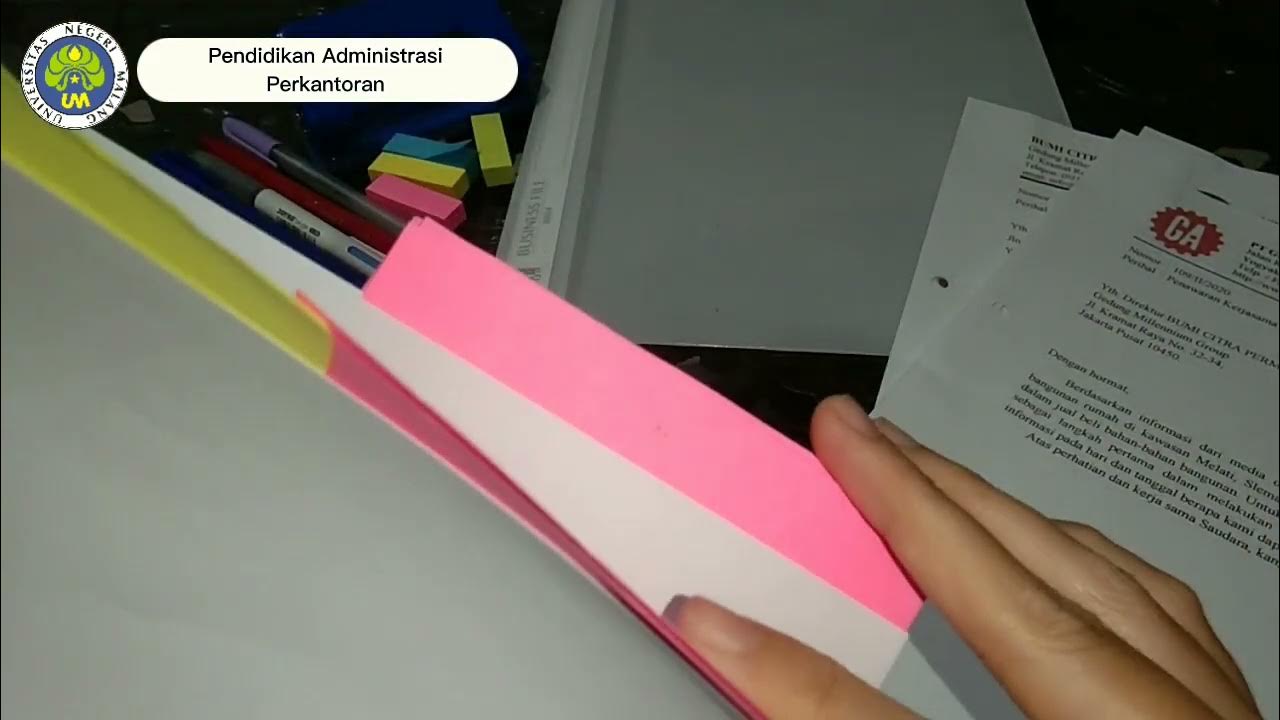
TLDRThis tutorial provides a detailed guide on using the Alphabetical Filing System for archiving documents. It explains three main methods: the pure alphabetical filing system, a combination of primary and secondary systems, and filing based on company departments with primary, secondary, and tertiary classifications. The video walks viewers through the steps of labeling, sorting, and storing documents efficiently, using tools like snackhelter maps and specific classification codes. The system is designed to simplify the organization and retrieval of documents in any business setting, ensuring both accessibility and order.
Takeaways
- 😀 The tutorial explains how to store archives using the Alphabetical Filing System.
- 😀 The Alphabetical Filing System is commonly used in companies for easy retrieval of documents.
- 😀 The tutorial is divided into three methods of alphabetical filing: pure alphabetical, primary and secondary, and division-based classification.
- 😀 The first step involves organizing documents by assigning them an appropriate code (e.g., letter codes for company names or document types).
- 😀 In the second method, documents are sorted using primary and secondary folders, making it easier to retrieve specific files.
- 😀 The third method introduces the use of tertiary folders and involves categorizing documents by both subject and alphabetical order.
- 😀 Essential tools for filing include various types of folders (primary, secondary, tertiary) and a filing cabinet or snackhelter map.
- 😀 The documents are organized in alphabetical order based on assigned codes, and each folder is labeled appropriately with clear identifiers.
- 😀 The tutorial emphasizes the importance of using a pencil for coding documents to avoid permanent marks.
- 😀 The final step in each method involves placing documents into folders and ensuring they are organized properly for easy access.
Q & A
What is the main topic of the tutorial?
-The tutorial explains how to organize and store archives using the alphabetical filing system, with three different methods of organizing the archives.
What are the three methods of the alphabetical filing system mentioned in the tutorial?
-The three methods are: 1) the pure alphabetical filing system, 2) a combination of primary and secondary categorization, and 3) using divisions or departments for classification.
Why is the alphabetical filing system commonly used in companies?
-The alphabetical filing system is widely used because it makes it easy for archivists or employees to find and retrieve documents quickly based on their names or titles.
What materials are needed for the tutorial?
-The materials needed include: letters or documents, an agenda book for incoming and outgoing mail, different types of file folders (primary, secondary, tertiary), a file cabinet or snakehelter map, pens, pencils, and erasers.
How is the first step of the alphabetical filing system explained?
-In the first step, documents are categorized alphabetically by their code. Each document is assigned a code, which helps identify its position in the filing system. These documents are then placed into labeled folders and organized.
What role does the 'snakehelter map' play in the filing system?
-The snakehelter map serves as the medium for storing the categorized files. It is used to insert documents into appropriate folders after they are coded and organized alphabetically.
How are documents coded before filing them?
-Documents are given codes based on their type, such as 'PT' for outgoing letters or 'AB' for incoming letters. The codes are written on the upper right corner of the documents to make them easily identifiable.
What is the difference between the 'primary' and 'secondary' folders in the filing system?
-Primary folders are used for the main classification, such as the first letter of the document's subject or department. Secondary folders categorize documents further within the primary classification, adding another layer of organization.
Can the alphabetical filing system be combined with other classification methods?
-Yes, the alphabetical system can be combined with other methods such as division-based classification or primary, secondary, and tertiary categorization to create a more refined and organized system.
How are documents filed when there are multiple divisions or departments involved?
-When multiple divisions or departments are involved, documents are filed according to their classification code, which may include primary codes for the department, secondary codes for the subject, and tertiary codes for the specific issue or project.
What is the final step in organizing the documents in this system?
-The final step involves reviewing the categorized and coded documents, ensuring they are stored in the correct order, and securing them in the appropriate folder or file cabinet based on the classification system.
Outlines

Cette section est réservée aux utilisateurs payants. Améliorez votre compte pour accéder à cette section.
Améliorer maintenantMindmap

Cette section est réservée aux utilisateurs payants. Améliorez votre compte pour accéder à cette section.
Améliorer maintenantKeywords

Cette section est réservée aux utilisateurs payants. Améliorez votre compte pour accéder à cette section.
Améliorer maintenantHighlights

Cette section est réservée aux utilisateurs payants. Améliorez votre compte pour accéder à cette section.
Améliorer maintenantTranscripts

Cette section est réservée aux utilisateurs payants. Améliorez votre compte pour accéder à cette section.
Améliorer maintenantVoir Plus de Vidéos Connexes
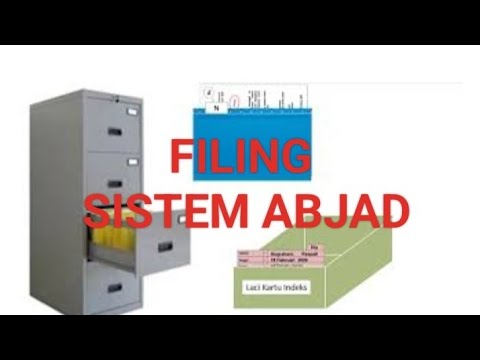
ALPHABETIC FILING SYSTEM || PENYIMPANAN ARSIP SISTEM ABJAD
Praktek Penyimpanan Arsip Sistem Subyek (Subyek Filling System )
Praktek Penyimpanan Arsip Sistem Nomor (Numerical Filling System )
VIDEO TUTORIAL PENATAAN ARSIP PERPUSNAS

MANAJEMEN KEARSIPAN (Penyimpanan Arsip dengan Sistem Abjad)
Penyimpanan Arsip Sistem Kronologis
5.0 / 5 (0 votes)

