Mengenal 4 Jenis Pasar dalam Ekonomi: Pasar Persaingan Sempurna, Monopoli, Oligopoli, Monopolistik
Summary
TLDRThis video explores the different types of markets in economics, explaining their characteristics and impact on prices. It begins by defining a market as a place where buyers and sellers meet, both physically and online. The video then breaks down four key market types: perfect competition, monopoly, oligopoly, and monopolistic competition, highlighting the number of sellers, product similarities, and price control in each. Finally, it compares these markets, showing how seller numbers and influence on prices vary, helping viewers understand how market structure affects the goods and services they buy. The explanation is clear, practical, and easy to follow.
Takeaways
- 😀 A market is a place or mechanism where buyers and sellers meet to exchange goods and services.
- 😀 Markets are not just physical (like traditional markets), but can also exist online (such as e-commerce platforms).
- 😀 The type of market affects how goods prices are set and who has the power to control these prices.
- 😀 The first type of market discussed is 'Perfect Competition', where many sellers offer identical products, making price determination competitive and equal.
- 😀 In a 'Monopoly' market, there is only one seller who controls the market and sets prices, such as the electricity provided by PLN in Indonesia.
- 😀 A characteristic of a 'Monopoly' is that there are no substitutes, and the single seller has the power to influence prices.
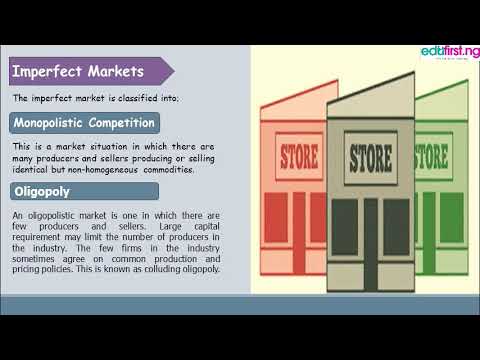
- 😀 The 'Oligopoly' market is controlled by a few large sellers, who can influence the price and services, like the major telecom companies in Indonesia.
- 😀 'Monopolistic Competition' is a market with many sellers offering slightly different products, like fast-food chains where the offerings are similar but vary in taste, packaging, or features.
- 😀 The main differences between market types are the number of sellers and how they influence prices.
- 😀 Perfect competition has many sellers and market-determined prices, while monopoly is controlled by one seller who sets the price. Oligopoly involves a few major players who affect price, and monopolistic competition has many sellers with differentiated products.
Q & A
What is the definition of a market in economics?
-A market is a place or mechanism where buyers and sellers meet to conduct transactions involving goods and services. Markets can exist in physical locations, like traditional markets, or in virtual spaces, like online markets.
How do markets influence the pricing of goods and services?
-Markets determine the prices of goods and services based on supply and demand. The power to control prices can vary depending on the type of market, whether it is competitive or monopolistic.
What characterizes a perfect competition market?
-A perfect competition market is characterized by many buyers and sellers, with identical or homogeneous goods being sold. No seller can influence the price, and there are no barriers for entry or exit from the market.
Can you give an example of a perfect competition market?
-An example of a perfect competition market could be a vegetable or fish market, where many vendors offer similar products at nearly identical prices and qualities.
What is a monopoly market?
-A monopoly market is where a single seller dominates the entire market, with no close substitutes for the goods or services offered. This gives the seller the power to set prices as they wish.
What is an example of a monopoly in the real world?
-An example of a monopoly in the real world is the electricity provider PLN in Indonesia, as it is the sole provider of electricity in the country, thus controlling the pricing of electricity.
What are the key features of an oligopoly market?
-An oligopoly market is controlled by a few large sellers, and there is limited choice for buyers. Sellers in this market can influence prices and services, often through competition or collaboration. Products in an oligopoly may be similar but differentiated.
How do firms in an oligopoly market influence each other?
-Firms in an oligopoly market can influence each other’s pricing and offerings because there are only a few competitors. For example, telecommunications companies like Telkomsel, Indosat, and XL in Indonesia can affect each other's pricing strategies.
What distinguishes a monopolistic competition market?
-In a monopolistic competition market, there are many sellers offering similar products, but each product is slightly differentiated. Sellers have some control over prices due to product differences, though not as much as in a monopoly.
Can you provide an example of monopolistic competition?
-A good example of monopolistic competition is the fast food industry. Chains like McDonald's, KFC, and Burger King offer similar products (fast food) but with unique variations in their menus, which allows them to have some control over their pricing.
Outlines

Cette section est réservée aux utilisateurs payants. Améliorez votre compte pour accéder à cette section.
Améliorer maintenantMindmap

Cette section est réservée aux utilisateurs payants. Améliorez votre compte pour accéder à cette section.
Améliorer maintenantKeywords

Cette section est réservée aux utilisateurs payants. Améliorez votre compte pour accéder à cette section.
Améliorer maintenantHighlights

Cette section est réservée aux utilisateurs payants. Améliorez votre compte pour accéder à cette section.
Améliorer maintenantTranscripts

Cette section est réservée aux utilisateurs payants. Améliorez votre compte pour accéder à cette section.
Améliorer maintenantVoir Plus de Vidéos Connexes

MPLB FASE F || ELEMEN EKONOMI & BISNIS || JENIS JENIS PASAR

EKONOMI INTERNASIONAL | SISTEM KURS VALUTA ASING | KELOMPOK 1 @unigalciamis
Market Structure | Economics SS2 | 2nd term

Dasar-dasar Permintaan dan Penawaran Ekonomi

Economia - Aula 01 - Incentivos, funcionamento dos mercados e efeito dos impostos

Apa beda Classical vs Keynesian ?
5.0 / 5 (0 votes)

