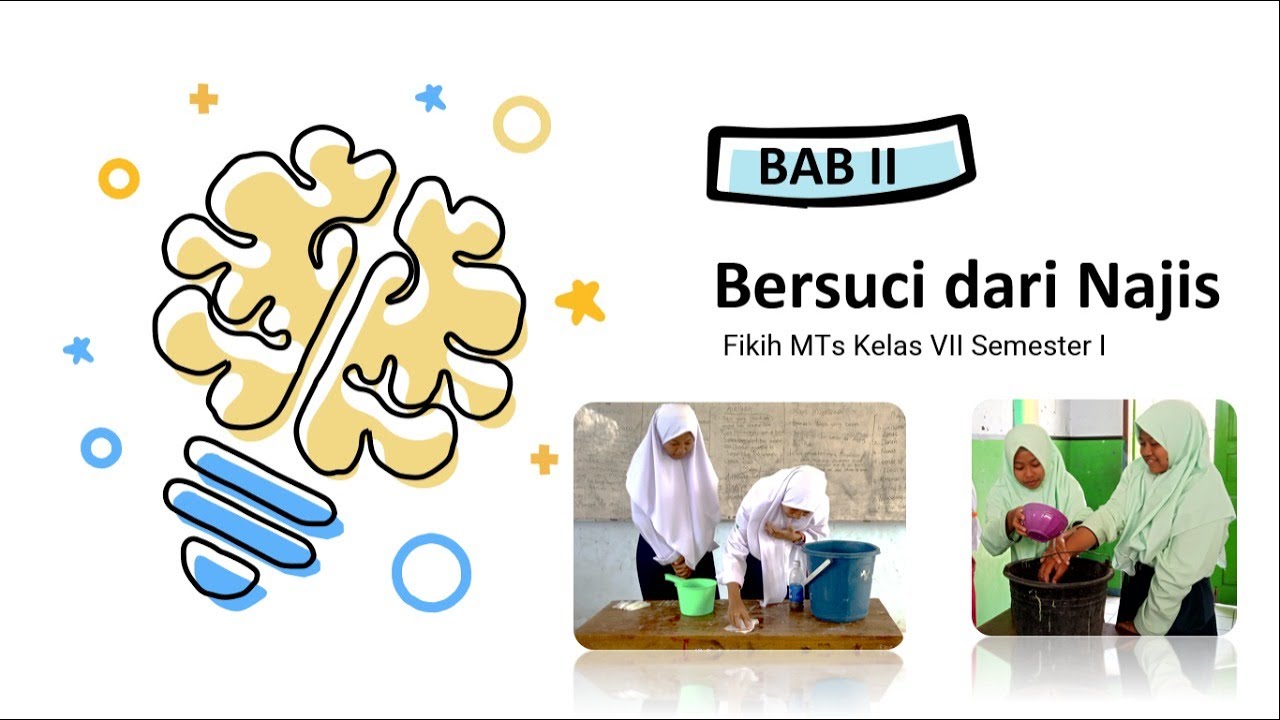
BAHAN AJAR BERBASIS VIDEO ANIMASI MATERI THAHARAH (BERSUCI) KELAS VII MTs
Summary
TLDRThis video script introduces the topic of Islamic teachings on purification (thaharah), starting with the importance of maintaining cleanliness and purity in daily life, particularly before engaging in acts of worship such as prayer. The lesson explores the concept of ritual purification from both minor and major impurities (hadas and najis), explaining the necessary procedures and the types of impurity. It covers essential practices like wudu (ablution) and tayammum (dry ablution), as well as the significance of water and other cleansing materials. The lesson emphasizes the link between faith and cleanliness, aiming to encourage viewers to learn and apply these practices in their lives.
Takeaways
- 😀 Thaharah (purification) is an essential concept in Islam that emphasizes cleanliness and purity before performing acts of worship such as prayer, reading the Quran, and tawaf.
- 😀 Maintaining cleanliness and purity is directly tied to faith, as Prophet Muhammad (PBUH) said, 'Purity is half of faith.'
- 😀 Fiqh (Islamic jurisprudence) places great importance on purification, with thaharah being the first topic in all fiqh books.
- 😀 The first step in purification is to ensure that one is free from both hadas (impurity) and najis (uncleanliness), which is necessary to perform acts of worship properly.
- 😀 The two types of impurity that Muslims must purify themselves from are hadas and najis, with hadas being divided into small and large categories.
- 😀 Hadas kecil (minor impurity) can be removed by performing wudu (ablution) or tayamum (dry ablution when water is unavailable).
- 😀 Hadas besar (major impurity) requires ghusl (ritual washing) or tayamum. It is caused by specific actions such as sexual relations, menstruation, or death.
- 😀 Najis (impurity) is anything deemed impure by Islamic law, and it includes substances like urine, feces, blood, and certain animals like dogs and pigs.
- 😀 There are different types of najis, categorized as najis mukhaffafah (light), najis mutawassitah (medium), and najis mughallazah (heavy), each with varying degrees of impurity.
- 😀 Islamic law emphasizes the importance of using water and other resources like dust (for tayamum) or stones (for istinja) to purify oneself when needed.
- 😀 The correct way to perform wudu involves a step-by-step process, including washing the hands, mouth, nose, face, arms, head, ears, and feet while reciting prayers to seek God's blessing.
Q & A
Why is the study of thaharah (purification) important in Islam?
-Thaharah is essential in Islam because it ensures that a person is in a state of physical and spiritual purity, which is necessary for performing acts of worship such as salat (prayer), reading the Quran, and tawaf during Hajj. Purity is linked to faith, as cleanliness is a sign of iman (belief).
What are the four goals for students in the lesson on thaharah?
-The four goals for students are: 1) To have a strong belief in the meaning of purification from hadas (impurity) and najis (ritual impurity). 2) To be able to perform purification correctly. 3) To understand the types of najis and how to purify them. 4) To understand the types of hadas and how to purify them.
Why is the chapter of thaharah placed before other topics like salat, zakat, or hajj in Islamic jurisprudence?
-Thaharah is placed first to emphasize the importance of cleanliness and purity in Islam. A person must be in a state of purity before engaging in worship, as acts like prayer, zakat, and Hajj require a purified body and environment.
What did Prophet Muhammad (PBUH) say about purity in relation to faith?
-The Prophet Muhammad (PBUH) said, 'Purity is half of faith.' This highlights the vital role that cleanliness plays in the practice of Islam, as it is intertwined with a Muslim's belief.
What is the meaning of thaharah in Islamic terms?
-Thaharah refers to the process of purification or cleansing from any form of hadas (impurity) and najis (ritual impurity) to enable one to perform acts of worship like salat, reading the Quran, or performing tawaf.
What are the two types of hadas mentioned in the script?
-The two types of hadas are: 1) Hadas kecil (minor impurity), which can be removed by performing wudu (ablution) or tayammum if water is unavailable. 2) Hadas besar (major impurity), which requires a full bath (mandi wajib) or tayammum if water is not available.
What causes hadas kecil, and how can it be purified?
-Hadas kecil can be caused by activities such as urinating, defecating, losing consciousness (due to sleep, intoxication, etc.), or physical contact between a non-mahram man and woman. It can be purified by performing wudu (ablution) or tayammum.
What are the different levels of najis in Islam?
-Najis (impurity) is categorized into three levels: 1) Najis mukhaffafah (light impurity), which includes the urine of a male baby under two years old. 2) Najis mutawassitah (medium impurity), which includes blood, pus, vomit, and intoxicants. 3) Najis mughallazah (severe impurity), which comes from animals like dogs and pigs.
What is tayammum, and when should it be used?
-Tayammum is a purification process performed by using dust or clean earth when water is unavailable or its use is harmful (due to illness). It serves as a substitute for wudu or mandi wajib when water cannot be used.
How should one perform wudu correctly?
-To perform wudu, one should: 1) Recite 'Bismillah' (in the name of Allah). 2) Wash the hands, including the wrists, three times. 3) Rinse the mouth and nose three times. 4) Wash the face three times. 5) Wash the arms up to the elbows three times. 6) Wipe the head and ears. 7) Wash the feet up to the ankles three times. Finally, recite the prayer after wudu.
Outlines

Cette section est réservée aux utilisateurs payants. Améliorez votre compte pour accéder à cette section.
Améliorer maintenantMindmap

Cette section est réservée aux utilisateurs payants. Améliorez votre compte pour accéder à cette section.
Améliorer maintenantKeywords

Cette section est réservée aux utilisateurs payants. Améliorez votre compte pour accéder à cette section.
Améliorer maintenantHighlights

Cette section est réservée aux utilisateurs payants. Améliorez votre compte pour accéder à cette section.
Améliorer maintenantTranscripts

Cette section est réservée aux utilisateurs payants. Améliorez votre compte pour accéder à cette section.
Améliorer maintenant


5.0 / 5 (0 votes)

