Bagaimana Mata Bisa Melihat? (animasi Indonesia vers)
Summary
TLDRThis video explains how the human eye works, from the cornea to the retina. It describes the functions of key parts such as the iris, pupil, lens, and retina in the process of vision. The video also includes a simple experiment to demonstrate how the lens focuses light on objects at different distances. The light is converted into a signal and sent to the brain, which processes the image, allowing us to see. This educational guide offers an engaging way to understand the anatomy and function of the eye.
Takeaways
- 😀 Eyes allow us to see the world because God gave us a pair of eyes.
- 😀 The eye works like a camera lens, letting light into the eye to help us see.
- 😀 The cornea is the transparent surface of the eye that allows light to enter.
- 😀 The iris, a circular structure, regulates the amount of light entering the eye and gives color to the iris.
- 😀 The pupil adjusts to control how much light enters the eye, shrinking in bright light and expanding in dim light.
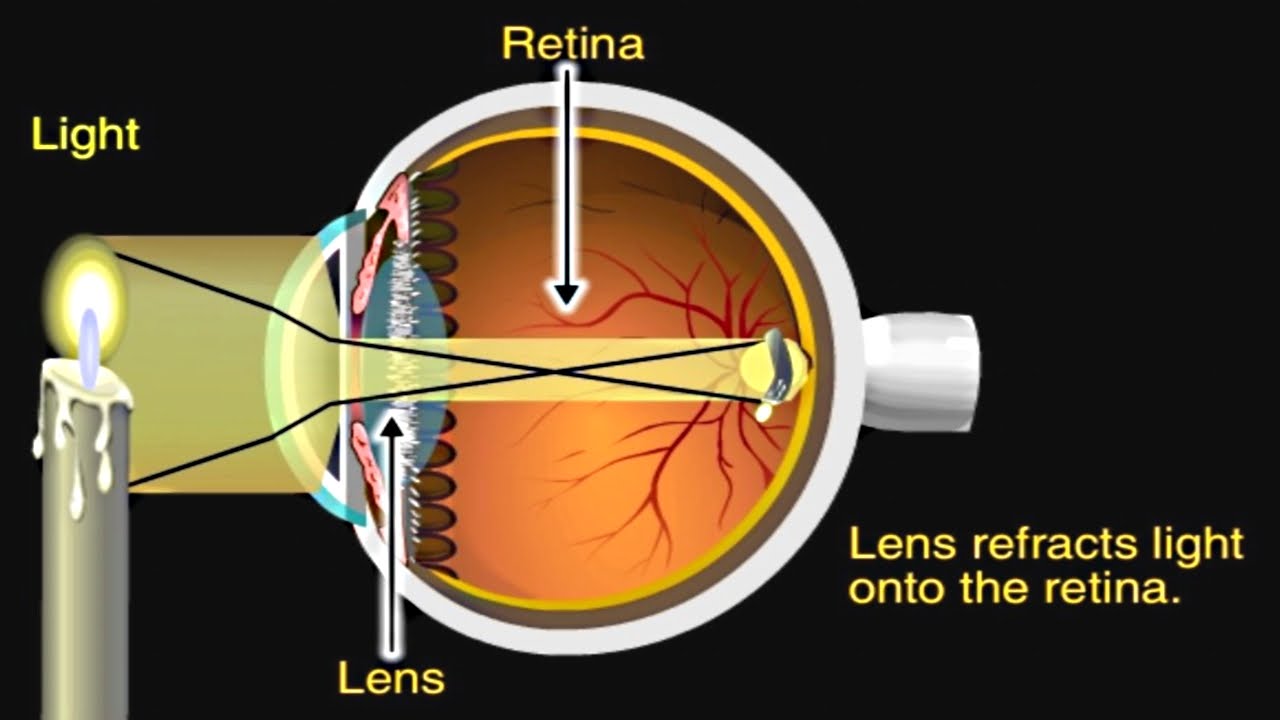
- 😀 The lens focuses the light entering the eye onto the retina, allowing us to see clearly.
- 😀 A demonstration shows how the lens works to focus or blur vision based on the object's distance from the eye.
- 😀 The retina receives light and forms an inverted image that is sent to the brain as a nerve signal.
- 😀 The brain processes the signal from the retina, reversing the image and allowing us to see it correctly.
- 😀 The entire process of seeing involves multiple structures working together to convert light into a visual signal for the brain.
- 😀 The video explains the crucial role of each part of the eye in helping us perceive the world around us.
Q & A
What is the purpose of our eyes?
-Our eyes are designed to help us see, allowing us to perceive colors, shapes, and even videos. They play a crucial role in vision by receiving light and sending signals to the brain.
What is the cornea and what role does it play in vision?
-The cornea is the clear surface of the eye that functions as the first point of contact for incoming light. It helps to focus light as it enters the eye.
How does the iris contribute to vision?
-The iris is a circular structure in the eye that controls the amount of light entering. It also determines the color of the eye. It works by adjusting the size of the pupil depending on the amount of light.
What is the function of the pupil?
-The pupil is the black, round opening in the center of the iris. It regulates the amount of light entering the eye. In bright light, the pupil constricts to reduce light, while in dim light, it dilates to allow more light in.
What is the lens of the eye responsible for?
-The lens helps to focus light onto the retina. It adjusts its shape depending on the distance of objects, which allows us to focus on both near and distant objects.
Can you explain the pencil experiment mentioned in the script?
-In the experiment, closing one eye and bringing a pencil closer to the open eye demonstrates how the lens works. As the pencil gets closer, the image becomes blurry. This illustrates how the lens focuses light depending on the distance of an object.
What happens when the lens focuses light?
-When the lens focuses light, it directs the light toward the retina, where it forms an image that is inverted and reduced in size.
What is the role of the retina in vision?
-The retina is responsible for converting the incoming light into nerve signals. These signals are then sent to the brain via the optic nerve, where they are processed into a clear image.
Why is the image formed on the retina inverted and reduced in size?
-The image on the retina is inverted and reduced because of the way light is focused by the lens. This is a natural result of the optical processes that occur in the eye.
How does the brain help us see after the retina receives the light signals?
-Once the retina sends the light signals to the brain, the brain processes these signals, reconstructing the image in its correct orientation and size, allowing us to perceive what we are looking at.
Outlines

Cette section est réservée aux utilisateurs payants. Améliorez votre compte pour accéder à cette section.
Améliorer maintenantMindmap

Cette section est réservée aux utilisateurs payants. Améliorez votre compte pour accéder à cette section.
Améliorer maintenantKeywords

Cette section est réservée aux utilisateurs payants. Améliorez votre compte pour accéder à cette section.
Améliorer maintenantHighlights

Cette section est réservée aux utilisateurs payants. Améliorez votre compte pour accéder à cette section.
Améliorer maintenantTranscripts

Cette section est réservée aux utilisateurs payants. Améliorez votre compte pour accéder à cette section.
Améliorer maintenantVoir Plus de Vidéos Connexes

Eye Dissection || The Eyes Have It [EDU]

Cahaya dan Alat Optik: Indra Penglihatan Manusia (Bagian-Bagian Mata) - SMP Kelas 8 | Part 1
How the Eye Works Animation - How Do We See Video - Nearsighted & Farsighted Human Eye Anatomy

Anatomia do Olho - Como Funciona o Olho Humano

How the Eye Works

Parts of the eye | Human eye & the colourful world | Khan Academy
5.0 / 5 (0 votes)

