The Final Stages of Vocal Mixing - How to Compete with a Pro Vocal Mix
Summary
TLDRIn this video, the creator shares advanced techniques for achieving a professional vocal mix. They explore setting ideal vocal loudness, backed by research, showing how to balance vocals and instruments. The video also covers frequency-specific side-chain expansion, a method to retain vocal clarity even in busier parts of a song. Additionally, the benefits of amplifying critical vocal bands are discussed to reduce masking and enhance the mix. The sponsor, Mono, is highlighted, showcasing their PD200W hybrid microphone, which is praised for its high-quality sound and versatility in both wired and wireless recording setups.
Takeaways
- 😀 Setting the ideal vocal loudness is crucial, and research shows that vocals should typically match the combined loudness of all other instrumentation.
- 😀 To check vocal loudness, send all vocal tracks to one bus and all instrumental tracks to another, then compare the integrated LUFS levels to ensure they match.
- 😀 Mono's PD200W Hybrid mic impresses with its sound quality and functionality, offering both XLR and USB recording options, plus wireless adapters.
- 😀 The PD200W Hybrid also includes noise cancellation functions, making it a solid choice for high-quality dialogue recording on the go.
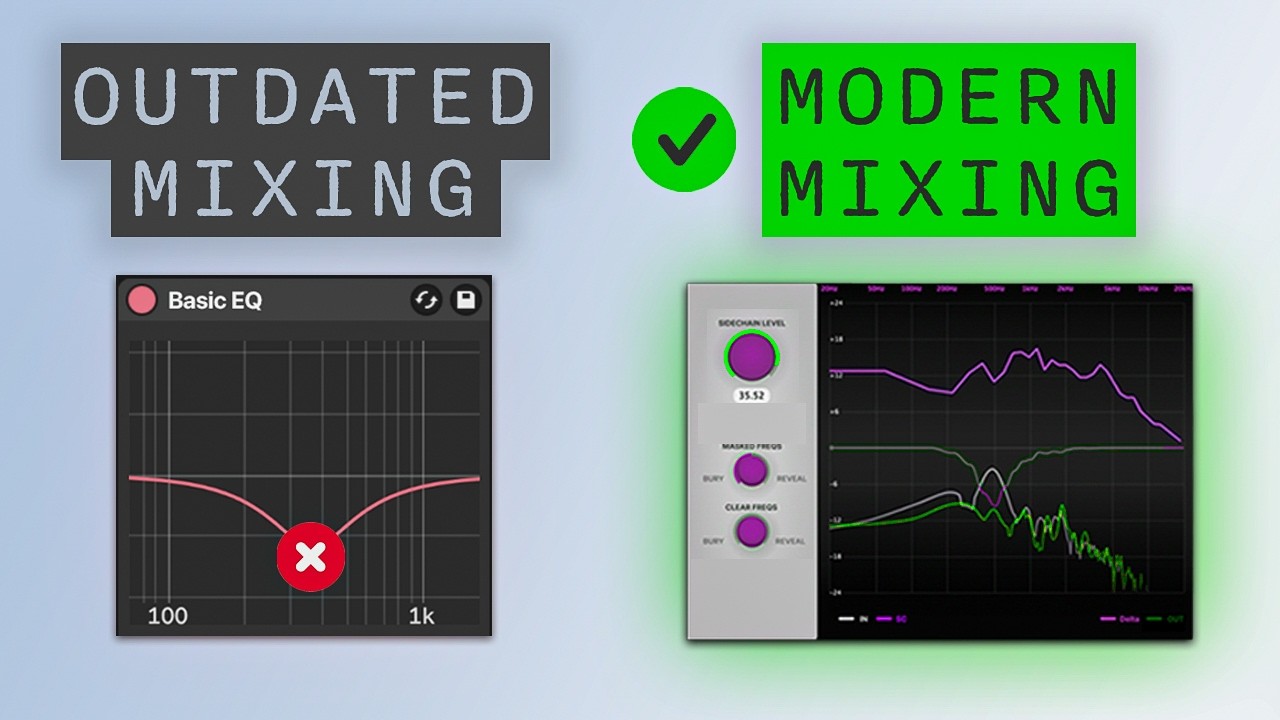
- 😀 Frequency-specific side chain expansion can prevent vocals from getting buried in busy sections of a track, maintaining clarity even during choruses.
- 😀 Dynamic EQ can be used to expand the vocal’s third formant, typically between 2-5 kHz, to ensure it cuts through the mix when more instruments are introduced.
- 😀 Masking of vocals by other instruments can be reduced by amplifying the vocal’s third formant when the instrumental volume increases.
- 😀 The 'critical bands' (or 'bark bands') in a vocal are important for clarity, and amplifying these frequencies can reduce masking and enhance the vocal’s presence.
- 😀 A 1/3 octave filter can be used to amplify or attenuate critical bands, with adjustments often made around the 250 Hz and 2-5 kHz ranges depending on the vocal performance.
- 😀 For the best results, experiment with dynamic EQ settings and use multiband processors to address specific vocal frequency ranges, particularly in busier sections of the song.
- 😀 Sage Audio offers mastering services with a free revision process, ensuring that the final mix meets the artist's expectations before final delivery.
Q & A
What is the main focus of the video?
-The video focuses on techniques for improving vocal mixing to achieve professional-level vocal clarity in complex mixes.
Why is setting the ideal vocal loudness important in mixing?
-Setting the ideal vocal loudness is important because research shows that vocals should be equally loud as the rest of the instrumental mix, which is a common practice in professionally mixed songs.
How can you check if your vocal loudness is correctly set?
-You can check vocal loudness by sending the vocals and its doubles to one bus, and all the instrumental tracks to another. Then, compare their loudness using an LUFS meter.
What does LUFS stand for, and why is it important?
-LUFS stands for Loudness Units relative to Full Scale. It's important because it measures the perceived loudness of audio and helps ensure that the vocal's loudness is balanced with the rest of the mix.
How does frequency-specific sidechain expansion help improve vocal clarity?
-Frequency-specific sidechain expansion helps maintain vocal clarity by expanding the vocal's third formant whenever it is masked by other instrumental frequencies, especially during busier sections of a song.
What is the third formant, and why is it important for vocal clarity?
-The third formant is a cluster of higher frequencies between 2 to 5 kHz responsible for vocal clarity. It's important because if these frequencies are masked by other instruments, the vocal can become hard to hear or sound muddled.
What is a dynamic EQ, and how is it used in the sidechain expansion technique?
-A dynamic EQ is an equalizer that adjusts frequencies based on signal levels. In sidechain expansion, it's used to dynamically boost specific frequencies of the vocal when certain frequencies from the instrumental are loud enough to mask the vocal.
What is the Mono PD200W Hybrid microphone, and what makes it unique?
-The Mono PD200W Hybrid is a versatile microphone with both XLR and USB outputs, and wireless recording capabilities. It includes a built-in microphone and headphone amplifier, providing high-quality sound for various recording scenarios.
What are critical bands (or bark bands), and how do they relate to vocal mixing?
-Critical bands, also known as bark bands, are specific frequency ranges that are easier for our ears to distinguish from others. In mixing, amplifying these critical bands can reduce masking and improve vocal presence in a track.
How can adjusting the critical bands improve the overall vocal mix?
-Adjusting critical bands can improve the vocal mix by amplifying or attenuating specific frequencies where the vocal's clarity resides, making it stand out more clearly in the mix and reducing overlap with other instruments.
Outlines

Cette section est réservée aux utilisateurs payants. Améliorez votre compte pour accéder à cette section.
Améliorer maintenantMindmap

Cette section est réservée aux utilisateurs payants. Améliorez votre compte pour accéder à cette section.
Améliorer maintenantKeywords

Cette section est réservée aux utilisateurs payants. Améliorez votre compte pour accéder à cette section.
Améliorer maintenantHighlights

Cette section est réservée aux utilisateurs payants. Améliorez votre compte pour accéder à cette section.
Améliorer maintenantTranscripts

Cette section est réservée aux utilisateurs payants. Améliorez votre compte pour accéder à cette section.
Améliorer maintenant


5.0 / 5 (0 votes)

