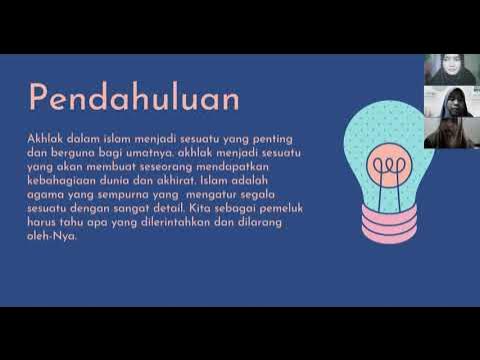
Hari ke 1 : Ust Apit Saparudin SMPN 3 Purwakarta Bab Al Akhlaq
Summary
TLDRThis sermon emphasizes the importance of good character (akhlak) in Islam, highlighting its role in achieving happiness in both this world and the hereafter. The speaker uses references from the Quran and Hadith to explain how good manners, respect for parents, and kindness toward others are crucial for a fulfilling life. The sermon also connects the practice of fasting during Ramadan with the development of good character, reminding listeners that akhlak is central to achieving Allah's approval and entering paradise. Practical advice is given on how to cultivate these virtues, even in challenging situations.
Takeaways
- 😀 Good character (akhlak) is the key to happiness in both this world and the hereafter.
- 😀 Allah will be pleased with those who possess good character, and their families and communities will love them.
- 😀 Bad character leads to misery, as it results in Allah's anger and rejection by others.
- 😀 Akhlak is not something that comes naturally; it must be cultivated from a young age through consistent practice.
- 😀 The teachings emphasize that the foundation of happiness lies in good manners and etiquette, starting from childhood.
- 😀 The importance of respecting and obeying parents, even when disagreeing with them, is highlighted through Islamic teachings.
- 😀 When interacting with others, it’s crucial to maintain kindness and gentleness, especially when discussing differences of opinion.
- 😀 According to the Prophet Muhammad (saw), the most important factors that lead to entry into paradise are piety (taqwa) and good character.
- 😀 A believer with good character can attain a higher rank than those who engage in fasting and night prayers.
- 😀 During Ramadan, fasting serves as a training tool to refine one's character and develop a closer relationship with Allah.
Q & A
What is the main theme of the script?
-The main theme of the script is the importance of good character (akhlaq) in Islam, particularly in how it leads to happiness in both this world and the hereafter. The script also emphasizes the connection between good character and the teachings of Prophet Muhammad (peace be upon him).
What does the speaker say about the relationship between good character and happiness?
-The speaker explains that good character is a key factor in achieving happiness both in this world (dunya) and the hereafter (akhirah). Those who have good character are loved by others, including their families, and are also rewarded with Allah's pleasure.
How does the speaker describe bad character?
-Bad character is described as a source of misery in both this world and the hereafter. People with bad character are disliked by others and incur the anger of Allah. They live in dishonor and are often isolated from others.
What did the speaker mention about the process of cultivating good character?
-Cultivating good character is a gradual process. It requires training from a young age, such as practicing good manners, being honest, patient, and respectful. Initially, it may be challenging, but with persistence, these qualities become habits that are easier to perform.
What does the speaker say about the role of the Ramadan fast in developing good character?
-The speaker emphasizes that the fasting during Ramadan helps to cultivate good character by fostering taqwa (God-consciousness), which is linked to the development of good behavior. Fasting serves as a means to purify oneself and improve one's character.
How does the speaker explain the connection between faith and good character?
-The speaker refers to a hadith where Prophet Muhammad (peace be upon him) states that the best of the believers are those who have the best character. A person with good character is seen as having the most complete and perfect faith.
What advice does the speaker give when it comes to dealing with parents, especially when there is a disagreement?
-The speaker advises to always speak kindly and respectfully to parents, even when disagreeing with them. It is important to maintain a soft tone and avoid raising one's voice. The speaker quotes the Quranic verse from Surah Al-Isra, which forbids harsh words and behavior toward parents.
What does the speaker say about the impact of mocking or laughing at others?
-The speaker warns against mocking or laughing at others, as it is a form of bad character. Even if one does not directly make fun of someone, laughing at others' misfortunes or weaknesses is considered unacceptable and goes against the teachings of good manners.
How does the speaker suggest we can practice good character from a young age?
-The speaker suggests that children should be taught good manners and respect from an early age. They should be encouraged to practice kindness, honesty, and politeness, which will help them develop good character as they grow older.
What is the significance of the Quranic verses and hadiths mentioned in the script?
-The Quranic verses and hadiths mentioned in the script serve to support the idea that good character is a key aspect of being a successful Muslim. The references to Surah As-Syam and the teachings of Prophet Muhammad (peace be upon him) highlight the importance of character and the connection between taqwa, good behavior, and success in the hereafter.
Outlines

Cette section est réservée aux utilisateurs payants. Améliorez votre compte pour accéder à cette section.
Améliorer maintenantMindmap

Cette section est réservée aux utilisateurs payants. Améliorez votre compte pour accéder à cette section.
Améliorer maintenantKeywords

Cette section est réservée aux utilisateurs payants. Améliorez votre compte pour accéder à cette section.
Améliorer maintenantHighlights

Cette section est réservée aux utilisateurs payants. Améliorez votre compte pour accéder à cette section.
Améliorer maintenantTranscripts

Cette section est réservée aux utilisateurs payants. Améliorez votre compte pour accéder à cette section.
Améliorer maintenantVoir Plus de Vidéos Connexes


5.0 / 5 (0 votes)

