"La Persistenza della Memoria", Salvador Dalí, 1931 (Storia dell'Arte)
Summary
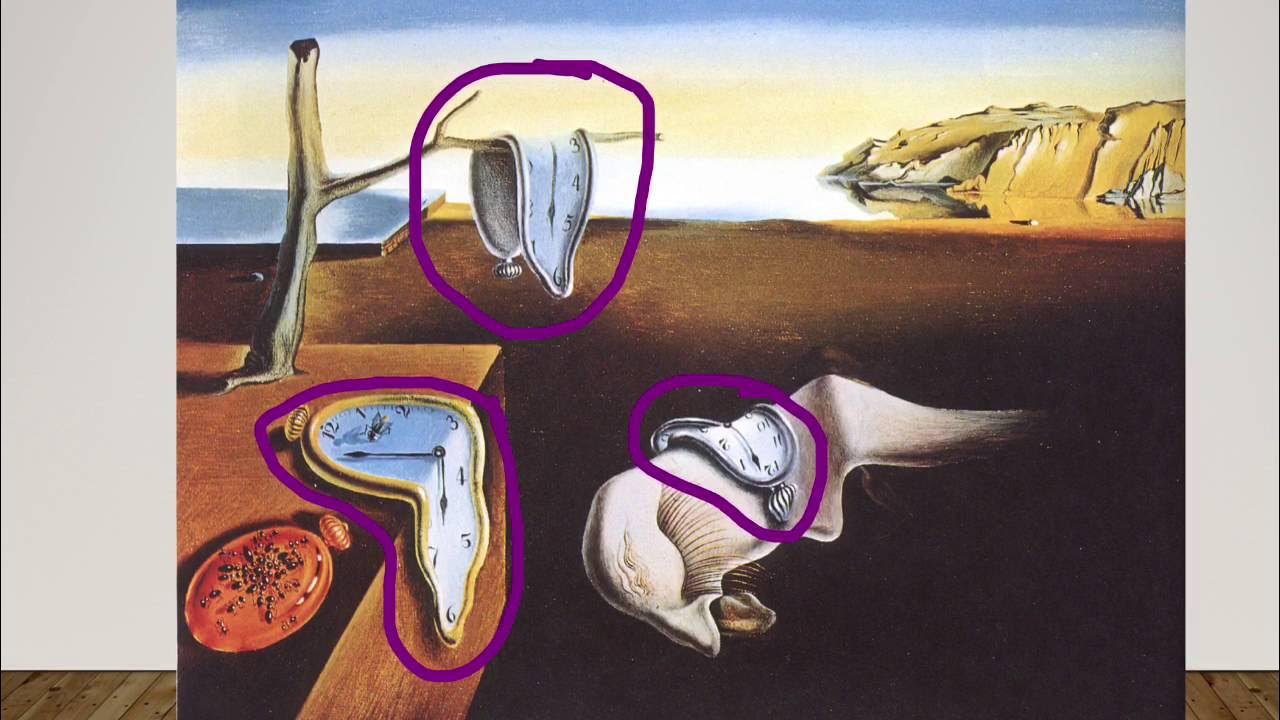
TLDRThis video explores Salvador Dalí's iconic 1931 painting, *The Persistence of Memory*. The artwork is a reflection on the subjectivity of time, featuring melting clocks that challenge the fixed nature of time perception. Dalí's inspiration came from a migraine and a piece of camembert cheese, leading to a vision of soft clocks draped over objects in a desolate landscape. The painting conveys the malleability of time, influenced by the mind and dreams rather than the laws of physics. Additionally, the video discusses the symbolic use of ants and Dalí's personal connection to them. The painting's title was given by a collector, not Dalí himself.
Takeaways
- 😀 Salvador Dalí's 'The Persistence of Memory' is a famous 1931 oil painting, measuring 24x33 cm, currently housed at the Museum of Modern Art (MoMA) in New York.
- 😀 Dalí's inspiration for the painting came from a severe migraine, which led him to reflect on the soft, melting cheese he was eating at the time.
- 😀 The scene depicts a desolate landscape with a dried-up olive tree, a rocky formation, and several iconic melting clocks.
- 😀 Dalí created the painting in just two hours, finishing it before his wife returned from the cinema, marking its rapid creation into a famous masterpiece.
- 😀 The painting features a unique and unsettling creature that appears to be a closed eye, with long eyebrows and a tongue resting on the ground.
- 😀 The clocks in the painting are symbolic, illustrating the malleability and subjectivity of time, as time is perceived differently by individuals and is often fleeting or endless.
- 😀 One clock drips over the edge of the parallelepiped (a rectangular solid object), and another hangs from the single branch of the olive tree.
- 😀 A fourth clock, without a visible face, is covered in ants, a symbol of decay and death in Dalí's works, linked to his childhood fear of ants.
- 😀 The painting reflects the concept of time as subjective, based on perception rather than physical laws, aligning with the theory of relativity proposed by Albert Einstein.
- 😀 Dalí's original title for the painting was 'The Soft Watches,' but it was later renamed 'The Persistence of Memory' by art dealer Giulia Lady after acquiring it in 1932.
Q & A
What is the title of Salvador Dalí's famous 1931 painting?
-The title of the painting is *La Persistenza della Memoria* (The Persistence of Memory).
Where is *La Persistenza della Memoria* currently housed?
-The painting is currently housed at the Museum of Modern Art (MoMA) in New York.
What inspired Dalí to create *La Persistenza della Memoria*?
-Dalí was inspired by a migraine headache and his inability to accompany his wife to the cinema. He was reflecting on a piece of camembert cheese that appeared 'too moldy,' which led him to envision the melting clocks.
How long did it take Dalí to complete *La Persistenza della Memoria*?
-Dalí completed the painting in just two hours.
What is the symbolic meaning of the melting clocks in the painting?
-The melting clocks symbolize the fluid and subjective nature of time, challenging traditional ideas of fixed, measurable time.
What is the significance of the insects, particularly ants, in Dalí's work?
-The ants represent decay, death, and Dalí's own complex relationship with sexuality. Dalí had a deep fear of ants, which stemmed from his childhood memories.
What famous quote by Albert Einstein is referenced in relation to *La Persistenza della Memoria*?
-The quote referenced is: 'When a man sits two hours with a beautiful girl, it seems like a minute; but let him sit on a hot stove for a minute, and it seems like two hours.' This reflects the relativity of time, which is a central theme in Dalí's painting.
Why is *La Persistenza della Memoria* also known as 'The Soft Watches'?
-The painting was initially referred to as 'The Soft Watches' because of the soft, melting nature of the clocks depicted in the work.
Who gave *La Persistenza della Memoria* its current title?
-The painting was given its current title, *La Persistenza della Memoria*, by the collector Giulia Lady, who acquired the painting in 1932.
How did Dalí describe the atmosphere of the landscape in *La Persistenza della Memoria*?
-Dalí described the landscape as desolate and devoid of vegetation. The scene is dominated by a barren environment with an eerie, dreamlike quality.
Outlines

Cette section est réservée aux utilisateurs payants. Améliorez votre compte pour accéder à cette section.
Améliorer maintenantMindmap

Cette section est réservée aux utilisateurs payants. Améliorez votre compte pour accéder à cette section.
Améliorer maintenantKeywords

Cette section est réservée aux utilisateurs payants. Améliorez votre compte pour accéder à cette section.
Améliorer maintenantHighlights

Cette section est réservée aux utilisateurs payants. Améliorez votre compte pour accéder à cette section.
Améliorer maintenantTranscripts

Cette section est réservée aux utilisateurs payants. Améliorez votre compte pour accéder à cette section.
Améliorer maintenantVoir Plus de Vidéos Connexes


5.0 / 5 (0 votes)

