Latihan Elliott Wave SEKARANG !!! Ada 12 soal
Summary
TLDRThis video tutorial dives into the intricacies of Elliott Wave Theory, focusing on how to count and analyze market waves using technical analysis. It covers essential rules, including the behavior of waves 1 through 5, and the importance of applying Fibonacci tools, momentum analysis, and trend indicators. The content also highlights the subjective nature of wave counting and presents multiple methods for counting waves, stressing the need to combine these methods with other technical strategies like support and resistance analysis. The video includes various exercises and real-world examples to help viewers grasp wave counting in practice.
Takeaways
- 😀 Understanding the basics of technical analysis is essential before diving into advanced topics like wave counting and Fibonacci.
- 😀 Wave counting follows strict rules, such as Wave 2 never crossing below the start of Wave 1, and Wave 3 cannot be the shortest wave.
- 😀 In impulsive waves, Wave 4 must not enter the area of Wave 1, whereas in diagonal waves, Wave 4 always enters Wave 1's area.
- 😀 The method of counting waves can vary based on subjective interpretation, as long as it doesn’t violate the core rules.
- 😀 Combining different methods of analysis, such as Fibonacci, momentum analysis, and fundamental analysis, enhances the accuracy of wave counting.
- 😀 Subjectivity in wave counting means there can be multiple valid interpretations, yet the projected direction of the market remains consistent across methods.
- 😀 To accurately count waves, always ensure you're familiar with the key rules of the Elliott Wave Theory, including the properties of impulsive and diagonal waves.
- 😀 Wave counting in practice involves reviewing multiple scenarios and testing different possibilities, such as counting patterns like ABC or diagonal formations.
- 😀 Understanding complex patterns like triangles and flat corrections is essential for interpreting wave structures correctly.
- 😀 Analysis of market trends should be combined with multiple approaches (e.g., Fibonacci, supply/demand, volume analysis) to confirm wave patterns and improve decision-making.
Q & A
What is the first step recommended before starting the wave analysis?
-The first step is to master the basics of technical analysis. Beginners are advised to first understand fundamental technical analysis concepts before attempting the wave counting exercises.
What tools are suggested to assist in wave analysis?
-The suggested tools include Fibonacci for retracement analysis, momentum indicators, trend indicators, and fundamental information to confirm analysis.
What are the five mandatory rules in wave counting according to the video?
-The five mandatory rules are: 1) Wave 2 cannot go below the start of Wave 1, 2) Wave 3 cannot be the shortest among Waves 1, 3, and 5, 3) In impulsive waves, Wave 4 cannot enter Wave 1's area, 4) In diagonal waves, Wave 4 always enters Wave 1's area, 5) Wave 3 cannot be a diagonal; only Waves 1 and 5 can be diagonals.
What is meant by the 'subjective nature' of wave counting?
-The subjective nature refers to the fact that multiple wave counts can be valid for the same chart, as long as they do not violate the mandatory rules. Different analysts may count waves differently while arriving at similar projections.
How does the video suggest handling situations where multiple wave counts are possible?
-It suggests combining wave analysis with other methods like Fibonacci, support/resistance levels, momentum indicators, volume analysis, and fundamental analysis to increase confidence in projections.
What types of wave patterns are practiced in the exercises?
-The exercises include impulsive waves, diagonal waves, flat corrections (ABC 335), triangles, complex corrections (WXY, WXYXZ), and other complex corrective structures.
Why is logarithmic scale recommended for chart analysis?
-A logarithmic scale is recommended because it better visualizes the waves across different price levels, making it easier to accurately count the waves compared to using a regular scale.
What is the purpose of the 20-second counting exercises?
-The 20-second exercises are designed to train viewers to quickly identify and count wave patterns on charts, practicing both impulsive and corrective structures.
What is the role of practice with real market data like IHSG in wave analysis?
-Practicing with real market data allows viewers to apply counting techniques to actual charts, understand wave structures in live conditions, and combine them with other analysis methods for better decision-making.
What should viewers do if they want their wave counting to be checked or corrected?
-Viewers can submit their wave counting results to the Discord community for review or feedback. Joining the Discord channel and sharing screenshots allows for collaborative correction and learning.
Why is it important to combine wave analysis with other analytical methods?
-Because wave analysis alone is subjective, combining it with Fibonacci levels, supply-demand zones, momentum, volume, or fundamental data helps validate wave projections and improves the reliability of trading decisions.
Outlines

Esta sección está disponible solo para usuarios con suscripción. Por favor, mejora tu plan para acceder a esta parte.
Mejorar ahoraMindmap

Esta sección está disponible solo para usuarios con suscripción. Por favor, mejora tu plan para acceder a esta parte.
Mejorar ahoraKeywords

Esta sección está disponible solo para usuarios con suscripción. Por favor, mejora tu plan para acceder a esta parte.
Mejorar ahoraHighlights

Esta sección está disponible solo para usuarios con suscripción. Por favor, mejora tu plan para acceder a esta parte.
Mejorar ahoraTranscripts

Esta sección está disponible solo para usuarios con suscripción. Por favor, mejora tu plan para acceder a esta parte.
Mejorar ahoraVer Más Videos Relacionados
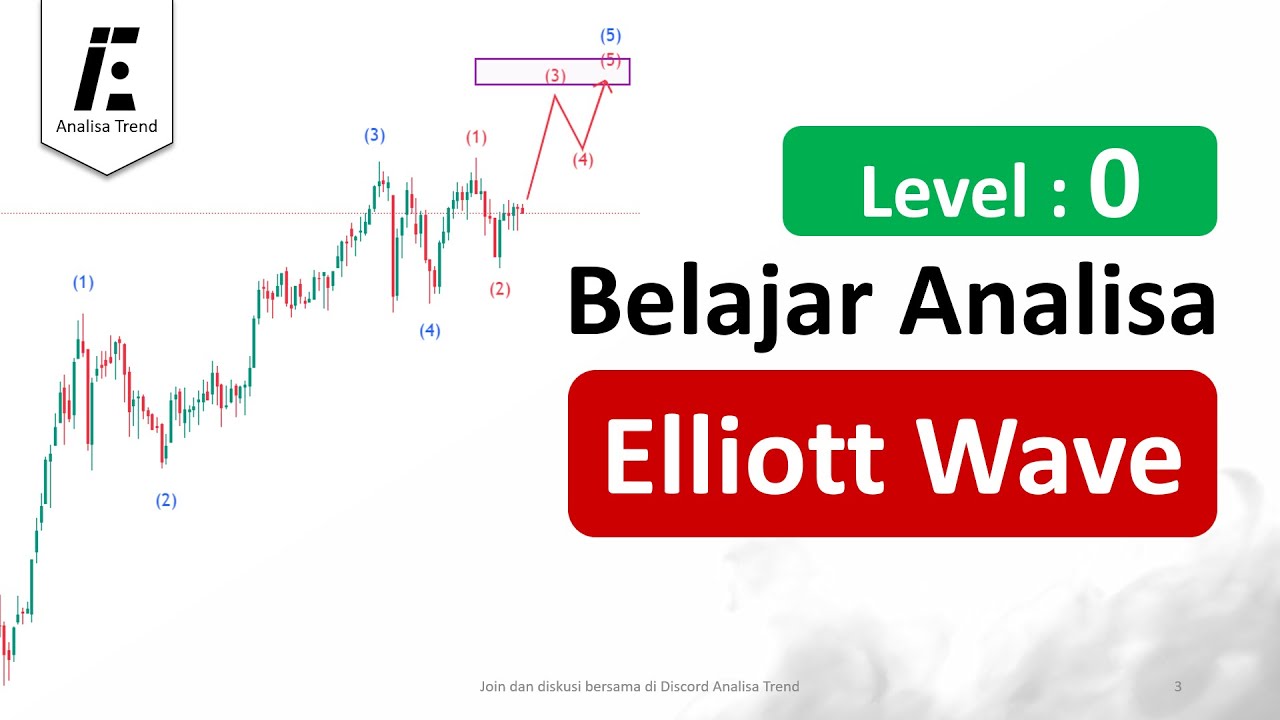
Belajar Analisa Elliott Wave level 0 | mengenal elliott wave

Elliott Waves & Fibonacci Retracement / Extension - Ep. 38 | Trading MasterClass 2.0

🔴 Most Effective "ELLIOT WAVE and FIBONACCI" Price Action Trading Strategy (Wave Trading Explained)

Teori elliott wave yang wajib diketahui trader pemula

Elliott Wave Part 3 || Strategi Analisa

How to use Elliott Wave with Fibonacci
5.0 / 5 (0 votes)

