Pesawat sederhana : katrol dan roda berporos
Summary
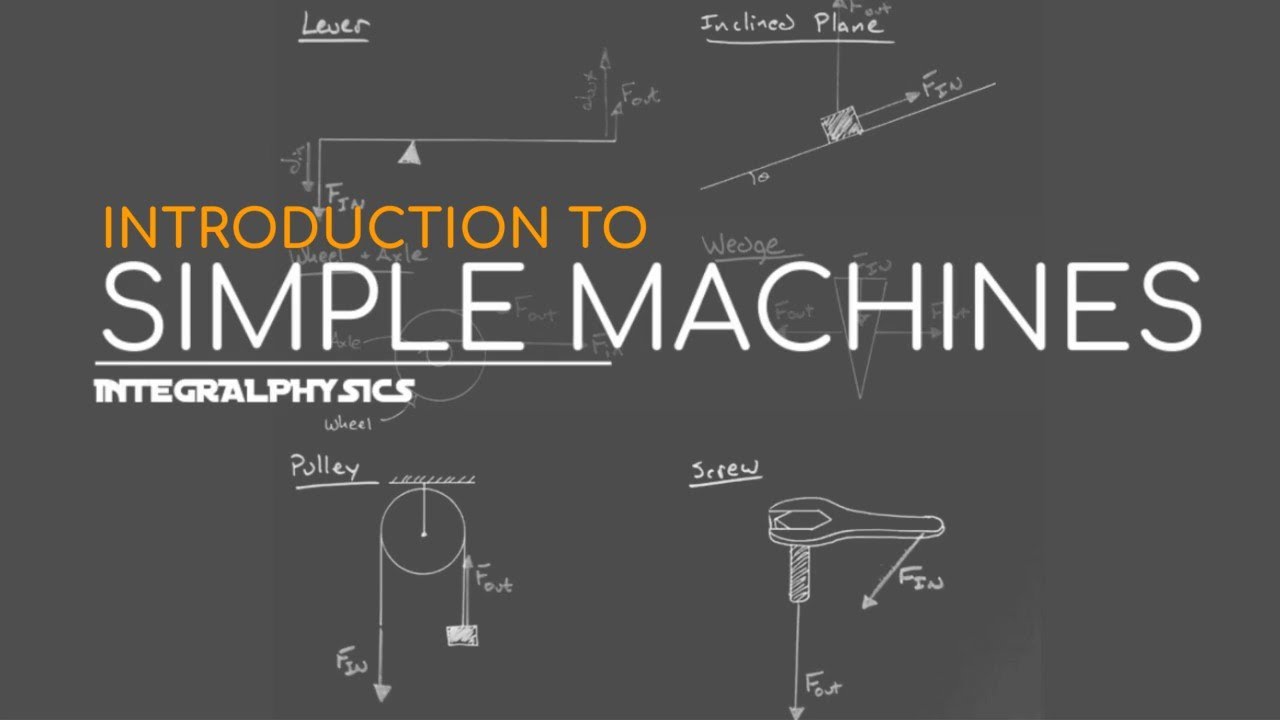
TLDRIn this educational video, the host explores the concept of simple machines, focusing on pulleys and wheel-axle systems. It discusses the three types of pulleys: fixed, movable, and compound, explaining how each reduces the effort needed to lift heavy objects. The video illustrates real-world applications, such as water wells and shipping containers, showing how these systems work to make tasks easier. The wheel-axle mechanism is also covered, highlighting its use in devices like bicycles. Viewers are encouraged to like, share, and subscribe for more scientific insights.
Takeaways
- 😀 Simple machines are tools that help make work easier by changing the direction or amount of force required.
- 😀 Examples of simple machines in daily life include scissors, plows, and pulleys.
- 😀 Pulleys are used to lift or move heavy objects, with three main types: fixed, movable, and compound.
- 😀 A **fixed pulley** changes the direction of force but does not reduce the amount of force needed (Mechanical Advantage = 1).
- 😀 A **movable pulley** reduces the amount of force needed by providing a mechanical advantage of 2 (Force needed is halved).
- 😀 A **compound pulley** is a combination of fixed and movable pulleys, and its mechanical advantage depends on the number of ropes supporting the load.
- 😀 When using a **fixed pulley**, the force needed to lift an object is equal to its weight (e.g., 100 N weight = 100 N force).
- 😀 With a **movable pulley**, the force needed to lift the same weight is halved (e.g., 100 N weight = 50 N force).
- 😀 **Compound pulleys** allow further reduction in force needed to lift an object, as more ropes provide additional mechanical advantage.
- 😀 **Wheels with axles** reduce the force needed to turn or move objects, such as in bicycles, where the wheel provides force and the axle receives it.
Q & A
What is a simple machine?
-A simple machine is a device that helps perform tasks with less effort by changing the direction or amount of force applied. Examples include scissors, pulleys, and levers.
What are the four types of simple machines discussed in the script?
-The four types of simple machines discussed are pulleys, wheels and axles, inclined planes, and levers.
What is a fixed pulley, and how does it work?
-A fixed pulley is a type of pulley that does not move; it remains in place while the load is lifted. An example is a pulley used in a well to draw water.
How does a movable pulley differ from a fixed pulley?
-A movable pulley can move along with the load, making it easier to lift heavier objects. The mechanical advantage of a movable pulley is 2, meaning it requires less force to lift the same weight.
What is a compound pulley?
-A compound pulley is a combination of both fixed and movable pulleys. The mechanical advantage of a compound pulley depends on the number of ropes supporting the load.
How does the mechanical advantage of a compound pulley change?
-The mechanical advantage of a compound pulley increases with the number of ropes supporting the load. For example, if four ropes support the load, the mechanical advantage would be 4.
What is the formula for calculating the force needed to lift an object using a pulley system?
-The formula is F = W / MA, where F is the force needed, W is the weight of the object, and MA is the mechanical advantage.
What is the mechanical advantage of a fixed pulley?
-The mechanical advantage of a fixed pulley is 1, meaning the force required to lift an object is equal to the weight of the object.
How does the force required to lift an object change with different types of pulleys?
-The force required to lift an object decreases as the mechanical advantage increases. For example, with a fixed pulley, the force needed is equal to the weight of the object, but with a movable pulley, the force required is halved.
What is an example of the application of a wheel and axle in daily life?
-An example of the application of a wheel and axle is a bicycle. The large wheel acts as the force applied, while the small axle serves to move the bike forward with less effort.
Outlines

Esta sección está disponible solo para usuarios con suscripción. Por favor, mejora tu plan para acceder a esta parte.
Mejorar ahoraMindmap

Esta sección está disponible solo para usuarios con suscripción. Por favor, mejora tu plan para acceder a esta parte.
Mejorar ahoraKeywords

Esta sección está disponible solo para usuarios con suscripción. Por favor, mejora tu plan para acceder a esta parte.
Mejorar ahoraHighlights

Esta sección está disponible solo para usuarios con suscripción. Por favor, mejora tu plan para acceder a esta parte.
Mejorar ahoraTranscripts

Esta sección está disponible solo para usuarios con suscripción. Por favor, mejora tu plan para acceder a esta parte.
Mejorar ahora




5.0 / 5 (0 votes)

