[FISIKA] Efek Compton
Summary
TLDRThis video explains the Compton Effect, a key concept in physics that describes how high-energy photons (like X-rays) scatter off electrons, transferring some of their energy in the process. The effect is demonstrated with an example using the Compton wavelength shift formula to calculate changes in photon wavelength based on scattering angles. The video also touches on how Compton’s work helped in understanding cosmic phenomena, such as the Big Bang, galaxy collisions, and black holes. It concludes by solving a problem to determine the wavelength of a photon after scattering at a 60° angle.
Takeaways
- 😀 The Compton Effect is a physics concept that explains the scattering of electrons by high-energy photons like X-rays and gamma rays.
- 😀 Compton's concept was used to develop a telescope capable of detecting high-energy radiation, which helps explain cosmic phenomena such as the Big Bang and black holes.
- 😀 The Compton Effect shows that when high-energy photons (like X-rays) collide with electrons, the photons lose energy, which results in an increase in their wavelength.
- 😀 A key observation of the Compton Effect is that after scattering, the wavelength of the photon becomes longer (greater) than before the collision.
- 😀 The formula for the change in wavelength (Δλ) due to the Compton Effect is Δλ = h / (m * c) * (1 - cos(θ)), where h is Planck's constant, m is the electron mass, c is the speed of light, and θ is the scattering angle.
- 😀 The scattering angle (θ) directly influences the change in the photon's wavelength; the larger the angle, the greater the change in wavelength.
- 😀 The energy lost by the photon during the scattering event is transferred to the electron, causing the electron to be 'ejected' from its position.
- 😀 The wavelength of the scattered photon increases as the scattering angle increases, which implies the photon's energy decreases.
- 😀 The Compton Effect helped resolve discrepancies in physics by supporting the idea that light can act as both a particle and a wave (wave-particle duality).
- 😀 A sample problem demonstrates how to calculate the wavelength of an incoming cosmic ray based on its scattering angle, showcasing the practical application of Compton's formula.
Q & A
What is the Compton Effect?
-The Compton Effect explains the scattering of electrons by high-energy photons, such as X-rays or gamma rays, resulting in a change in the photon's wavelength. This phenomenon demonstrates the particle-like nature of light and how energy is transferred between the photon and the electron.
What role did the Compton Telescope play in understanding the Compton Effect?
-The Compton Telescope was launched by the United States to capture high-energy gamma rays using the principles of the Compton Effect. It helped detect cosmic phenomena such as the Big Bang, black hole collisions, and other astronomical events by studying the energy of high-energy radiation.
How does the Compton Effect impact the energy of photons?
-In the Compton Effect, the photon loses energy after colliding with an electron, resulting in an increase in the photon's wavelength. The amount of energy transferred from the photon to the electron depends on the scattering angle.
What happens to the wavelength of the photon during the Compton scattering?
-After scattering, the wavelength of the photon increases. The longer wavelength indicates that the photon has lost energy in the collision with the electron, which is transferred to the electron.
What does the formula for the Compton Effect describe?
-The formula for the Compton Effect describes the change in wavelength (Δλ) of a photon after scattering. It is given by Δλ = h / (mc) * (1 - cos(θ)), where h is Planck's constant, m is the mass of the electron, c is the speed of light, and θ is the scattering angle.
What are the values used in the Compton Effect formula?
-The values used in the Compton Effect formula are: Planck's constant (h) = 6.6 × 10^-34 J·s, the mass of the electron (m) = 9.1 × 10^-31 kg, and the speed of light (c) = 3 × 10^8 m/s.
What happens to the photon’s energy as the scattering angle increases?
-As the scattering angle (θ) increases, the photon's wavelength increases and its energy decreases. This is because more energy is transferred to the electron at larger angles.
How is the Compton Effect used to study cosmic phenomena?
-The Compton Effect allows scientists to study high-energy cosmic radiation, such as gamma rays from distant astronomical events like supernovae or black hole collisions. By measuring changes in photon wavelengths, scientists can gain insights into these powerful cosmic processes.
What is the significance of the Compton wavelength shift in astronomical observations?
-The shift in the wavelength of photons, as described by the Compton Effect, is important in astrophysics because it provides a way to measure the energy of distant cosmic sources. This helps scientists better understand high-energy phenomena like the Big Bang or the behavior of black holes.
What does the experiment described in the script aim to calculate?
-The experiment described in the script calculates the wavelength of cosmic rays before they are scattered by electrons. The formula is applied to determine the initial wavelength of the photon (λ₀) using the known scattered wavelength and the scattering angle.
Outlines

Esta sección está disponible solo para usuarios con suscripción. Por favor, mejora tu plan para acceder a esta parte.
Mejorar ahoraMindmap

Esta sección está disponible solo para usuarios con suscripción. Por favor, mejora tu plan para acceder a esta parte.
Mejorar ahoraKeywords

Esta sección está disponible solo para usuarios con suscripción. Por favor, mejora tu plan para acceder a esta parte.
Mejorar ahoraHighlights

Esta sección está disponible solo para usuarios con suscripción. Por favor, mejora tu plan para acceder a esta parte.
Mejorar ahoraTranscripts

Esta sección está disponible solo para usuarios con suscripción. Por favor, mejora tu plan para acceder a esta parte.
Mejorar ahoraVer Más Videos Relacionados

Linear Energy Transfer (LET) | X-ray Physics | Radiology Physics Course #26
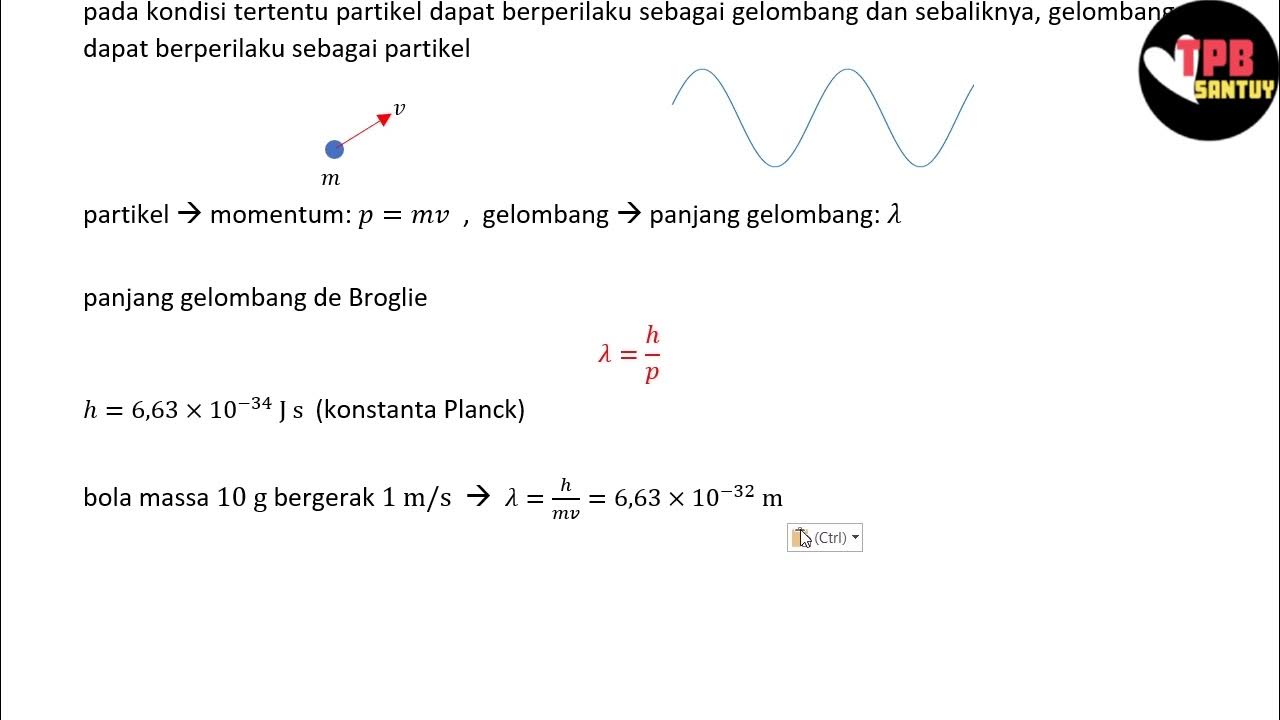
Dualisme Gelombang-Partikel | Fenomena Kuantum | Part 1 | Fisika Dasar

Understanding Bremsstrahlung Radiation - X ray Production

Compton Experiment Animation | 12th Class Physics
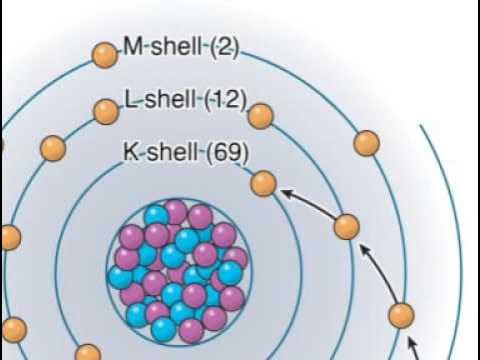
20 CharacteristicInteraction
Bremsstrahlung Radiation | X-ray production | X-ray physics | Radiology Physics Course #19
5.0 / 5 (0 votes)

