MODUL PRAKTIKUM GERAK BENDA PADA BIDANG - GALIH ANINDITA, S.T., M.T.
Summary
TLDRThis video script presents a detailed physics experiment on determining the coefficient of friction for objects moving on different surfaces. The experiment applies Newton's laws of motion, focusing on two objects with masses M1 and M2, one on a flat surface and the other on an inclined plane. The key objective is to measure the frictional force and validate the theoretical coefficient of friction (Miu) between 0 and 1. Throughout the process, the script explains the experimental setup, measurement techniques, and calculations, including how to determine acceleration and interpret data for various materials like aluminum and wood.
Takeaways
- 😀 The main goal of the experiment is to determine the coefficient of friction (μ) between two surfaces.
- 😀 Theoretical values for μ should fall between 0 and 1, and the experiment will aim to verify this.
- 😀 The experiment involves motion on both flat and inclined surfaces, applying Newton's laws of motion.
- 😀 Newton's laws (1st, 2nd, and 3rd) are crucial for analyzing the forces acting on the objects during the experiment.
- 😀 The forces involved include tension (T), weight (W1 and W2), and friction (F_k), where friction opposes the motion.
- 😀 The coefficient of friction is calculated by analyzing the forces acting on the objects, using equations derived from Newton's second law.
- 😀 The setup involves a pulley system with masses M1 and M2, where M1 hangs and M2 moves on a surface.
- 😀 The experiment will be conducted by adjusting the angle of inclination (30 degrees in one case) and measuring the distance and time for M2 to travel.
- 😀 A key part of the experiment is determining the acceleration of M2 as it moves, using the kinematic equations for uniformly accelerated motion.
- 😀 Data collected includes the time and distance traveled by M2, and these values will be used to calculate acceleration and μ for different materials.
- 😀 The experiment requires measuring distances (e.g., 50, 60, 70 cm) and repeating the measurements three times to ensure accuracy.
- 😀 The results should be compared with theoretical expectations, but discrepancies may arise, which should be analyzed and discussed.
Q & A
What is the primary goal of the experiment described in the script?
-The primary goal of the experiment is to determine the coefficient of friction (μ) between an object and a surface.
According to the script, what should the value of the coefficient of friction (μ) be?
-The coefficient of friction (μ) should theoretically be between 0 and 1.
What are the two types of surfaces used in the experiment?
-The two types of surfaces used in the experiment are a flat surface and an inclined surface (ramp).
How are Newton's laws applied in this experiment?
-Newton's laws are used to analyze the forces acting on the objects, such as gravitational force (weight), tension in the rope, and the frictional force. Newton's second law (F = ma) is particularly used to determine the object's acceleration.
What forces need to be considered to calculate the coefficient of friction (μ)?
-Forces that need to be considered include the weight of the objects (W1 and W2), the normal force (N), the tension in the rope (T), and the frictional force (FK).
How is the frictional force (FK) calculated in the experiment?
-The frictional force (FK) is calculated as FK = μ * N, where N is the normal force and μ is the coefficient of friction.
What happens to the system when the object moves on the inclined surface?
-When the object moves, the frictional force opposes its motion, and the system experiences motion under the influence of forces like gravity, tension, and friction.
Why is the mass of the pulley considered negligible in the experiment?
-The mass of the pulley is considered negligible to simplify the calculations and ensure that the focus remains on the forces acting on the objects being studied.
What is the significance of changing the mass of M2 in the experiment?
-Changing the mass of M2 helps determine how different weights affect the motion and frictional forces, which are crucial for calculating the coefficient of friction.
Why are measurements repeated three times in the experiment?
-Measurements are repeated three times to ensure the accuracy of the data and to minimize the impact of human error and experimental inconsistencies.
What is the role of the stopwatch in the experiment?
-The stopwatch is used to measure the time it takes for the object (M2) to travel a given distance along the inclined surface, which is essential for calculating acceleration and the coefficient of friction.
Outlines

Esta sección está disponible solo para usuarios con suscripción. Por favor, mejora tu plan para acceder a esta parte.
Mejorar ahoraMindmap

Esta sección está disponible solo para usuarios con suscripción. Por favor, mejora tu plan para acceder a esta parte.
Mejorar ahoraKeywords

Esta sección está disponible solo para usuarios con suscripción. Por favor, mejora tu plan para acceder a esta parte.
Mejorar ahoraHighlights

Esta sección está disponible solo para usuarios con suscripción. Por favor, mejora tu plan para acceder a esta parte.
Mejorar ahoraTranscripts

Esta sección está disponible solo para usuarios con suscripción. Por favor, mejora tu plan para acceder a esta parte.
Mejorar ahoraVer Más Videos Relacionados

FISICA! forza d’attrito, fisica attrito, attrito statico e dinamico, forza d’attrito esercizi

Магнитный шарик и его необычное движение
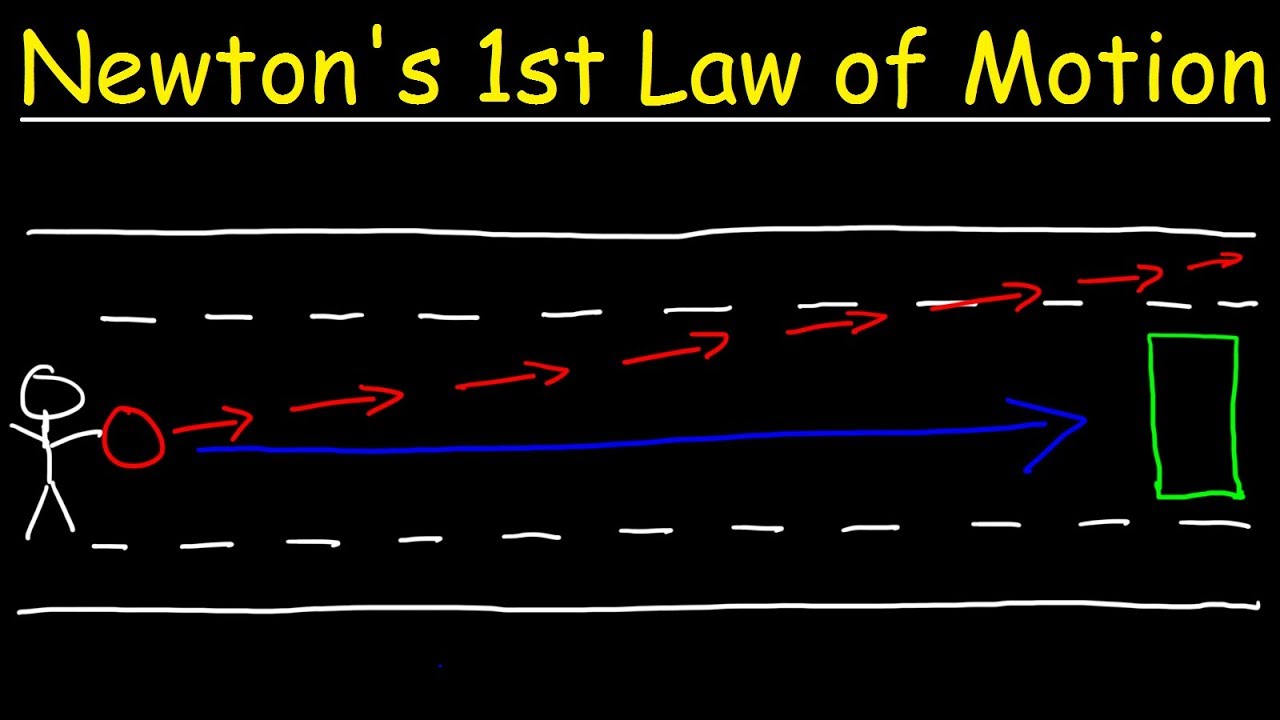
Newton's First Law of Motion

Friction 4 (Coefficient of Friction)

Introduction to Static and Kinetic Friction by Bobby

Fisika Kelas 10 | Jenis - jenis gaya pada hukum Newton | Hukum Newton part 2
5.0 / 5 (0 votes)

