America Isn't Rome. It's The Holy Roman Empire.
Summary
TLDRIn this video, the creator draws a fascinating comparison between the United States and the medieval Holy Roman Empire, arguing that America today mirrors the decentralized and complex nature of the empire more than ancient Rome. The script explores themes of regional disparities, the power dynamics of tech hubs, and the challenges of central governance. Using historical context and the story of Emperor Frederick II, the video highlights how internal fragmentation, wealth imbalances, and political divisions shape both past and present civilizations. The conclusion suggests that, despite its struggles, America may just be undergoing a period of transformation, rather than inevitable collapse.
Takeaways
- 😀 The US in 2026 is more comparable to the medieval Holy Roman Empire than the late Roman Empire, with a decentralized, complex system of governance.
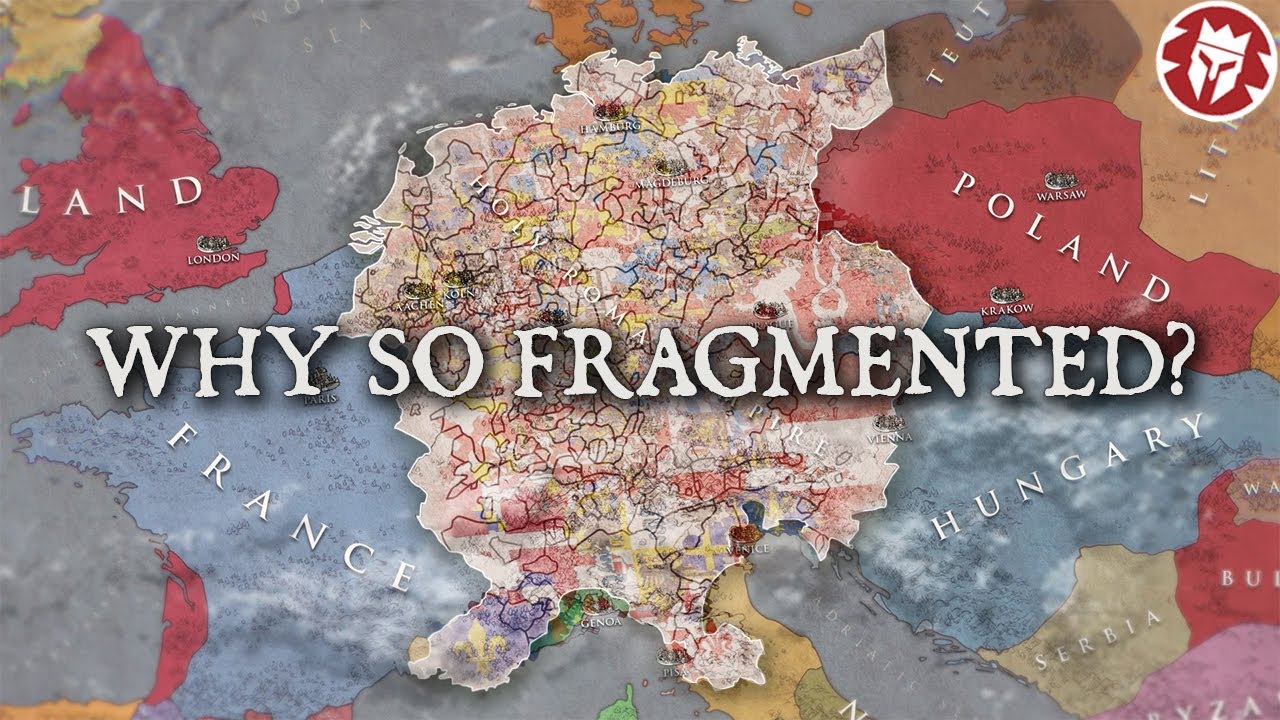
- 😀 The Holy Roman Empire was a federation of hundreds of tiny sovereign states, similar to how modern tech hubs and industrial areas in the US function as distinct entities.
- 😀 The Holy Roman Empire lasted for a thousand years, despite internal chaos, due to its decentralized structure and the emperor's role as a figurehead rather than a central authority.
- 😀 The US today mirrors the fragmented nature of the Holy Roman Empire, where cities like New York and San Francisco hold disproportionate wealth and power compared to the surrounding regions.
- 😀 The 'free imperial cities' in the Holy Roman Empire, like Nuremberg, functioned as independent city-states with special privileges—much like modern tech cities in the US that act as economic and regulatory hubs.
- 😀 Both the Holy Roman Empire and the US rely on a few high-performance regions (e.g., finance, tech) to generate the majority of their GDP, creating a feudal-like economic feedback loop.
- 😀 The power structure of the Holy Roman Empire resembled that of the US, with figurehead leadership and complex systems of courts and negotiations instead of direct, centralized control.
- 😀 Cultural and political divisions in the US today reflect the fragmentation of the Holy Roman Empire, where people identified more with their local region than with the empire as a whole.
- 😀 The electoral college in the US mirrors the Holy Roman Empire's system of electing emperors by a small, select group of electors—both designed to prevent concentration of power in one individual or region.
- 😀 Historical context, like the 'Donation of Constantine' and the founding of the Holy Roman Empire, plays a crucial role in shaping how societies view their own legitimacy and authority, much like the US struggles with interpretations of the Constitution.
Q & A
Why does the speaker argue that America in 2026 is more like the Holy Roman Empire than ancient Rome?
-The speaker suggests that America in 2026 mirrors the Holy Roman Empire because both are decentralized systems with regional powers that are loosely united under a figurehead leader. The Holy Roman Empire lasted for a thousand years despite its chaotic internal structure, and America shares similar fragmented political, economic, and cultural divisions, especially between wealthy cities and the rest of the country.
What was the Holy Roman Empire, and why was it so unique in its structure?
-The Holy Roman Empire was a large, decentralized federation of sovereign states that spanned across parts of modern-day Italy, Germany, and France. It was unique because it didn't function like a modern nation-state but instead relied on a web of regional powers, free cities, and a symbolic emperor who had limited control over the vast territories.
How did the Holy Roman Empire manage to survive despite its chaotic structure?
-The Holy Roman Empire survived by allowing regional princes and free cities to maintain a high degree of autonomy. The emperor, while a figurehead, helped mediate disputes and maintain a semblance of unity, but real power rested with local rulers. The empire’s decentralized system made it resilient, as it adapted to a variety of local needs and realities.
How does the speaker compare modern U.S. cities to medieval free cities like Nuremberg and Frankfurt?
-The speaker compares modern U.S. cities like San Francisco, New York, and Austin to medieval free cities, which were autonomous and economically powerful, governed by their own laws and not subject to local feudal lords. Similarly, these modern cities drive the U.S. economy, have a disproportionate influence, and enjoy legal autonomy, much like the free cities in the Holy Roman Empire.
What is the significance of the disparity between wealthy and less prosperous regions in the U.S.?
-The disparity between wealthy urban hubs (like Silicon Valley and New York) and economically struggling regions (such as the industrial Midwest) is compared to the divisions in the Holy Roman Empire. Just as the empire had regions with flourishing economies and others in disrepair, America faces similar challenges, where wealth is concentrated in specific cities while other areas are left behind.
How does the speaker describe the role of the U.S. Electoral College in comparison to the Holy Roman Empire’s election process?
-The speaker compares the U.S. Electoral College to the electoral process of the Holy Roman Empire, noting how both systems were designed to prevent any one region from becoming too powerful. In the HRE, electors often voted for candidates who would protect local privileges, and the Electoral College similarly aims to balance the power between states rather than allowing a popular vote to dominate.
What is the significance of the *Donation of Constantine* in the context of the Holy Roman Empire?
-The *Donation of Constantine* was a forged document that claimed the Roman Emperor Constantine had granted the Pope supreme authority over the Western Roman Empire. This document legitimized the Holy Roman Empire's claim to power, but it was eventually debunked. The speaker compares this to the founding myths of the U.S. and suggests that historical myths often influence modern political ideologies.
How does the speaker connect the figure of Emperor Frederick II to modern American political elites?
-The speaker compares Frederick II, the Holy Roman Emperor, to modern American political elites, especially tech leaders and billionaires, who are seen as out of touch with ordinary citizens. Just as Frederick II faced distrust from the German princes because of his progressive ideas and outsider status, modern elites are often seen as disconnected from the needs of the general population.
What does the speaker mean by describing America’s political division as a 'fever pitch of cultural and political division'?
-The speaker refers to the deepening cultural and political polarization in the U.S., where political identity is now central to how people perceive the world. This division mirrors the religious and regional divisions that tore apart the Holy Roman Empire during the Reformation, where each region had its own religious identity, and conflict was often a result of these differences.
Why does the speaker suggest that comparisons between America and ancient Rome may be misleading?
-The speaker argues that comparing America to ancient Rome is misleading because Rome’s fall was often seen as inevitable due to cultural decay and external threats. In contrast, the Holy Roman Empire’s survival was due to its decentralized and adaptable structure. America, like the Holy Roman Empire, may be undergoing a period of adjustment, not collapse, which is often misinterpreted as civilizational decline.
Outlines

Esta sección está disponible solo para usuarios con suscripción. Por favor, mejora tu plan para acceder a esta parte.
Mejorar ahoraMindmap

Esta sección está disponible solo para usuarios con suscripción. Por favor, mejora tu plan para acceder a esta parte.
Mejorar ahoraKeywords

Esta sección está disponible solo para usuarios con suscripción. Por favor, mejora tu plan para acceder a esta parte.
Mejorar ahoraHighlights

Esta sección está disponible solo para usuarios con suscripción. Por favor, mejora tu plan para acceder a esta parte.
Mejorar ahoraTranscripts

Esta sección está disponible solo para usuarios con suscripción. Por favor, mejora tu plan para acceder a esta parte.
Mejorar ahoraVer Más Videos Relacionados
Every Claimant To Rome Ever || How Rome Finally Fell in 2011

Storia2_UD 0: Il Medioevo (ripasso)

History of the Roman Republic
Sound Familiar? The Romans Chose Autocracy To Gain Safety And Security
Why Was Germany so Fragmented in the Middle Ages - Medieval DOCUMENTARY
Sejarah Republik Romawi: Dari Monarki, Republik, hingga Kekaisaran
5.0 / 5 (0 votes)

