Marine Ecosystem | Iken Edu
Summary
TLDRThis video explores aquatic ecosystems, dividing them into freshwater and marine categories. It explains how organisms in these environments have evolved unique adaptations for survival, such as air spaces or specialized substances to help with buoyancy and swimming. Marine life, like fish and dolphins, has developed floaters, while microscopic organisms such as plankton rely on oil droplets to stay afloat. The video highlights the impact of ocean conditions, such as salt content and pressure, on life forms, as well as how deep-diving mammals adapt to extreme underwater environments.
Takeaways
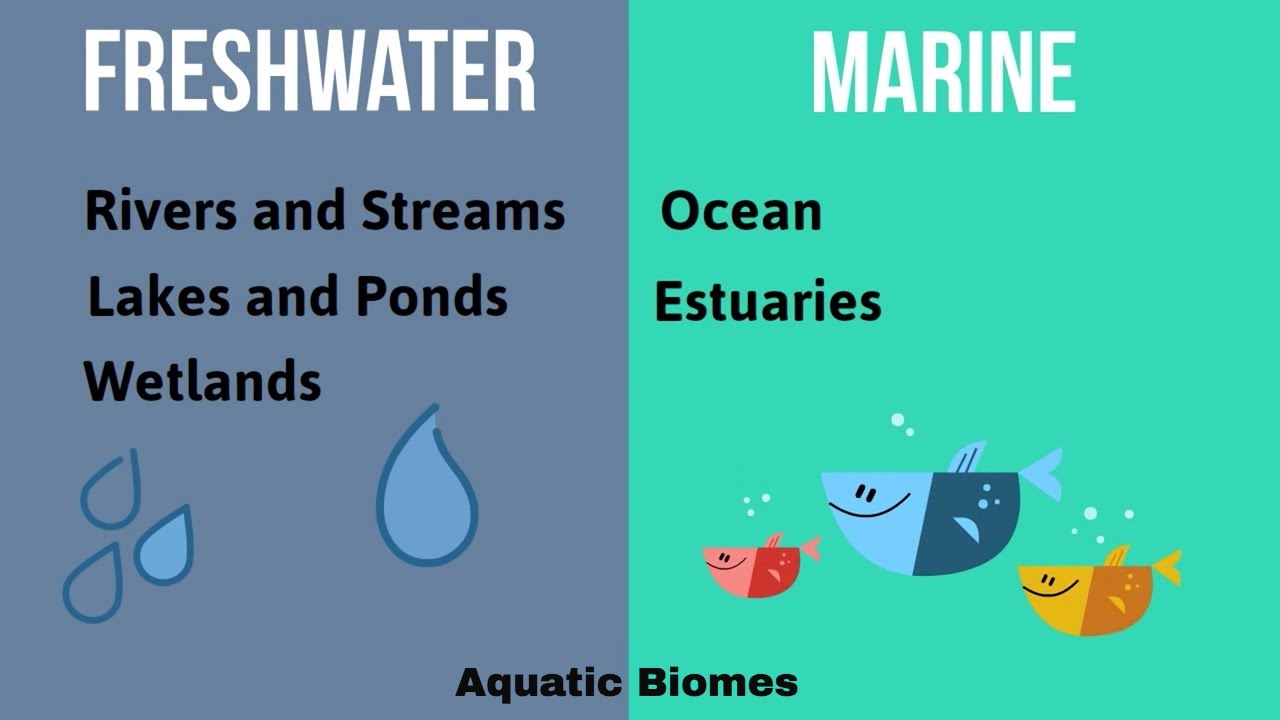
- 🌊 Aquatic ecosystems are mainly classified into two types: freshwater ecosystems (ponds, lakes, rivers) and marine ecosystems (seas and oceans).
- 🐟 Organisms in aquatic environments have different living conditions and show specialized structural adaptations for survival.
- 🎈 Many aquatic animals such as fish and dolphins possess floatation mechanisms that help them inhabit specific water levels.
- 🦠 Microscopic photosynthetic organisms like plankton contain oil droplets in their cells that help them float.
- 🌿 Larger aquatic plants have long, tough leaves and flexible stems to withstand moving water currents.
- 🌍 Life on Earth originated in the oceans around 2,000 million years ago and gradually evolved into complex land forms.
- 🧪 The protoplasm found in all living cells closely resembles seawater, highlighting life’s marine origins.
- 🦑 Marine life adapts to specific zones in the ocean, each with narrow ranges of salinity, temperature, and light.
- 🧂 The high salt content of oceans supports large marine animals like giant squids and whales by providing buoyancy.
- ضغط🌡️ Water pressure increases by one atmosphere for every 10 meters of depth, requiring special adaptations in deep-sea organisms.
- 🤿 Deep-diving mammals such as seals and sperm whales allow their lungs to collapse and store oxygen mainly in their muscles.
- 💪 Marine mammals have high concentrations of oxygen-binding chemicals in their muscle tissue, enabling long dives.
- ⬇️ Collapsed lungs increase body density, allowing diving mammals to sink and glide to great depths efficiently.
- 🎈 Some fish use lung-like swim bladders to control buoyancy by adjusting gas levels without collapsing under pressure.
Q & A
What are the two main types of aquatic ecosystems?
-The two main types of aquatic ecosystems are freshwater ecosystems (such as ponds, lakes, and rivers) and marine ecosystems (such as seas and oceans).
How do marine organisms adapt to their environment?
-Marine organisms adapt to their environment through structural features like special airspaces, substances that help them float, and adaptations to withstand pressure and moving water.
What role do floaters play in marine life?
-Floaters, such as those found in fish and dolphins, help these organisms maintain specific depths in the water, enabling them to navigate the aquatic environment.
Why do plankton have oil droplets in their cells?
-Plankton contain oil droplets in their cells to help them remain buoyant and float in the water, allowing them to stay in the upper layers of the ocean where light is more abundant.
What are the adaptations of larger plants in marine ecosystems?
-Larger marine plants, like seaweeds, have long, tough leaves and flexible stems that enable them to withstand the force of moving water and survive in challenging conditions.
How has life on Earth evolved from the oceans to land?
-Over the past 2,000 million years, life on Earth evolved from simple oceanic organisms to more complex life forms on land, with some species adapting to life beneath the surface of the oceans.
How does the ocean’s salt content affect marine life?
-The high salt content in ocean water supports large marine creatures like squids and whales, as the salt allows them to evolve without relying on strong limbs for movement.
What is the impact of pressure on marine animals at great depths?
-As marine animals dive deeper, the pressure increases by one atmosphere for every 10 meters of depth, which can affect their body structure and function. Some animals have adaptations to cope with this immense pressure.
How do deep-diving animals manage oxygen during long dives?
-Deep-diving animals, like sperm whales, allow their lungs to collapse during dives, storing oxygen in their muscles instead. This adaptation helps them dive deeper and stay underwater for longer periods.
What is the function of swim bladders in fish?
-Swim bladders in fish help control their buoyancy. By secreting gas into the bladder, fish can move up in the water, and by reabsorbing the gas, they can move down, all without the bladder collapsing at depth.
Outlines

Esta sección está disponible solo para usuarios con suscripción. Por favor, mejora tu plan para acceder a esta parte.
Mejorar ahoraMindmap

Esta sección está disponible solo para usuarios con suscripción. Por favor, mejora tu plan para acceder a esta parte.
Mejorar ahoraKeywords

Esta sección está disponible solo para usuarios con suscripción. Por favor, mejora tu plan para acceder a esta parte.
Mejorar ahoraHighlights

Esta sección está disponible solo para usuarios con suscripción. Por favor, mejora tu plan para acceder a esta parte.
Mejorar ahoraTranscripts

Esta sección está disponible solo para usuarios con suscripción. Por favor, mejora tu plan para acceder a esta parte.
Mejorar ahora


5.0 / 5 (0 votes)

