A Brief History of Everything, feat. Neil deGrasse Tyson
Summary
TLDRThe universe, beginning 13.7 billion years ago in an incredibly dense, hot state, expanded rapidly, evolving from energy into matter. Through complex processes, matter and antimatter asymmetry allowed for the creation of the universe as we know it. As stars formed, they produced heavier elements, which were spread through supernova explosions, paving the way for planets like Earth. Life emerged in Earth's oceans, leading to the rise of oxygen and the eventual dominance of complex life. Ultimately, humans, born from the stars, developed the intellect to understand their origins, as we continue to unravel the mysteries of the cosmos.
Takeaways
- 😀 The universe began 13.7 billion years ago from a volume smaller than the tip of a pin, containing all space, matter, and energy.
- 😀 In the early moments after the Big Bang, the forces of nature were unified and black holes spontaneously formed and disappeared.
- 😀 The universe underwent rapid inflation, expanding exponentially, smoothing out any variations in density across the cosmos.
- 😀 The asymmetry between matter and antimatter led to a slight excess of matter, ensuring the formation of the universe's structures.
- 😀 As the universe cooled, particles and forces split, and basic atomic nuclei like hydrogen, helium, and lithium were formed.
- 😀 The cosmic microwave background, the faint glow of photons from the early universe, is still detectable today.
- 😀 Over billions of years, galaxies formed, containing billions of stars, many of which produced heavier elements necessary for life.
- 😀 Massive stars exploded in supernovae, distributing heavy elements like carbon, which would later form planets and life.
- 😀 Earth’s location in the solar system, where liquid oceans could form, was key to the development of life.
- 😀 Life emerged from simple anaerobic bacteria that transformed Earth's atmosphere into one rich in oxygen, supporting aerobic life.
- 😀 The evolutionary rise of humans, as part of the universe, is part of the cosmic journey, and we are empowered to understand and explore this vast universe.
Q & A
What was the state of the universe 13.7 billion years ago?
-13.7 billion years ago, the entire universe—space, matter, and energy—was contained in a volume smaller than a trillionth of the size of the point of a pin. The conditions were so hot that the basic forces of nature were unified.
What happened during the universe's initial expansion?
-For reasons unknown, the universe began expanding, and as it cooled, the forces of nature separated. This led to the formation of black holes and the rapid inflation of the universe, stretching and smoothing out the distribution of matter and energy.
What is the epoch of inflation, and why is it significant?
-The epoch of inflation was a period of extremely rapid expansion in the early universe. It stretched the universe by a factor of 30 to the 10th power, smoothing out the distribution of matter and energy and reducing any regional variations in density.
What caused the matter-antimatter asymmetry in the universe?
-At some point, the symmetry between matter and antimatter was broken, which led to a slight excess of matter. For every billion antimatter particles, one extra matter particle was born. This asymmetry was crucial for the formation of the universe as we know it.
How did the first atoms form in the universe?
-As the universe cooled and photons lost their energy, free electrons were captured by protons and neutrons to form atoms of hydrogen, helium, and lithium. This made the universe transparent to visible light, allowing the cosmic microwave background to be observed today.
What role did stars play in the formation of heavier elements?
-High-mass stars underwent thermonuclear fusion, creating elements heavier than hydrogen. When these stars exploded as supernovae, they scattered these enriched elements across the galaxy, allowing for the formation of planets and life.
How did the Earth form and why was its location critical for life?
-Earth formed in a zone around the Sun where conditions allowed for liquid oceans. If Earth had been too close or too far from the Sun, life as we know it would not have evolved. Its perfect distance allowed for the development of liquid water, which is essential for life.
What was the impact of oxygen and ozone on the Earth's atmosphere?
-Oxygen, initially produced by anaerobic bacteria, transformed Earth's atmosphere. It combined with other elements to form ozone in the upper atmosphere, which protects life on Earth from harmful ultraviolet radiation from the Sun.
What is the significance of carbon in the development of life on Earth?
-Carbon is crucial because it forms the backbone of a vast array of molecules, more diverse than any other elements. This diversity of carbon-based molecules enables the complexity of life as we know it.
How did the extinction of the dinosaurs create an opportunity for mammals?
-The asteroid impact that caused the extinction of the dinosaurs opened ecological niches for small surviving mammals. This allowed mammals to evolve and eventually gave rise to species with higher intelligence, such as humans.
Outlines

Esta sección está disponible solo para usuarios con suscripción. Por favor, mejora tu plan para acceder a esta parte.
Mejorar ahoraMindmap

Esta sección está disponible solo para usuarios con suscripción. Por favor, mejora tu plan para acceder a esta parte.
Mejorar ahoraKeywords

Esta sección está disponible solo para usuarios con suscripción. Por favor, mejora tu plan para acceder a esta parte.
Mejorar ahoraHighlights

Esta sección está disponible solo para usuarios con suscripción. Por favor, mejora tu plan para acceder a esta parte.
Mejorar ahoraTranscripts

Esta sección está disponible solo para usuarios con suscripción. Por favor, mejora tu plan para acceder a esta parte.
Mejorar ahoraVer Más Videos Relacionados

TODA NOSSA HISTÓRIA EM 10 MINUTOS !!

What If The Universe DID NOT Start With The Big Bang?

What Is the Oscillating Model of the Universe?

How the Prime Mover Argument Works #AskAFriar (Aquinas 101)
How the Origin of the Universe Points to the Existence of God

The Epic Journey of Atoms: From Big Bang to Now!
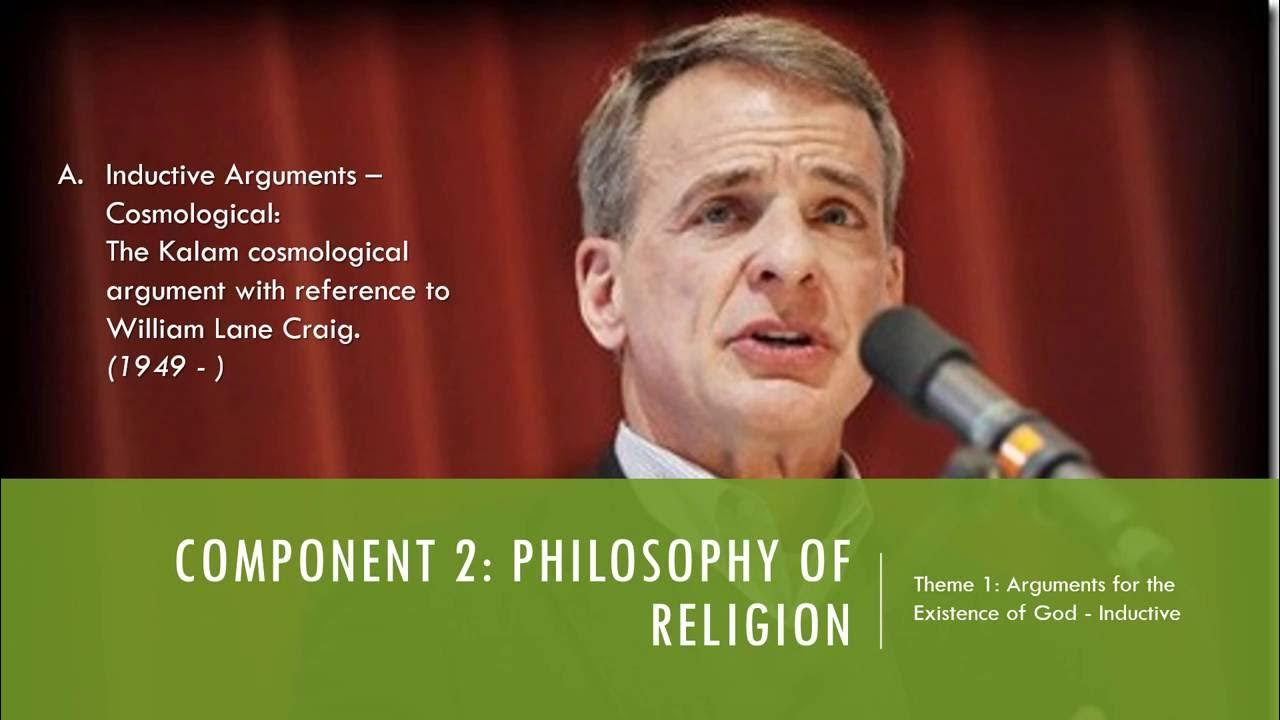
A. The Kalam Version
5.0 / 5 (0 votes)

