Engine cooling system / how does it work? (3D animation)
Summary
TLDRThe engine cooling system is essential for preventing engine overheating. It circulates coolant through the engine, absorbing heat from the cylinders, and transfers it to the radiator for cooling. The system includes components like the water pump, radiator, thermostat, and pressure cap, each playing a vital role in maintaining the engine’s temperature. Advanced systems may incorporate additional circuits for managing other components like the turbocharger and gearbox oil. Special coolant is used to prevent corrosion and freezing, ensuring optimal engine performance. The system also incorporates safety features like pressure relief to protect from overheating.
Takeaways
- 😀 Engine cooling is crucial to prevent overheating, which could cause engine failure.
- 😀 The engine cooling system is designed to keep the engine at its optimal operating temperature.
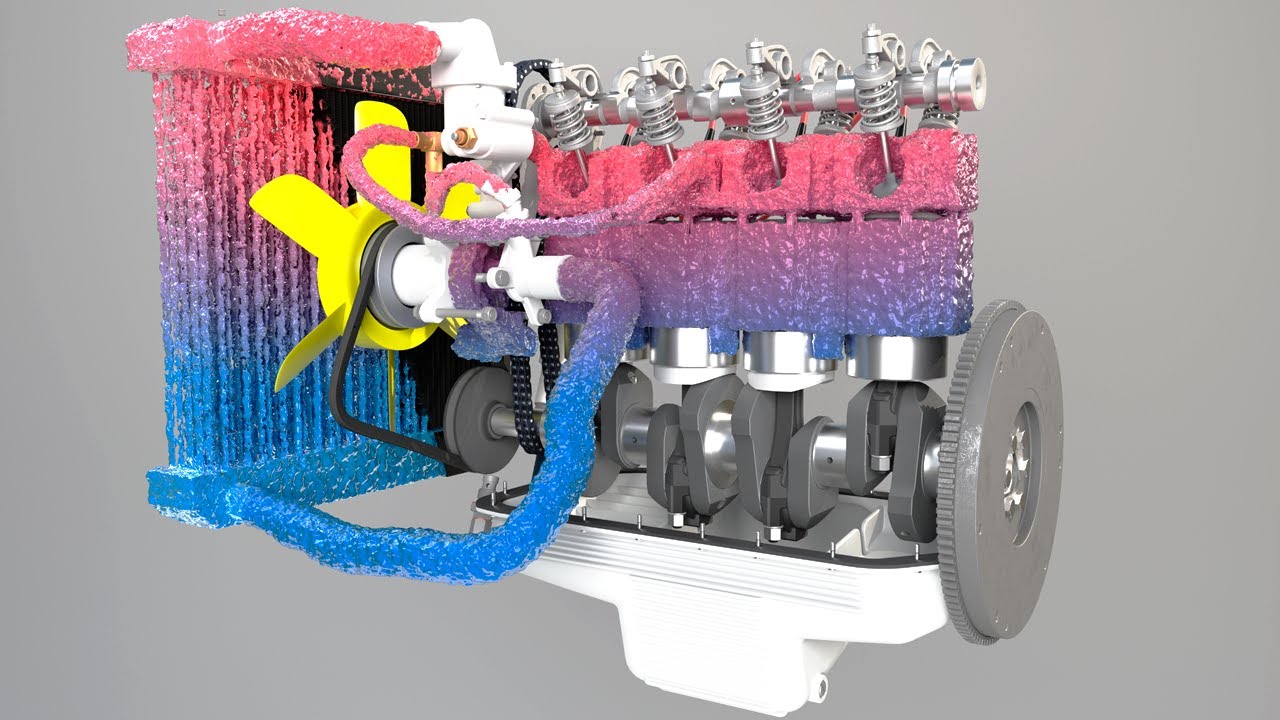
- 😀 The cooling system primarily uses a liquid coolant circulated through cylinder block ducts and cylinder head ducts, known as the cooling jacket.
- 😀 The coolant is circulated by a centrifugal pump, which is driven by the crankshaft.
- 😀 A radiator plays a key role in cooling the liquid coolant through heat exchange, with tubes, tanks, and fins enhancing heat transfer.
- 😀 Fans are employed to increase airflow through the radiator, activated by the engine coolant temperature sensor when needed.
- 😀 The system operates under pressure, raising the coolant's boiling point, and uses a pressure cap or expansion tank to release excess pressure.
- 😀 The expansion tank also stores coolant and allows for easy refill, ensuring the system maintains adequate coolant levels.
- 😀 A thermostat is used to regulate coolant temperature, bypassing the radiator when the engine is cold and ensuring proper temperature control during operation.
- 😀 The heater core extracts heat from the coolant to warm the vehicle cabin, making it an essential part of the system.
- 😀 More complex cooling systems may include additional thermostats, electronic controls, and separate cooling circuits for other components like turbochargers or the automatic gearbox oil.
Q & A
Why is an engine cooling system necessary?
-An engine cooling system is essential because the combustion of the fuel-air mixture generates a large amount of heat. If not cooled, the engine would overheat and fail.
What are the main components of the engine cooling system?
-The main components include the cooling jacket, water pump, radiator, expansion tank, thermostat, and heater core.
How does the coolant circulate through the engine cooling system?
-The coolant circulates in a closed loop, driven by a centrifugal water pump, which is powered by the crankshaft. This pump ensures the coolant is constantly moving through the system.
What role does the radiator play in the engine cooling system?
-The radiator cools the liquid coolant through a heat exchange process, where heat from the coolant is transferred to the air flowing through the radiator.
Why is the radiator equipped with fins and fans?
-Fins are added to the radiator tubes to improve heat transfer capacity, while fans boost airflow to ensure the coolant is cooled properly, especially when the system cannot cool the liquid effectively on its own.
How does the system handle excess pressure from heated coolant?
-The system uses a pressure cap on the radiator to release excess pressure when the coolant expands due to heat. This allows coolant to escape into the expansion tank, which pulls the liquid back into the system once the pressure decreases.
What is the function of the expansion tank in the cooling system?
-The expansion tank stores extra coolant and accommodates its expansion when heated. It also provides a space for liquid to return to the system as pressure drops and features a coolant level indicator.
What does the thermostat do in the engine cooling system?
-The thermostat divides the system into two circuits: a short one that bypasses the radiator when the engine is cold and a longer one that circulates the coolant through the radiator when the engine reaches operating temperature.
How does the thermostat maintain the engine's optimal temperature?
-The thermostat gradually opens as the coolant temperature rises. At 82°C, it allows the coolant to mix with radiator-cooled liquid, balancing the temperature. If the temperature exceeds 93°C, the thermostat fully opens the longer circuit to ensure the coolant circulates through the radiator for cooling.
What additional components can be included in more complex engine cooling layouts?
-More complex systems may include two thermostats, electronically controlled thermostats, and additional cooling circuits for components like the EGR system, turbocharger, throttle, intake manifold, and automatic gearbox oil.
Why is a special coolant used in engine cooling systems?
-The coolant used in engine cooling systems has specific chemical properties such as anti-corrosion, anti-cavitation, and non-freezing capabilities, which help protect the engine and enhance cooling efficiency.
Outlines

Esta sección está disponible solo para usuarios con suscripción. Por favor, mejora tu plan para acceder a esta parte.
Mejorar ahoraMindmap

Esta sección está disponible solo para usuarios con suscripción. Por favor, mejora tu plan para acceder a esta parte.
Mejorar ahoraKeywords

Esta sección está disponible solo para usuarios con suscripción. Por favor, mejora tu plan para acceder a esta parte.
Mejorar ahoraHighlights

Esta sección está disponible solo para usuarios con suscripción. Por favor, mejora tu plan para acceder a esta parte.
Mejorar ahoraTranscripts

Esta sección está disponible solo para usuarios con suscripción. Por favor, mejora tu plan para acceder a esta parte.
Mejorar ahoraVer Más Videos Relacionados
Car engine cooling system

Sistem Pendingin, Part 1: Macam-macam, Fungsi dan Komponen Sistem Pendingin Mobil

CARA KERJA SISTEM PENDINGIN PADA MESIN MOBIL

SISTEM PENDINGIN, Part 4: Cara Kerja Sistem Pendingin (Konvensional)

Marine diesel engine MAN B&W MC/ME Engine- Construction and Principle
Cara Kerja Sistem Pelumasan
5.0 / 5 (0 votes)

