The Supply Chain Revolution by Suman Sarkar: 10 Minute Summary
Summary
TLDRIn *The Supply Chain Revolution*, Suman Sarkar explores how businesses can harness the power of innovative supply chain management and sourcing to achieve a competitive edge. The book highlights examples from companies like Zara, TJX, and Ralph Lauren, illustrating the importance of demand-driven strategies, efficient operations, and strategic sourcing. By prioritizing supply chains, companies can transform operations, improve customer service, and drive growth. Sarkar advocates for a shift in how organizations view their supply chains, positioning them as key drivers of innovation, profitability, and market responsiveness.
Takeaways
- 😀 Supply chain management (SCM) and sourcing are often underestimated, but can be a major competitive advantage when done right.
- 😀 Zara's success is driven by its demand-driven supply chain, allowing it to rapidly introduce new products and respond to market needs.
- 😀 TJX Companies excel in sourcing discounted products, offering a 'treasure hunt' experience to customers, which contributes to their sustained growth.
- 😀 Ralph Lauren's 'Way Forward Plan' focuses on creating a demand-driven supply chain, best-in-class sourcing, and multichannel distribution to increase profitability.
- 😀 Traditional profit-building strategies like product differentiation are no longer as effective. SCM has become a critical tool for enhancing customer service and operational efficiency.
- 😀 Quality customer service can be achieved by segmenting customers based on needs and offering tailored service levels, as demonstrated by Amazon Prime.
- 😀 Innovation alone is not enough for success. Efficient supply chain operations are essential to deliver innovations to the marketplace and scale production effectively.
- 😀 Demand-driven planning, based on real-time customer data, can help companies avoid stockouts, improve sales, and increase customer satisfaction.
- 😀 Successful business alliances are formed through strategic partnerships with firms that complement each other's strengths, rather than competing directly.
- 😀 Revolutionizing supply chain management requires CEOs to integrate supply chain functions into the core of business strategy, leveraging expertise for long-term competitive advantage.
Q & A
What is the core philosophy behind Zara's supply chain management?
-Zara's supply chain management is built around the concept of 'demand-driven supply chain.' Founder Amancio Ortega views clothing as a perishable commodity, which drives Zara's ability to introduce new clothing lines quickly—within 10 to 15 days—based on real-time market demand.
How does TJX Companies maintain its success despite offering discounted prices?
-TJX Companies, including T.J. Maxx, Marshalls, and Home Goods, achieves success by creating a 'treasure hunt' shopping experience. They offer branded products at discounted prices, and the flexibility of their supply chain allows them to capitalize on the best deals for their customers, ensuring continuous growth.
What are the four key components of Ralph Lauren’s 'Way Forward Plan'?
-Ralph Lauren's 'Way Forward Plan' focuses on four strategic engines: 1) broadening product variety, 2) creating a demand-driven supply chain, 3) achieving best-in-class sourcing, and 4) implementing a multichannel distribution strategy.
How has traditional supply chain management remained stagnant since the 1940s?
-Despite the critical role supply chains play in modern business, many companies have not innovated their supply chain practices since the 1940s. This stagnation often results from viewing supply chains as back-office functions, rather than strategic drivers of innovation and business success.
What role does innovation play in supply chain management?
-Innovation alone is not enough to ensure success. An efficient supply chain and sourcing operation is essential to deliver innovations to the marketplace. A company must scale up production, secure parts, and ensure timely deliveries for successful product innovation.
What is the advantage of demand-driven planning over traditional forecasting?
-Traditional forecasting methods based on historical data often have a high error rate of around 50%. In contrast, demand-driven planning uses real-time customer demand data, which helps businesses make more accurate decisions about inventory replenishment, reducing stockouts and increasing customer satisfaction.
How can companies improve customer service through supply chain management?
-Improving customer service involves segmenting customers based on their needs and providing appropriate service levels. By coordinating with supply chain teams, businesses can ensure timely delivery, high-quality products, and efficient service, which can be more impactful than simply hiring additional customer service staff.
Why should CEOs prioritize sourcing and supply chain management?
-CEOs should prioritize sourcing and supply chain management because these areas are critical to achieving a competitive edge. Effective sourcing and streamlined supply chains can reduce costs, enhance product offerings, and increase responsiveness to market changes, all of which are essential for long-term business success.
What are the steps to achieve value from sourcing and supply chains?
-To achieve value, companies should: 1) Review operational practices across the organization, 2) Develop a centralized supply chain and sourcing organization to select vendors and reduce costs, 3) Eliminate bottlenecks to mitigate risks, and 4) Create a dynamic unit to respond quickly to market demands and drive business excellence.
What challenges do companies face when forming business alliances, and how can they overcome them?
-One major challenge is ineffective governance, which causes about 60% of partnerships to fail. Companies can overcome this by establishing clear governance procedures, leveraging the expertise of sourcing professionals, and forming alliances with firms that offer complementary strengths without direct competition.
Outlines

Esta sección está disponible solo para usuarios con suscripción. Por favor, mejora tu plan para acceder a esta parte.
Mejorar ahoraMindmap

Esta sección está disponible solo para usuarios con suscripción. Por favor, mejora tu plan para acceder a esta parte.
Mejorar ahoraKeywords

Esta sección está disponible solo para usuarios con suscripción. Por favor, mejora tu plan para acceder a esta parte.
Mejorar ahoraHighlights

Esta sección está disponible solo para usuarios con suscripción. Por favor, mejora tu plan para acceder a esta parte.
Mejorar ahoraTranscripts

Esta sección está disponible solo para usuarios con suscripción. Por favor, mejora tu plan para acceder a esta parte.
Mejorar ahoraVer Más Videos Relacionados

SCM Topic 1 - 6. Supply Chain Strategic Fit and Drivers of Supply Chain Performance
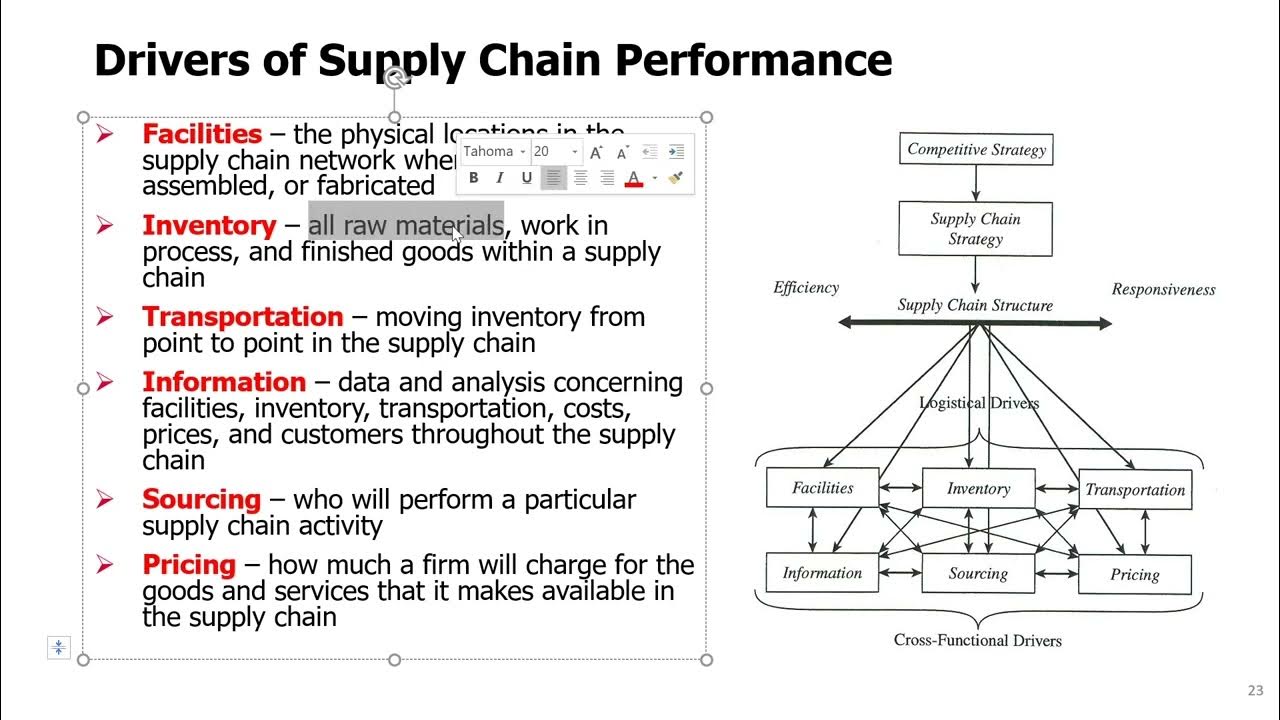
SCM Topic 1 - 6. Supply Chain Strategic Fit and Drivers of Supply Chain Performance

Entrevista com José Gracio, especialista em Supply Chain

Resource Based View | SCMT 4653
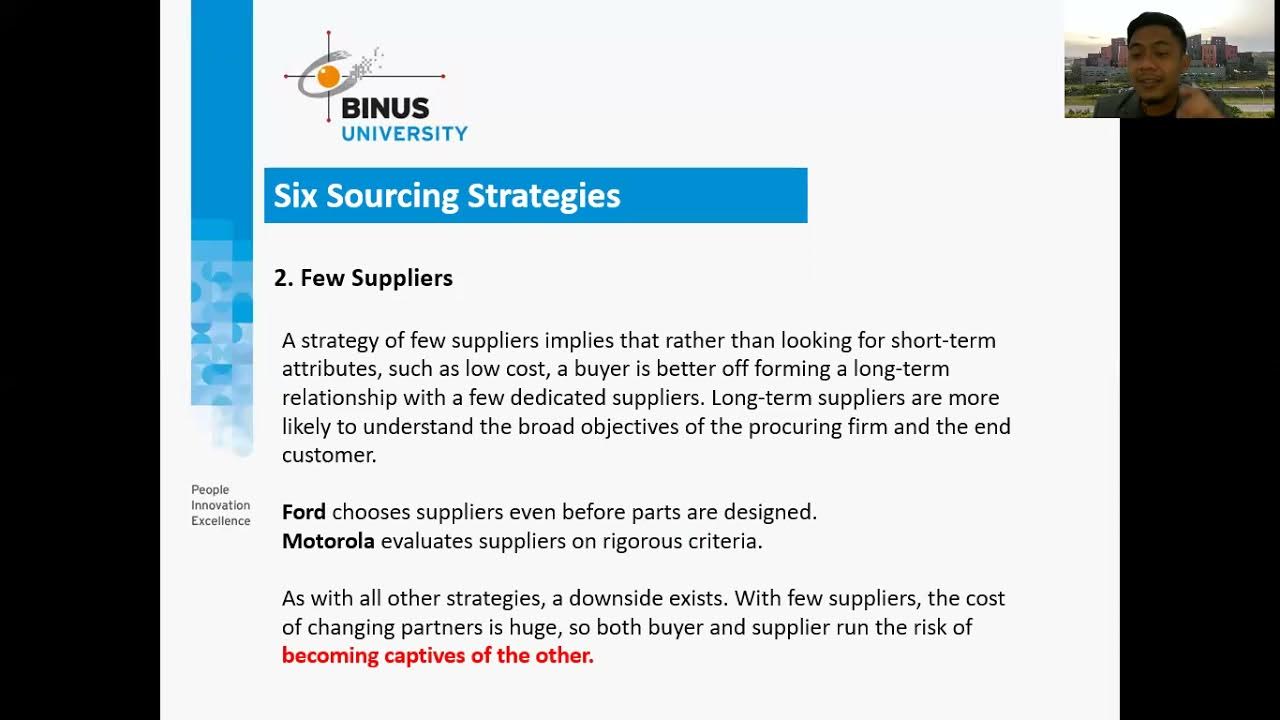
ENTR6511 1313 Market Validation Report I Market Validation Reflection Supply Chain
American Eagle Outfitters' Supply Chain Innovation Award Competition Case Study
5.0 / 5 (0 votes)

