Struktur Bumi dan Perkembangannya (kelas 8 SMP)
Summary
TLDRThis educational video from the Herianah Ana channel explores the structure and dynamics of the Earth. It explains the four main layers—crust, mantle, outer core, and inner core—highlighting their characteristics, compositions, and temperatures. The video also covers tectonic plate movements and their types—convergent, divergent, and transform—showing how these movements cause natural phenomena like earthquakes and volcanic eruptions. Additionally, it discusses the benefits and dangers of volcanoes, the role of Earth's magnetic field, and the importance of understanding Earth's structure for disaster mitigation. Interactive quiz questions at the end reinforce learning and help viewers recall key concepts.
Takeaways
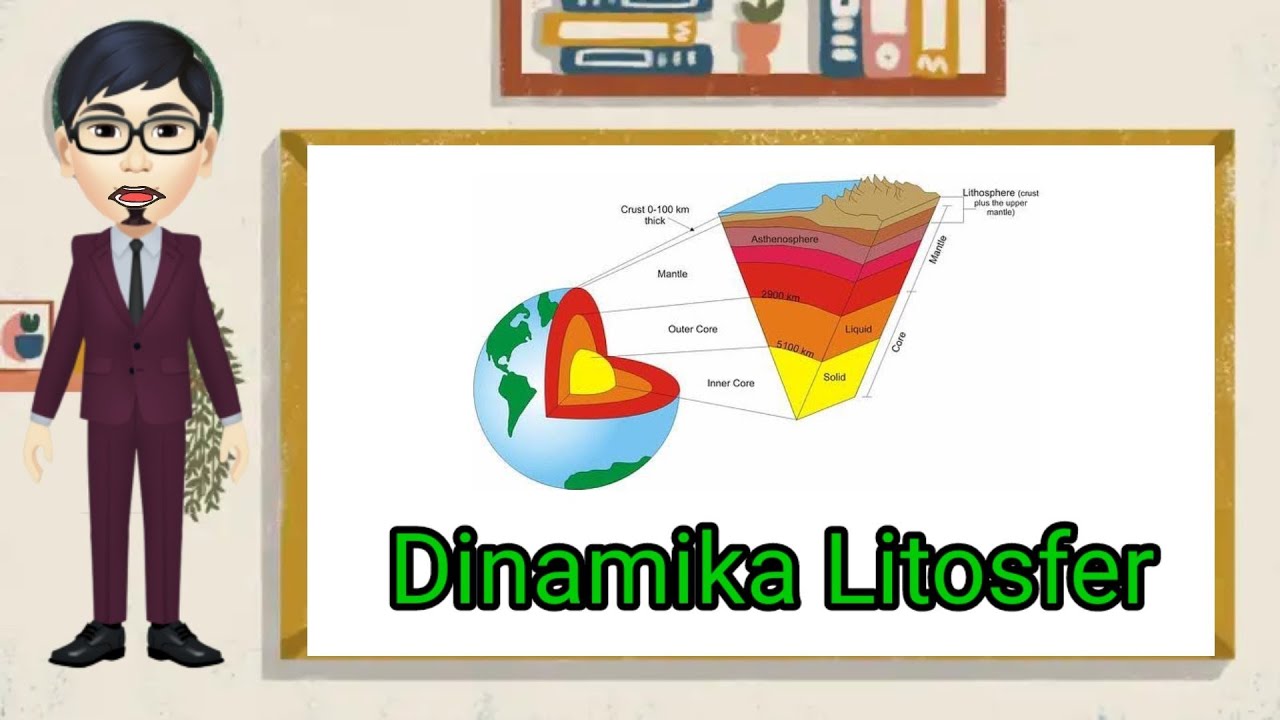
- 🌍 The Earth consists of four main layers: crust, mantle, outer core, and inner core, each with distinct characteristics.
- 🪨 The crust is the outermost and thinnest layer, composed of solid rocks like granite and basalt, and is divided into continental and oceanic crust.
- 🔥 The mantle is the thickest layer, made of silicate rocks rich in magnesium and iron, with temperatures ranging from 1,000 to 3,700°C, and contains magma.
- ♨️ Mantle convection drives the movement of tectonic plates, which can cause earthquakes and volcanic activity.
- 🧲 The outer core is liquid, composed of iron and nickel, and its movement generates Earth's magnetic field.
- 💎 The inner core is solid due to high pressure, composed of iron and nickel, and has temperatures reaching 6,000°C.
- 🔄 Tectonic plates move in three ways: convergent (colliding), divergent (separating), and transform (sliding past each other), causing various geological phenomena.
- 🌋 Volcanic eruptions occur when magma, gas, and ash escape through cracks in the crust; Indonesia has many active volcanoes due to the Pacific Ring of Fire.
- 💥 Earthquakes can be tectonic, volcanic, collapse-related, or caused by external impacts, leading to hazards like structural damage, landslides, and tsunamis.
- 🛡️ Understanding Earth's structure and plate tectonics is crucial for disaster mitigation, reducing risks and improving preparedness.
Q & A
What are the four main layers of the Earth from the outermost to the innermost?
-The four main layers of the Earth are: 1) Crust (outermost), 2) Mantle, 3) Outer Core, and 4) Inner Core (innermost).
What are the characteristics of the Earth's crust?
-The crust is the outermost and thinnest layer of the Earth, ranging from 5 to 70 km in thickness. It is composed of solid rocks, mainly granite and basalt, and is divided into continental crust and oceanic crust. This is where living organisms exist.
Why is the mantle important for the movement of tectonic plates?
-The mantle contains magma and experiences convection currents due to heat. These currents create movement in the tectonic plates above, which can lead to earthquakes, volcanic activity, and mountain formation.
What is the role of the Earth's outer core?
-The outer core is liquid and composed of iron and nickel. Its movement generates the Earth's magnetic field.
Why is the Earth's inner core solid despite its high temperature?
-The inner core is solid because the immense pressure at the Earth's center compresses the iron and nickel, preventing them from melting even though temperatures reach 5,200–6,000 °C.
What are the three types of tectonic plate movements and their effects?
-1) Convergent (plates collide, forming mountains), 2) Divergent (plates move apart, creating new crust), and 3) Transform (plates slide past each other, causing earthquakes).
What are the main causes of earthquakes?
-Earthquakes can be caused by tectonic plate movements, volcanic activity (magma movement), collapse of land or caves (landslides), and impacts from meteorites or large explosions.
Why does Indonesia have many active volcanoes?
-Indonesia is located on the Pacific Ring of Fire, where several major tectonic plates converge, including the Eurasian, Indo-Australian, and Pacific plates, causing frequent volcanic activity.
What are the benefits and dangers of volcanoes?
-Benefits include fertile soil for agriculture, geothermal energy, and building materials. Dangers include lava flows, pyroclastic flows, ash fall, and damage to infrastructure and the environment.
What is the significance of understanding the Earth's structure for disaster mitigation?
-Understanding the Earth's structure helps predict natural disasters such as earthquakes and volcanic eruptions, allowing for planning, preparation, and reducing risks through mitigation strategies.
What types of earthquakes are caused by tectonic plates, volcanoes, and land collapses?
-Tectonic earthquakes are caused by plate movements, volcanic earthquakes by magma movement during eruptions, and collapse earthquakes by landslides or cave collapses.
How do convection currents in the mantle affect the Earth's surface?
-Convection currents in the mantle transfer heat, causing movement of tectonic plates. This movement leads to geological phenomena like earthquakes, volcanic eruptions, and mountain formation.
Outlines

Dieser Bereich ist nur für Premium-Benutzer verfügbar. Bitte führen Sie ein Upgrade durch, um auf diesen Abschnitt zuzugreifen.
Upgrade durchführenMindmap

Dieser Bereich ist nur für Premium-Benutzer verfügbar. Bitte führen Sie ein Upgrade durch, um auf diesen Abschnitt zuzugreifen.
Upgrade durchführenKeywords

Dieser Bereich ist nur für Premium-Benutzer verfügbar. Bitte führen Sie ein Upgrade durch, um auf diesen Abschnitt zuzugreifen.
Upgrade durchführenHighlights

Dieser Bereich ist nur für Premium-Benutzer verfügbar. Bitte führen Sie ein Upgrade durch, um auf diesen Abschnitt zuzugreifen.
Upgrade durchführenTranscripts

Dieser Bereich ist nur für Premium-Benutzer verfügbar. Bitte führen Sie ein Upgrade durch, um auf diesen Abschnitt zuzugreifen.
Upgrade durchführen



5.0 / 5 (0 votes)

