Lingkaran dan Tali Busur Eksplorasi 2.3 Hal 70-71 Bab 2 LINGKARAN Kelas 11 SMA Kurikulum Merdeka
Summary
TLDRThis video lesson explores the geometry of circles, focusing on chords, arcs, and cyclic quadrilaterals for 11th-grade students. It demonstrates that equal-length chords subtend equal arcs, and explains properties of right triangles inscribed in circles, highlighting that mirrored triangles across a diameter form quadrilaterals with opposite angles summing to 180°. The lesson also introduces Ptolemy’s theorem, showing the relationship between the sides and diagonals of a cyclic quadrilateral. Through guided experiments, diagrams, and the use of GeoGebra, students discover and verify these geometric properties, fostering hands-on understanding of fundamental circle theorems and their practical applications.
Takeaways
- 😀 A chord is a line segment connecting two points on a circle, and a corresponding arc is the part of the circle between those points.
- 😀 Chords of equal length in a circle subtend equal central angles, resulting in arcs of equal measure.
- 😀 To check chord properties, connect the circle's center to the chord endpoints to form triangles and analyze congruency.
- 😀 Triangles formed by connecting a circle's center to equal-length chords are congruent, proving equal angles and arcs.
- 😀 Reflecting a right triangle across a circle's diameter creates a quadrilateral whose opposite angles sum to 180°.
- 😀 Opposite angles in any quadrilateral inscribed in a circle always sum to 180°, a fundamental property of cyclic quadrilaterals.
- 😀 The property of opposite angles summing to 180° does not hold if the quadrilateral is not inscribed in the circle.
- 😀 Each angle in a cyclic quadrilateral faces a specific arc, and the sum of opposite angles consistently equals 180°.
- -
- 😀 The Ptolemy Theorem states that for a cyclic quadrilateral, the product of its diagonals equals the sum of the products of its opposite sides: AC * BD = AB * CD + BC * DA.
- 😀 Using similarity of triangles within a cyclic quadrilateral helps prove relationships between sides, diagonals, and angles.
- 😀 Geometric explorations using tools like GeoGebra can visually demonstrate properties of chords, arcs, and cyclic quadrilaterals.
- 😀 Segiempat tali busur (cyclic quadrilateral) properties provide essential insights into circle geometry, including congruence, reflection, and proportionality relationships.
Q & A
What is a chord in a circle?
-A chord is a line segment that connects two points on a circle.
How can we determine if two arcs are equal in a circle?
-If the chords corresponding to two arcs are equal in length, then the arcs themselves are equal. This can be proven by showing that the triangles formed by the chords and the radii of the circle are congruent.
What is the relationship between the central angles of equal chords?
-The central angles subtended by equal chords are equal. This is because the triangles formed by the radii and the chords are congruent.
What happens when a right triangle is drawn with its hypotenuse as the diameter of a circle?
-Any triangle drawn with its hypotenuse along the diameter of a circle is a right triangle, and its right angle will always face the circle’s circumference.
What property is observed when a right triangle is reflected across the diameter of a circle?
-When a right triangle is reflected across the diameter, it forms a quadrilateral where opposite angles add up to 180 degrees.
Does the property of opposite angles summing to 180 degrees hold for all quadrilaterals?
-No, this property only holds for cyclic quadrilaterals, where all four vertices lie on the circumference of a circle.
How can we identify which arc a given angle in a cyclic quadrilateral faces?
-Each angle in a cyclic quadrilateral faces the arc opposite to it. For example, angle A faces arc BD, angle B faces arc AC, and so on.
What is Ptolemy's Theorem in the context of a cyclic quadrilateral?
-Ptolemy's Theorem states that for a cyclic quadrilateral ABCD, the product of the diagonals equals the sum of the products of the opposite sides: AC·BD = AB·CD + AD·BC.
How can we use triangle similarity to prove relationships in a cyclic quadrilateral?
-By identifying similar triangles within the quadrilateral, we can set up proportional relationships between sides, which help prove equations like DP·AC = AB·CD or BP·AC = BC·AD, eventually leading to Ptolemy's Theorem.
What happens to the opposite angles property if one vertex of a quadrilateral is outside the circle?
-If a vertex lies outside the circle, the property that opposite angles sum to 180 degrees no longer holds, as the quadrilateral is no longer cyclic.
Why are GeoGebra and visual exploration important in studying circles and cyclic quadrilaterals?
-Tools like GeoGebra allow dynamic visualization, helping to observe properties like congruence, opposite angles summing to 180°, and the effects of moving vertices, which enhances understanding and verification of geometric theorems.
Outlines

Dieser Bereich ist nur für Premium-Benutzer verfügbar. Bitte führen Sie ein Upgrade durch, um auf diesen Abschnitt zuzugreifen.
Upgrade durchführenMindmap

Dieser Bereich ist nur für Premium-Benutzer verfügbar. Bitte führen Sie ein Upgrade durch, um auf diesen Abschnitt zuzugreifen.
Upgrade durchführenKeywords

Dieser Bereich ist nur für Premium-Benutzer verfügbar. Bitte führen Sie ein Upgrade durch, um auf diesen Abschnitt zuzugreifen.
Upgrade durchführenHighlights

Dieser Bereich ist nur für Premium-Benutzer verfügbar. Bitte führen Sie ein Upgrade durch, um auf diesen Abschnitt zuzugreifen.
Upgrade durchführenTranscripts

Dieser Bereich ist nur für Premium-Benutzer verfügbar. Bitte führen Sie ein Upgrade durch, um auf diesen Abschnitt zuzugreifen.
Upgrade durchführen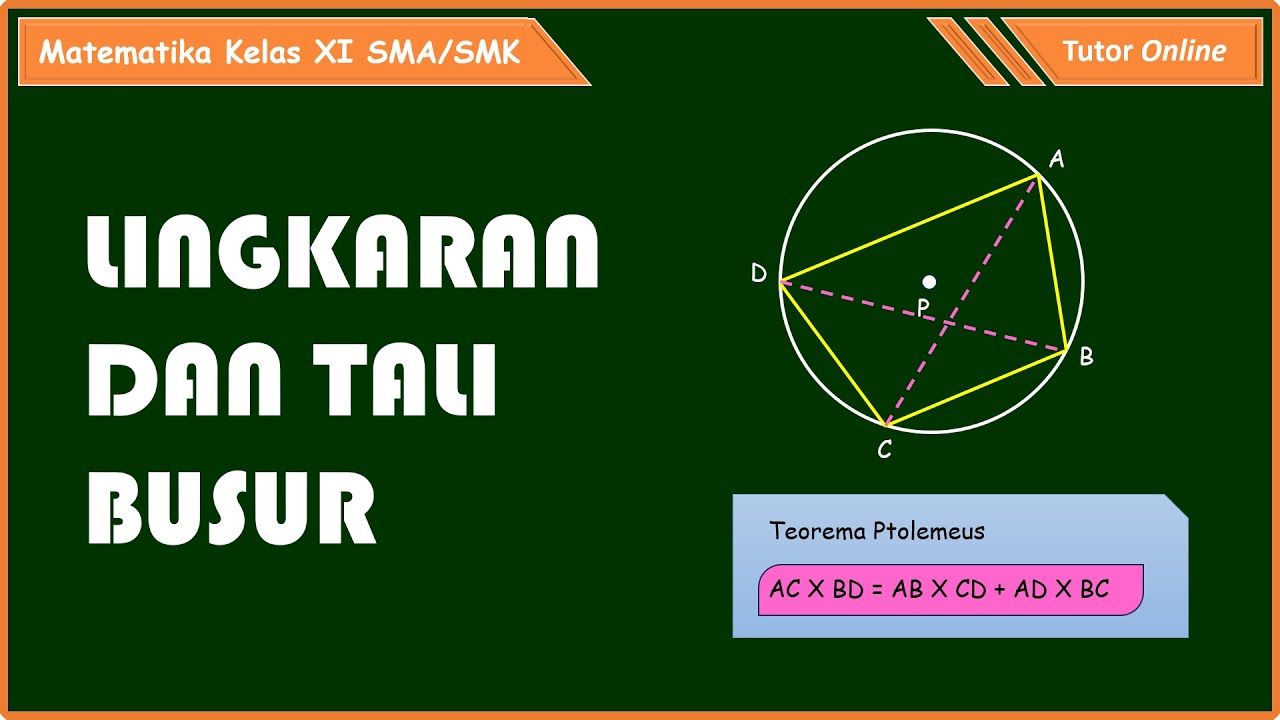



5.0 / 5 (0 votes)

