COMO SURGIU O PI ? 🤔🧮
Summary
TLDRThis video explores the fascinating history and significance of the number π (pi). Tracing back over 4,000 years to ancient Egypt and Babylon, it explains how early civilizations approximated π and highlights key mathematicians like Archimedes, Ptolemy, and Ludolf van Ceulen who refined its value over centuries. The video breaks down the concept of π as the ratio between a circle's circumference and diameter and explains its calculation. It also covers the introduction of the symbol π by Leonhard Euler in 1737 and reveals that π is an irrational number, with infinitely many decimal places, showcasing both its historical and mathematical importance.
Takeaways
- 😀 Pi originated over 4000 years ago, with early approximations made by ancient civilizations like the Egyptians and Babylonians.
- 😀 The Egyptians estimated Pi to be 3.16, and the Babylonians estimated it to be 3.125.
- 😀 Pi is a mathematical constant representing the ratio between a circle's circumference and its diameter, no matter the circle's size.
- 😀 The formula for calculating the perimeter (P) of any circle is P = d × π, where 'd' is the diameter.
- 😀 Archimedes of ancient Greece used polygons to approximate Pi, with his method achieving a value of 3.142.
- 😀 By the 5th century, Chinese mathematicians calculated Pi to be around 3.1415 using a polygon with 3,072 sides.
- 😀 In the 16th century, Dutch mathematician Ludolph van Ceulen calculated Pi to 35 decimal places, a task that took years of manual labor.
- 😀 With the advent of computers, Pi has been calculated to millions of decimal places, vastly improving the precision.
- 😀 The symbol 'π' for Pi was introduced in 1737 by Swiss mathematician Leonhard Euler.
- 😀 Pi is an irrational number, meaning its decimal expansion goes on infinitely without repeating.
- 😀 The history of Pi is marked by continuous improvements in its approximation over thousands of years, from manual calculations to modern computational methods.
Q & A
What is Pi?
-Pi is a number that represents the ratio between the circumference of a circle and its diameter. This ratio is constant, regardless of the size of the circle.
How did the ancient Egyptians estimate Pi?
-The ancient Egyptians estimated Pi to be around 3.16, based on their measurements of circles.
What did the Babylonians estimate Pi to be?
-The Babylonians approximated Pi to be 3.125.
How did Archimedes contribute to calculating Pi?
-Around the 1st century BC, Archimedes calculated the perimeter of two polygons inscribed and circumscribed within a circle. By increasing the number of sides of the polygons, he was able to approximate Pi as 3.142.
What value of Pi did Ptolemy estimate?
-Ptolemy, using a polygon with 720 sides, estimated Pi to be 3.1416.
What was the Chinese contribution to estimating Pi?
-In the 5th century, Chinese mathematicians used a polygon with 3,072 sides to estimate Pi to be 3.1415.
How did Ludolf van Selen contribute to Pi's calculation?
-In the 16th century, Ludolf van Selen calculated Pi to 35 decimal places, which was a monumental achievement at the time.
How has the calculation of Pi changed with technology?
-With the advent of computers, Pi has been calculated to millions of decimal places, greatly reducing the time and effort required to perform these calculations.
When was the symbol for Pi introduced, and who introduced it?
-The symbol for Pi (π) was introduced in 1737 by the Swiss mathematician Leonhard Euler.
What important property of Pi was discovered in the 18th century?
-In the 18th century, mathematicians discovered that Pi is an irrational number, meaning its decimal expansion is infinite and does not repeat.
Outlines

Dieser Bereich ist nur für Premium-Benutzer verfügbar. Bitte führen Sie ein Upgrade durch, um auf diesen Abschnitt zuzugreifen.
Upgrade durchführenMindmap

Dieser Bereich ist nur für Premium-Benutzer verfügbar. Bitte führen Sie ein Upgrade durch, um auf diesen Abschnitt zuzugreifen.
Upgrade durchführenKeywords

Dieser Bereich ist nur für Premium-Benutzer verfügbar. Bitte führen Sie ein Upgrade durch, um auf diesen Abschnitt zuzugreifen.
Upgrade durchführenHighlights

Dieser Bereich ist nur für Premium-Benutzer verfügbar. Bitte führen Sie ein Upgrade durch, um auf diesen Abschnitt zuzugreifen.
Upgrade durchführenTranscripts

Dieser Bereich ist nur für Premium-Benutzer verfügbar. Bitte führen Sie ein Upgrade durch, um auf diesen Abschnitt zuzugreifen.
Upgrade durchführenWeitere ähnliche Videos ansehen
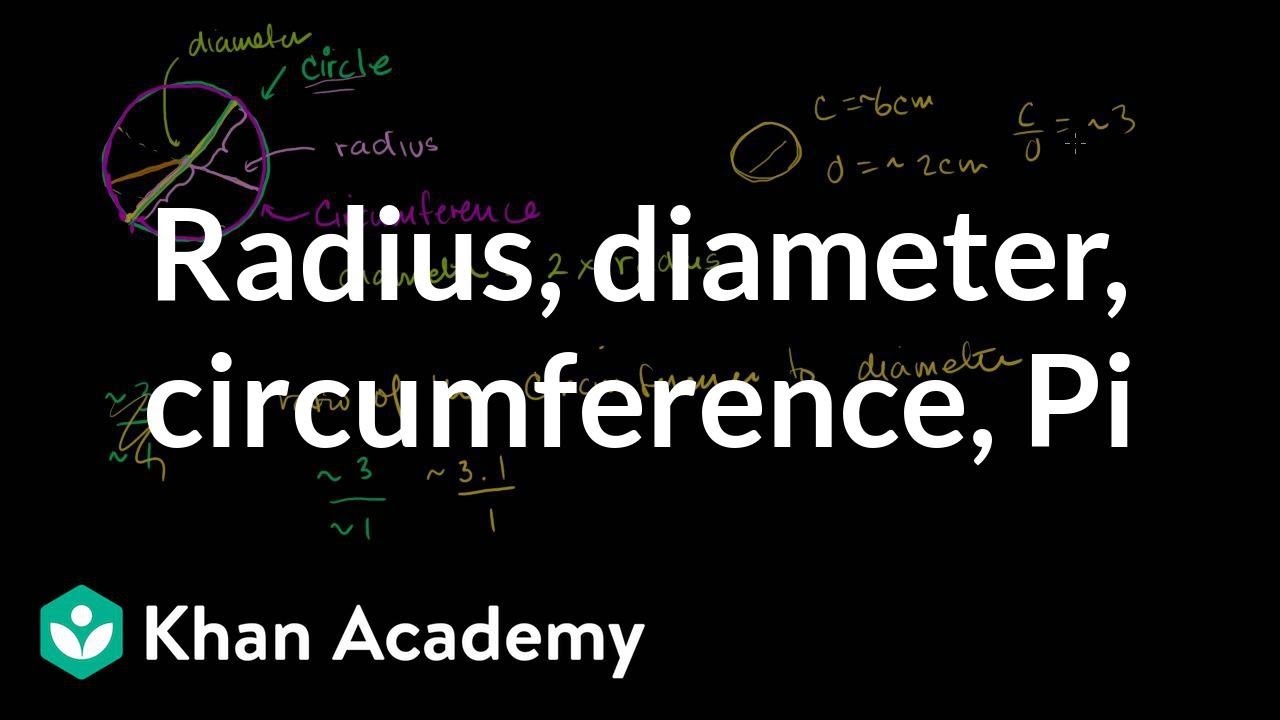
Circles: radius, diameter, circumference and Pi | Geometry | Khan Academy

Pi (π): O Número SECRETO que Explica o UNIVERSO? A Incrível História!
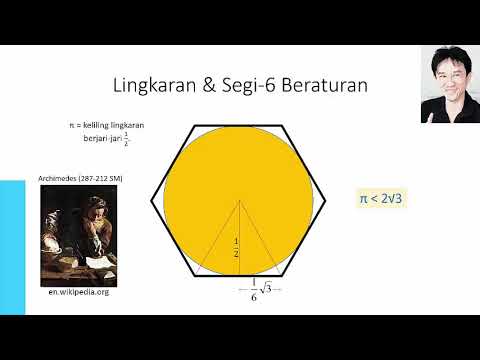
BERMATEMATIKA #17: Dari Mana Asalnya Hampiran π ≈ 22/7?

Tau vs Pi Smackdown - Numberphile
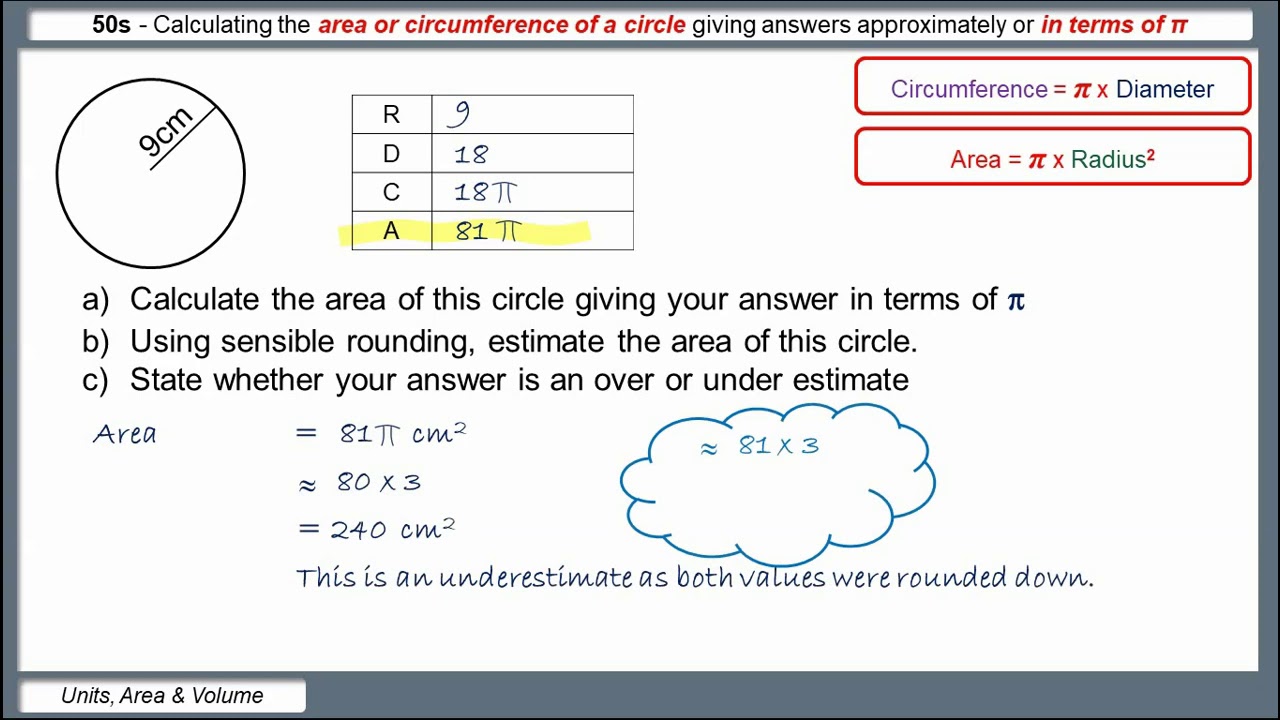
50s - Calculating area or circumference

Hidden Meanings of Symbols You See Every Day
5.0 / 5 (0 votes)

