Painful Experiments with Van De Graaff Generator
Summary
TLDRIn this video, the creator explores the fascinating workings of a Van de Graaff machine, demonstrating high-voltage arcs, capacitor behavior, and how sharp edges affect charge accumulation. They explain the science behind lightning rods, body resistance, and the role of current versus voltage in electrical safety. Despite receiving electric shocks at hundreds of kilovolts, the creator highlights the importance of current over voltage in determining danger. Through a series of experiments, including hair-raising effects and unusual phenomena with paper cups, the video offers both humor and valuable insight into electrostatics and high-voltage physics.
Takeaways
- 😀 The Van de Graaff machine generates high DC voltages, with the top dome holding charge between it and surrounding conductors or the ground ball.
- 😀 The voltage on the dome can reach up to 200,000 volts, but arcs reduce in size due to charge leakage at sharp edges.
- 😀 The voltage doesn't increase continuously because of charge leakage; the charge escaping balances the charge being put into the dome.
- 😀 Sharp edges, like nails, accelerate charge leakage, resulting in weaker arcs and preventing higher voltages from building.
- 😀 High voltage is not as dangerous as current; the body resistance and the short duration of current spikes reduce the risk of fatal harm.
- 😀 The body resistance appears high in measurements but is much lower when exposed to high voltage, allowing the charge to pass through the body.
- 😀 The capacitance of the Van de Graaff machine can be much smaller than other capacitors, like Leyden jars, causing faster discharge and less painful arcs.
- 😀 The human body can experience high voltages, but the current spikes are short-lived and quickly dissipate.
- 😀 The hair-raising effect occurs because the voltage from the dome attracts charges in the body, making hair stand up as charges accumulate.
- 😀 The behavior of a piece of paper placed on the dome demonstrates the relationship between charge distribution and the presence of arcs.
- 😀 The motor of the Van de Graaff machine generates a high level of noise, which can be mitigated by using an AC motor with a dimmer to adjust speed.
Q & A
What is the function of the Van de Graaff machine in the video?
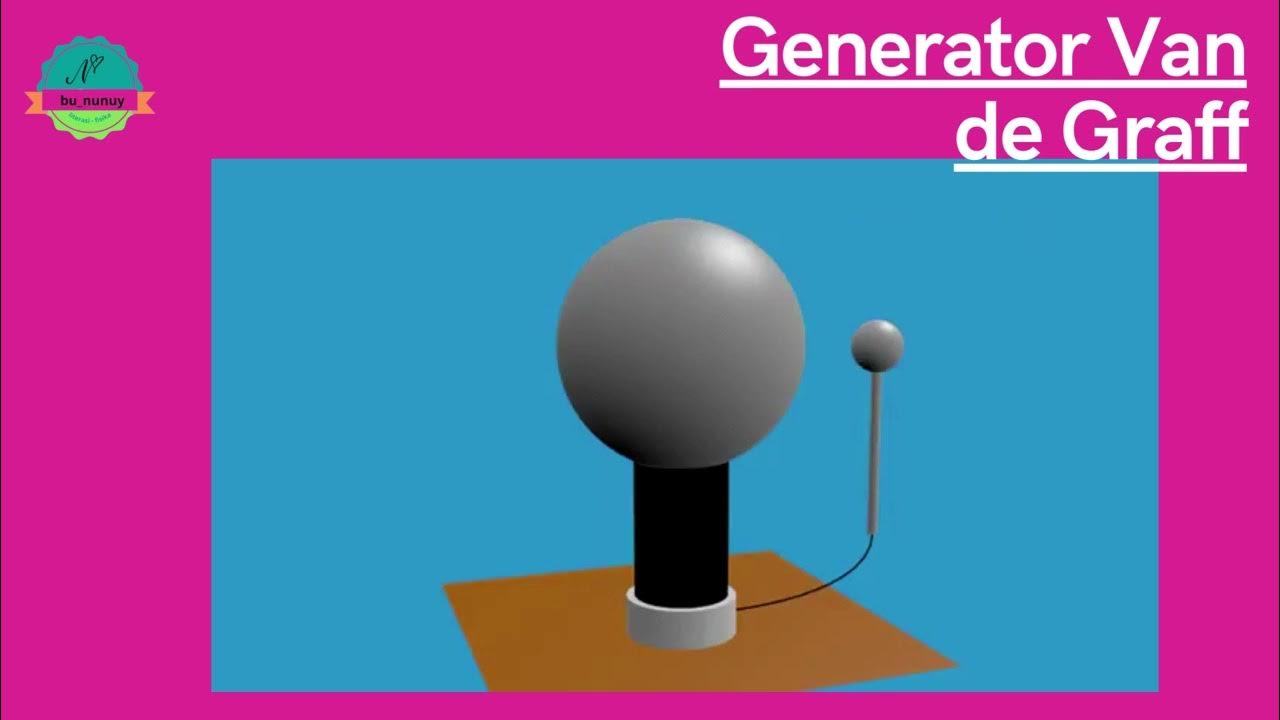
-The Van de Graaff machine creates high-voltage direct current (DC) by transferring charge to its top dome. This voltage builds up due to its capacitance, which is the stored charge between the top dome and the ground or other surrounding conductors.
Why does the voltage in the Van de Graaff machine not keep rising indefinitely?
-The voltage does not continue rising indefinitely because at higher voltages, the charge begins to leak off the dome due to the repelling forces between like charges. This leakage balances out the amount of charge being added by the belt, causing the voltage to stabilize.
Why are sharp edges or spikes dangerous for the Van de Graaff machine's voltage?
-Sharp edges or spikes increase the rate at which charges escape from the dome. This is because sharp points concentrate charge at their tips, causing the charges to leak away more rapidly, which reduces the voltage and the size of the arcs.
How does high voltage affect the human body according to the video?
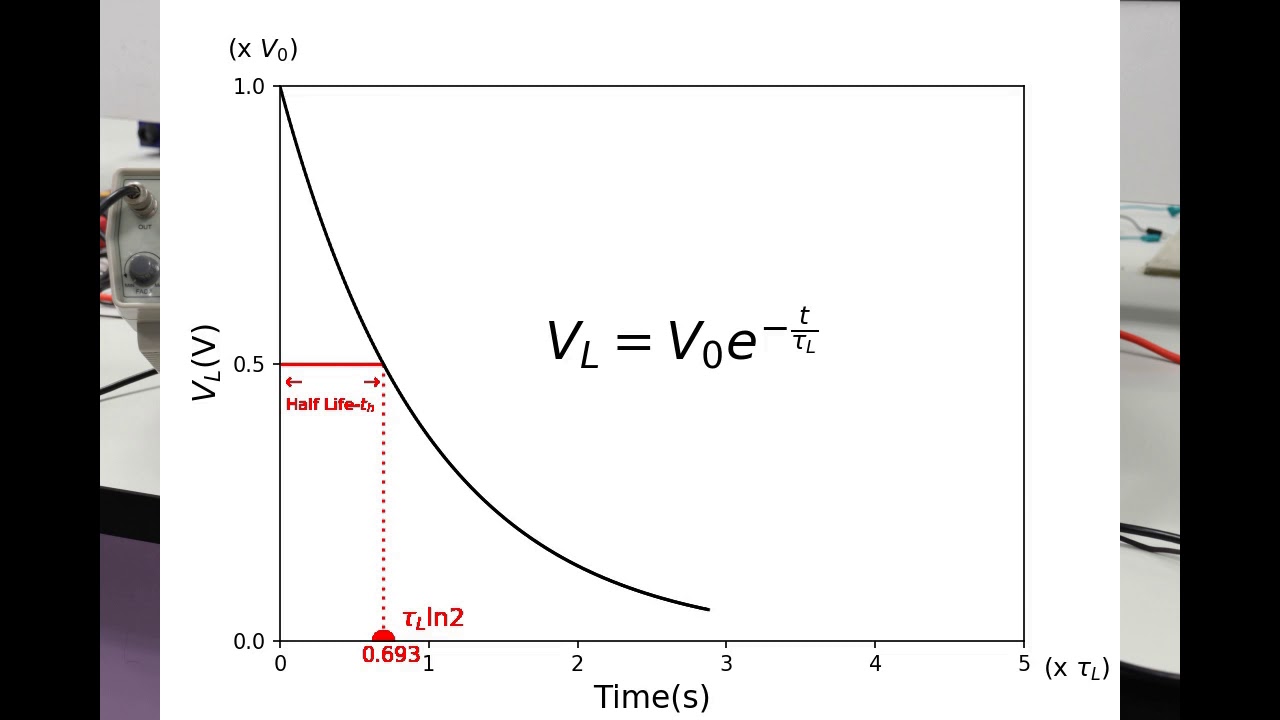
-High voltage can cause a significant spike in current through the human body, but the body’s resistance and the short duration of the arc prevent it from being fatal. Even though the current spike could theoretically reach 40 amps at 200 kV, the current quickly dissipates due to the time constant of the circuit.
What is the role of the Leyden jar in the video?
-The Leyden jar acts as a capacitor that stores electrical charge. It is used in the video to demonstrate how high-voltage discharges occur and to explain the difference in energy storage between the Leyden jar and the Van de Graaff machine.
Why does the voltage on the dome drop when the presenter gets close to it?
-The voltage on the dome drops when the presenter approaches because the human body is a conductor. The charge from the dome is transferred to the presenter’s body, effectively reducing the dome's voltage by discharging it.
Why does the presenter experience less pain with the Van de Graaff machine compared to the Leyden jar?
-The presenter feels less pain with the Van de Graaff machine because its capacitance is much smaller than that of the Leyden jar, meaning the discharge happens much faster. Even though the arcs are higher in voltage, they release their energy quicker, leading to less sensation of pain compared to the slower, higher-energy discharge of the Leyden jar.
What is the significance of the ground ball in the video?
-The ground ball is used to show how charge is transferred between the dome and a grounded conductor. The ball bounces back and forth due to the attraction and repulsion of charges between the two domes, demonstrating how the charges on the dome influence nearby objects.
Why does the presenter demonstrate hair-raising effects with the Van de Graaff machine?
-The hair-raising effect occurs because the voltage on the dome causes the charges in the presenter’s body to be redistributed, making individual hair strands repel each other as they acquire the same charge. This is an example of electrostatic repulsion in action.
What happens when the paper cup is placed on top of the dome face up versus face down?
-When the paper cup is placed face up, it flies away because the flat surface does not efficiently distribute the charge, causing it to become overcharged and repel from the dome. When placed face down, the edge of the paper cup can more easily distribute the charge, causing it to be attracted to the dome without arcs.
Outlines

Dieser Bereich ist nur für Premium-Benutzer verfügbar. Bitte führen Sie ein Upgrade durch, um auf diesen Abschnitt zuzugreifen.
Upgrade durchführenMindmap

Dieser Bereich ist nur für Premium-Benutzer verfügbar. Bitte führen Sie ein Upgrade durch, um auf diesen Abschnitt zuzugreifen.
Upgrade durchführenKeywords

Dieser Bereich ist nur für Premium-Benutzer verfügbar. Bitte führen Sie ein Upgrade durch, um auf diesen Abschnitt zuzugreifen.
Upgrade durchführenHighlights

Dieser Bereich ist nur für Premium-Benutzer verfügbar. Bitte führen Sie ein Upgrade durch, um auf diesen Abschnitt zuzugreifen.
Upgrade durchführenTranscripts

Dieser Bereich ist nur für Premium-Benutzer verfügbar. Bitte führen Sie ein Upgrade durch, um auf diesen Abschnitt zuzugreifen.
Upgrade durchführen



5.0 / 5 (0 votes)

