Il PALAZZO DI CNOSSO, come non l'hai mai visto! Videolezione 3d
Summary
TLDRThis video explores the ancient Palace of Knossos in Crete through a 3D reconstruction, bringing its rich history to life. The palace, central to the Minoan civilization, was built around 2000 BCE and remained active until the 10th century BCE. The video delves into its architecture, symbolic significance, and vibrant frescoes, offering a glimpse into Minoan life. It also highlights the mysterious abandonment of Knossos and the later influence of the Mycenaeans. Using modern technology, viewers can virtually walk through the palace, experiencing its grandeur and uncovering its ancient myths.
Takeaways
- 🏛️ Knossos is the most important archaeological site on Crete and a key symbol of Minoan civilization in the Mediterranean.
- 📅 The first palace was built around 2000 BCE during the Protopalatial period and was likely destroyed by an earthquake.
- 🏗️ The palace was rebuilt in the Neopalatial period (1700-1450 BCE) with larger size and more complex architecture.
- 🌿 Knossos lacked defensive walls, suggesting a relatively peaceful society for much of its history.
- 👑 The palace served multiple functions: administrative, religious, economic, and ceremonial.
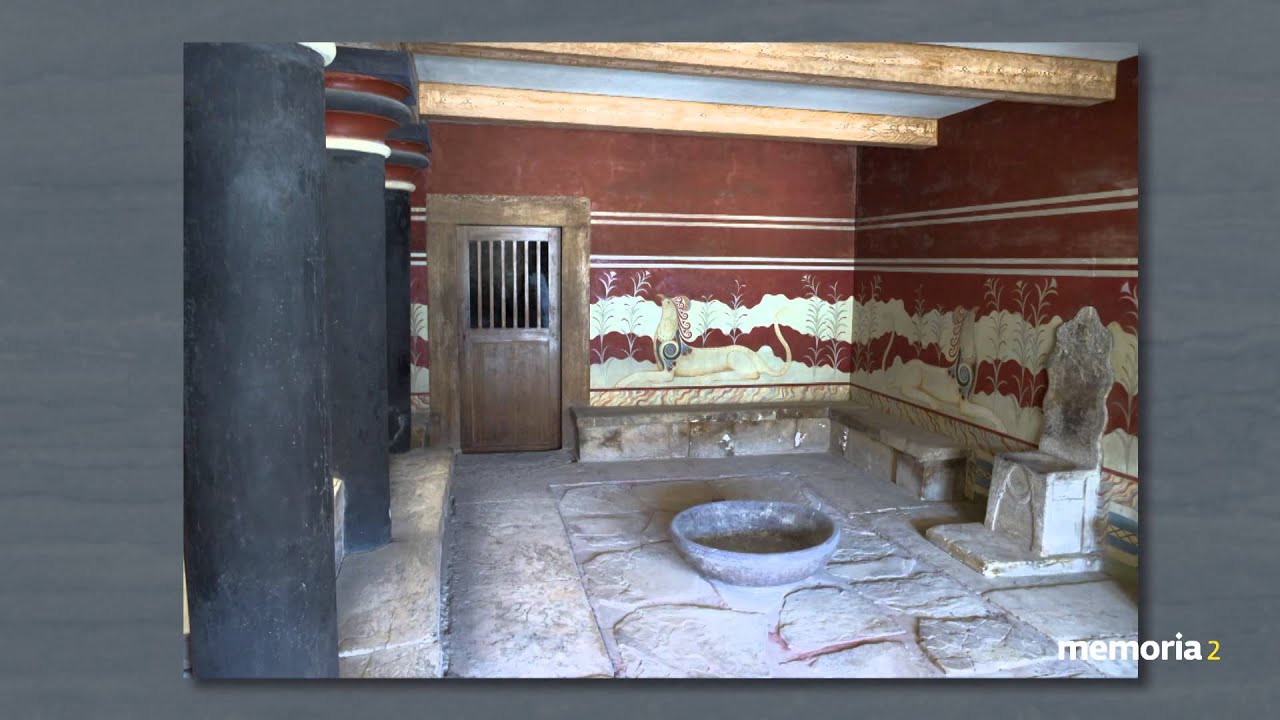
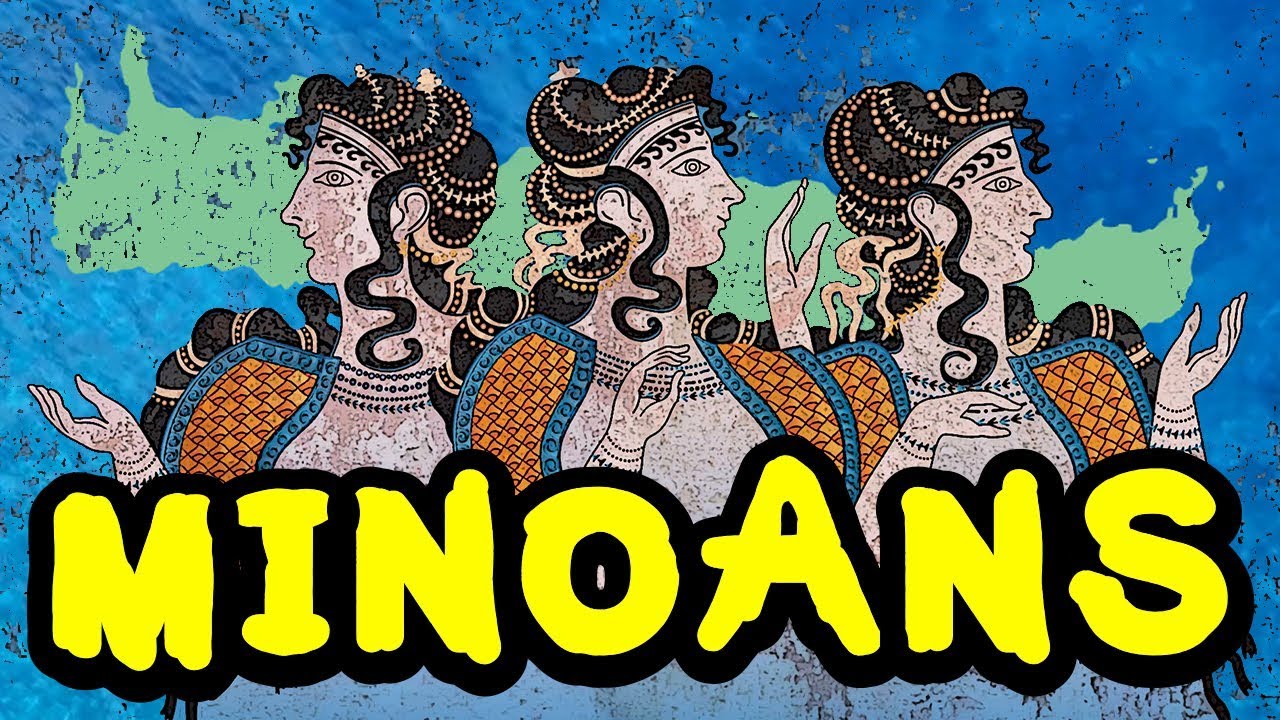
- 🎨 Wall frescoes depicted animals, marine life, dancers, priestesses, bulls, and sacred rituals, highlighting Minoan artistic culture.
- 🐂 The myth of the Minotaur and the labyrinth is connected to the palace's complex layout.
- 🪓 Recurring symbols in the palace include the horns of consecration, the labris (double axe), the solar disk, and female divine figures.
- ⚰️ After 1450 BCE, Mycenaean influence led to a decline in Knossos, which was eventually forgotten until its rediscovery by Arthur Evans in 1900.
- 💻 Modern 3D reconstructions allow immersive exploration of Knossos, providing insight into its architecture, urban layout, and cultural symbolism.
Q & A
What is the Palace of Knossos and why is it important?
-The Palace of Knossos is the most important archaeological site on the island of Crete and one of the most famous in the Mediterranean, serving as a central hub of the Minoan civilization.
When was the first palace at Knossos built?
-The first palace was built around 2000 BCE during the Protopalatial period of the Bronze Age.
What happened to the original palace structure?
-The original palace was likely destroyed by an earthquake around 1700 BCE.
What changes occurred during the Neopalatial period?
-During the Neopalatial period (1700–1450 BCE), the palace was rebuilt on a larger scale with greater complexity and architectural sophistication.
Why is the Palace of Knossos often described as a labyrinth?
-It is described as a labyrinth because of its complex layout of interconnected rooms, corridors, and spaces without a rigid central plan.
What does the absence of defensive walls suggest about Minoan society?
-The lack of defensive walls suggests that Minoan society may have been relatively peaceful, at least during certain periods.
What were the main functional areas within the palace?
-Key areas included the central courtyard, throne room, storage magazines with large jars (pithoi), royal quarters, advanced hydraulic systems, and a stepped theater for ceremonies.
What role did the palace play in Minoan civilization?
-The palace functioned as an administrative, religious, economic, and symbolic center of Minoan society.
What themes are commonly depicted in the frescoes of Knossos?
-The frescoes depict marine life, dancers, priestesses, bulls, and sacred rituals, reflecting both daily life and religious beliefs.
How is the myth of the Minotaur connected to Knossos?
-The myth of the Minotaur, a creature kept in a labyrinth by King Minos, is thought to be inspired by the palace’s complex structure and the cultural importance of the bull.
What are some important symbols found at Knossos?
-Important symbols include the horns of consecration, the labrys (double axe), the solar disk, and representations of female deities.
What happened to Knossos after 1450 BCE?
-After 1450 BCE, the palace lost its role as the center of Minoan power and came under Mycenaean influence, leading to its gradual decline.
Who rediscovered Knossos and when?
-Knossos was rediscovered and excavated in 1900 by British archaeologist Arthur Evans.
Why is Arthur Evans’ work at Knossos controversial?
-Evans not only excavated but also reconstructed parts of the site, sometimes using subjective interpretations that are still debated today.
How does 3D reconstruction enhance the understanding of Knossos?
-3D reconstruction allows viewers to explore the palace’s original structure, visualize building heights, navigate spaces, and better understand its architecture and cultural context.
Outlines

Dieser Bereich ist nur für Premium-Benutzer verfügbar. Bitte führen Sie ein Upgrade durch, um auf diesen Abschnitt zuzugreifen.
Upgrade durchführenMindmap

Dieser Bereich ist nur für Premium-Benutzer verfügbar. Bitte führen Sie ein Upgrade durch, um auf diesen Abschnitt zuzugreifen.
Upgrade durchführenKeywords

Dieser Bereich ist nur für Premium-Benutzer verfügbar. Bitte führen Sie ein Upgrade durch, um auf diesen Abschnitt zuzugreifen.
Upgrade durchführenHighlights

Dieser Bereich ist nur für Premium-Benutzer verfügbar. Bitte führen Sie ein Upgrade durch, um auf diesen Abschnitt zuzugreifen.
Upgrade durchführenTranscripts

Dieser Bereich ist nur für Premium-Benutzer verfügbar. Bitte führen Sie ein Upgrade durch, um auf diesen Abschnitt zuzugreifen.
Upgrade durchführenWeitere ähnliche Videos ansehen




5.0 / 5 (0 votes)

