KIMIA KELAS 10: KEELEKTRONEGATIFAN
Summary
TLDRIn this video, the topic of electronegativity is explored, focusing on its concept and relation to other periodic properties such as electron affinity and ionization energy. The video explains how electronegativity represents an atom's ability to attract electrons when forming chemical bonds to create molecules, with water (H₂O) used as an example. It also discusses the trend of electronegativity across periods and groups in the periodic table, providing a practical example of how to arrange elements based on their electronegativity values. The video concludes with an invitation for viewers to request more topics for future lessons.
Takeaways
- 😀 Electronegativity refers to an atom's ability to attract electrons when forming a chemical bond with another atom.
- 😀 Electronegativity is conceptually similar to electron affinity and ionization energy but focuses on bond formation rather than ion formation.
- 😀 Electron affinity involves an atom capturing an electron to form a negatively charged ion, while electronegativity deals with the attraction of electrons to form a molecule.
- 😀 The difference between electron affinity and electronegativity is that electronegativity is concerned with the formation of chemical bonds and molecules.
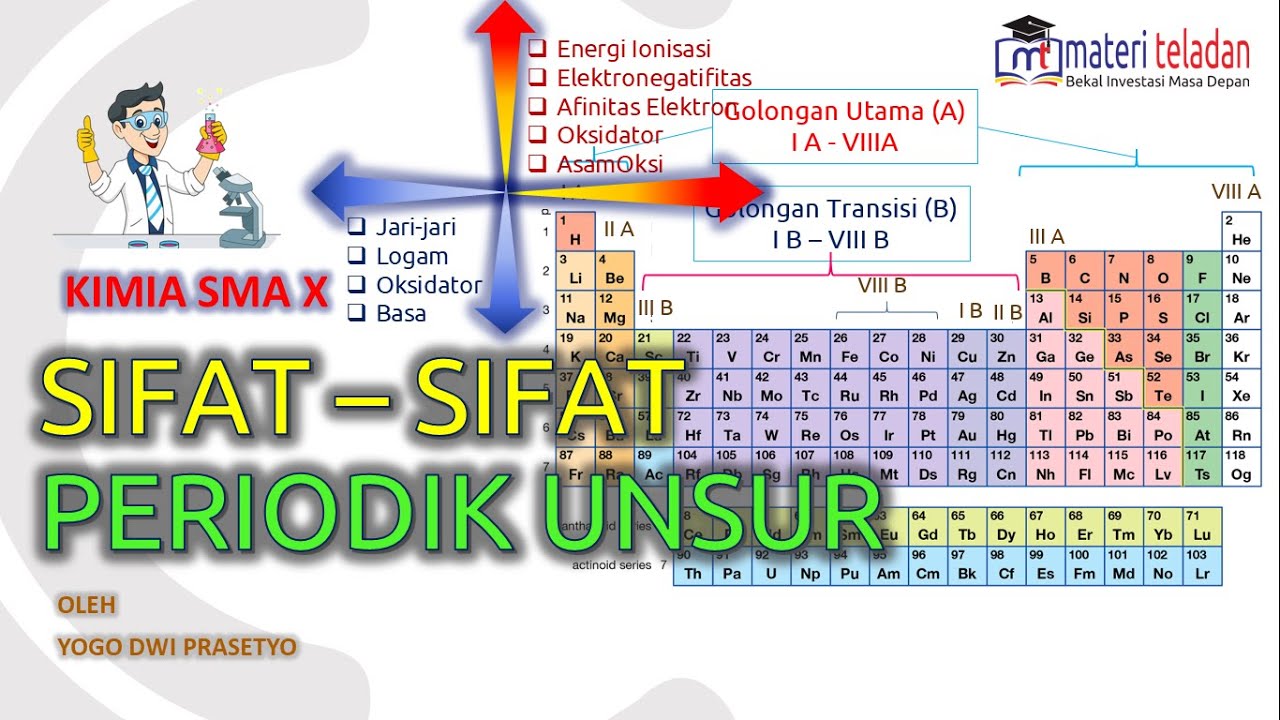
- 😀 Electronegativity increases across a period (left to right) and up a group (bottom to top) on the periodic table.
- 😀 A higher electronegativity means that an atom has a stronger ability to pull electrons towards itself in a bond.
- 😀 An example of electronegativity in action is the formation of water (H₂O), where oxygen attracts electrons more strongly than hydrogen, forming a chemical bond.
- 😀 In water, the oxygen atom's higher electronegativity results in a stronger attraction of electrons, creating a stable molecular bond.
- 😀 The concept of electronegativity trends in periods and groups is similar to the trends of ionization energy and electron affinity.
- 😀 A sample problem shows how to arrange elements by their electronegativity values from low to high, demonstrating how to determine the order of elements in a period based on their electronegativity.
- 😀 The lecture concludes with an invitation for viewers to comment on topics or problems they would like to see covered in future videos.
Q & A
What is electronegativity, and how is it different from electron affinity?
-Electronegativity refers to an atom's ability to attract electrons when forming a chemical bond, specifically in molecules. While electron affinity is the energy released when an atom gains an electron to become an ion, electronegativity is concerned with how strongly an atom can attract electrons when it is part of a molecule, forming a chemical bond.
What is the role of electron affinity in the formation of ions?
-Electron affinity is the energy change that occurs when an atom captures an electron to form an ion, typically an anion. This process is important because it reflects how likely an atom is to gain an electron and thus become negatively charged.
How does electronegativity affect the formation of chemical bonds?
-Electronegativity affects how atoms in a molecule share electrons. An atom with higher electronegativity attracts the shared electrons more strongly, leading to an uneven distribution of electron density. This can create polar bonds, where one atom is partially negative and the other partially positive.
What is the difference between electronegativity and chemical bonding?
-Electronegativity is the tendency of an atom to attract electrons in a molecule, while chemical bonding refers to the actual interaction or attraction between atoms. Electronegativity influences the type of bond that forms (e.g., covalent, ionic), but bonding is the result of interactions between atoms to form a stable structure.
How do electronegativity values trend across the periodic table?
-Electronegativity increases as you move from left to right across a period and decreases as you move down a group. This is because atoms on the right side of the periodic table have more protons and a stronger ability to attract electrons, while larger atoms lower down have a weaker attraction.
Can you explain the relationship between electronegativity and the example of the water molecule (H2O)?
-In the water molecule (H2O), the oxygen atom is more electronegative than the hydrogen atoms. This means oxygen attracts the shared electrons more strongly, creating a polar bond where the oxygen atom becomes partially negative and the hydrogen atoms become partially positive.
Why is it important to understand the concept of electronegativity when studying periodic trends?
-Understanding electronegativity helps explain the reactivity and bonding behavior of elements in different groups and periods. It provides insight into how atoms will interact with each other, affecting their chemical properties and how they form bonds in compounds.
How are electronegativity values used in problem-solving exercises or quizzes?
-In exercises or quizzes, electronegativity values are often used to determine the type of bond between atoms, predict molecular properties, and rank elements based on their ability to attract electrons. Understanding how electronegativity trends work helps solve such problems accurately.
What is the significance of the electronegativity trend from left to right across a period?
-The electronegativity trend from left to right across a period indicates that atoms become more effective at attracting electrons as they approach a full outer electron shell. This is due to an increasing number of protons in the nucleus, which enhances the atom’s ability to pull electrons from other atoms.
How does the electronegativity trend relate to the concept of ionization energy?
-Both electronegativity and ionization energy are related to an atom’s ability to attract or retain electrons. Higher electronegativity often correlates with higher ionization energy because atoms that attract electrons strongly also tend to hold onto their own electrons more tightly, requiring more energy to remove them.
Outlines

Dieser Bereich ist nur für Premium-Benutzer verfügbar. Bitte führen Sie ein Upgrade durch, um auf diesen Abschnitt zuzugreifen.
Upgrade durchführenMindmap

Dieser Bereich ist nur für Premium-Benutzer verfügbar. Bitte führen Sie ein Upgrade durch, um auf diesen Abschnitt zuzugreifen.
Upgrade durchführenKeywords

Dieser Bereich ist nur für Premium-Benutzer verfügbar. Bitte führen Sie ein Upgrade durch, um auf diesen Abschnitt zuzugreifen.
Upgrade durchführenHighlights

Dieser Bereich ist nur für Premium-Benutzer verfügbar. Bitte führen Sie ein Upgrade durch, um auf diesen Abschnitt zuzugreifen.
Upgrade durchführenTranscripts

Dieser Bereich ist nur für Premium-Benutzer verfügbar. Bitte führen Sie ein Upgrade durch, um auf diesen Abschnitt zuzugreifen.
Upgrade durchführenWeitere ähnliche Videos ansehen

SISTEM PERIODIK UNSUR [Sifat Sifat Periodik Unsur]

Sifat Periodik Unsur | Jari jari Atom | Energi Ionisasi | Afinitas Elektron | Elektronegativitas

Kimia Kelas X | Sifat- Sifat Keperiodikan Suatu Unsur.

PROPRIEDADES DA TABELA PERIÓDICA | Resumo de Química Enem. Professor Felipe Sobis

Sistem Periodik Unsur • Part 6: Sifat Keperiodikan Unsur
Sifat Keperiodikan Unsur Kelas X
5.0 / 5 (0 votes)

