Directional Boring I Trenchless Technology I Horizontal Directional Drilling
Summary
TLDRDirectional Boring, also known as horizontal directional drilling, is an innovative technology used to install underground pipes without disturbing the surface above. It involves a three-step process: drilling a pilot hole, enlarging the bore, and pulling the pipe through. This method is ideal for crossing roads and existing structures, especially where traditional trenching is impractical. Directional Boring works in various soil types but is not suitable for rocky layers. It offers numerous benefits, including minimal environmental disturbance, reduced groundwater contamination, and less weather dependency compared to traditional boring methods, though it comes at a higher cost.
Takeaways
- 😀 Directional Boring, also known as horizontal directional drilling, is used to install underground pipes without disturbing the surface above the borehole.
- 😀 It is commonly used for installing utility pipelines and conduits, especially for crossings along roads or existing structures.
- 😀 The process involves three main steps: drilling a pilot hole, enlarging the bore to the required diameter, and pulling the pipeline into the hole.
- 😀 Directional Boring is ideal for situations where trenching or traditional excavation is not feasible or practical.
- 😀 It can be used in a variety of soil conditions, but is less effective in areas with incomplete rock layers or cobblestones.
- 😀 Directional Boring is effective in solid rock or sedimentary rocks, where traditional methods might face challenges.
- 😀 Unlike traditional boring, Directional Boring does not disturb the surface, making it suitable for areas with roads, rivers, or buildings.
- 😀 The cost of traditional boring is generally lower compared to Directional Boring, but the latter ensures better quality and finish.
- 😀 One of the main advantages of Directional Boring is its minimal impact on the environment, as it reduces soil disturbance and contamination of groundwater.
- 😀 Directional Boring is less impacted by weather conditions, making it a more reliable option compared to traditional methods.
- 😀 Overall, Directional Boring is an eco-friendly, efficient, and safer method for underground pipe installation, offering a better solution in certain construction scenarios.
Q & A
What is Directional Boring?
-Directional Boring, also known as horizontal directional drilling, is a technique used to install underground pipes without disturbing the area above the borehole. It is typically used for the installation of utility pipelines and conduits.
What are the primary steps involved in Directional Boring?
-The Directional Boring process involves three main steps: 1) Drilling a pilot hole along a directional path from one surface to another, 2) Enlarging the bore to a diameter suitable for the required pipe, and 3) Pulling the pipeline into the hole to create a continuous underground pipeline.
What types of pipes can be installed using Directional Boring?
-Directional Boring can be used to install various types of pipes, including PVC, ductile iron, polyethylene, steel, and polypropylene.
In what soil conditions is Directional Boring most effective?
-Directional Boring is most effective in solid rock or sedimentary rocks. It is less feasible in soils with large boulders, gravel, or incomplete layers of rock.
How does Directional Boring differ from traditional boring methods like trenching?
-Traditional boring methods, such as trenching or open-cut digging, require disturbing the ground above the utilities, which can be problematic in areas with buildings, rivers, or roads. In contrast, Directional Boring allows for the installation of pipes without disturbing the surface above, making it more suitable for sensitive or urban environments.
Is Directional Boring more expensive than traditional boring?
-Yes, Directional Boring is generally more expensive than traditional boring methods. However, it offers greater precision and a higher-quality finish, making it a more reliable option despite the higher cost.
What environmental benefits does Directional Boring offer?
-Directional Boring is an eco-friendly method that minimizes soil disturbance, reduces groundwater contamination, and helps protect the surrounding ecosystem compared to traditional excavation methods.
Can Directional Boring be performed in any weather conditions?
-Yes, Directional Boring is less influenced by weather conditions compared to traditional excavation methods, making it a reliable option regardless of climate.
Why is Directional Boring preferred in urban areas or areas with sensitive structures?
-Directional Boring is preferred in such areas because it does not disturb the surface above the borehole, allowing for the installation of utilities without damaging roads, buildings, or other existing structures.
What is the main advantage of Directional Boring over traditional excavation methods?
-The main advantage of Directional Boring is its ability to install pipelines without disturbing the surface above, leading to less disruption, lower environmental impact, and fewer logistical challenges compared to traditional excavation.
Outlines

Dieser Bereich ist nur für Premium-Benutzer verfügbar. Bitte führen Sie ein Upgrade durch, um auf diesen Abschnitt zuzugreifen.
Upgrade durchführenMindmap

Dieser Bereich ist nur für Premium-Benutzer verfügbar. Bitte führen Sie ein Upgrade durch, um auf diesen Abschnitt zuzugreifen.
Upgrade durchführenKeywords

Dieser Bereich ist nur für Premium-Benutzer verfügbar. Bitte führen Sie ein Upgrade durch, um auf diesen Abschnitt zuzugreifen.
Upgrade durchführenHighlights

Dieser Bereich ist nur für Premium-Benutzer verfügbar. Bitte führen Sie ein Upgrade durch, um auf diesen Abschnitt zuzugreifen.
Upgrade durchführenTranscripts

Dieser Bereich ist nur für Premium-Benutzer verfügbar. Bitte führen Sie ein Upgrade durch, um auf diesen Abschnitt zuzugreifen.
Upgrade durchführenWeitere ähnliche Videos ansehen
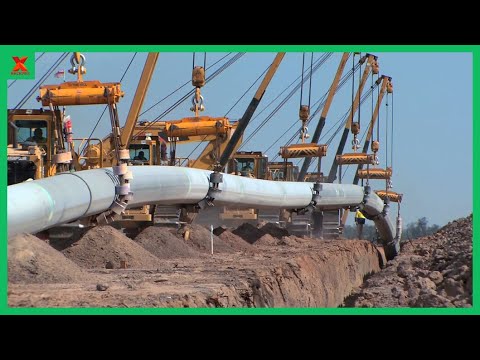
Construction Process Of One Of The Largest Oil And Gas Pipelines In The World.

Directional Control Valve Working Animation | 5/2 Solenoid Valve | Pneumatic Valve Symbols Explained

Bi Directional Replication Tasks

Auger: Deep-water Pioneer

Drilling Machine Operations: Boring, Reaming, Counter Sinking, Spot Facing, Tapping | Shubham Kola

TA Cloning (PCR cloning)
5.0 / 5 (0 votes)

