LECTURE D'UN ECG : les bases des bases (partie 1)
Summary
TLDRIn this video, the creator discusses the basics of reading an electrocardiogram (ECG), aiming to help healthcare professionals better understand ECGs, from nurses to doctors. The video explains the essential electrical activity of the heart, including depolarization, repolarization, and how these processes correspond to the waves seen on an ECG. The presenter emphasizes the importance of recognizing ECG anomalies in daily medical practice. This is the first episode of a series meant to break down ECG reading step-by-step throughout the year, with further content planned on different ECG derivations and advanced interpretation techniques.
Takeaways
- 😀 The video creator is addressing the long-awaited request to explain electrocardiogram (ECG) readings.
- 😀 The creator's goal is to teach viewers how to distinguish between physiological and pathological ECGs through a series of videos in 2023.
- 😀 Although not a 100% expert, the creator is committed to learning more about ECGs and simplifying complex concepts for a wide audience.
- 😀 ECG interpretation is important for medical professionals such as nurses, doctors, and physiotherapists, even if they don’t directly interpret ECGs in practice.
- 😀 The video aims to break down ECG reading into small, digestible lessons throughout the year for better understanding.
- 😀 The video begins with the basics of ECG: the relationship between electrical and mechanical activity in the heart, and concepts like depolarization and repolarization of cardiac cells.
- 😀 Depolarization of heart cells leads to contraction, while repolarization is the process of restoring the cell's charge balance.
- 😀 The video introduces the importance of sodium and potassium ions in maintaining the electrical potential of cardiac cells.
- 😀 The heart has an organized conduction system with backup pacemakers to regulate heart rhythm. The sinoatrial (SA) node is the primary pacemaker, followed by atrial, junctional, and ventricular pacemakers if needed.
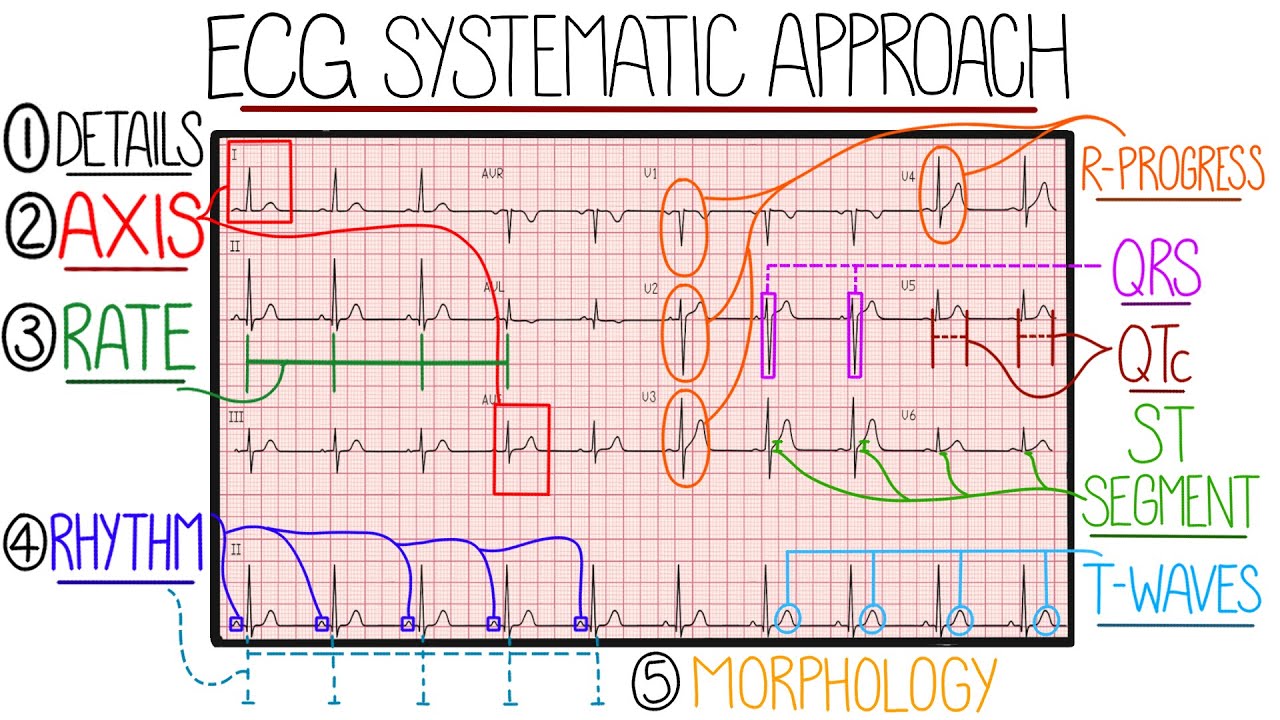
- 😀 The heart's depolarization wave spreads in a coordinated manner through the atria and ventricles, resulting in contraction. This wave is reflected on an ECG with the P wave (atria), QRS complex (ventricles), and T wave (repolarization).
- 😀 The video emphasizes that the electrical activity seen on an ECG corresponds to the mechanical contraction of the heart, which is crucial for understanding and diagnosing heart conditions.
Q & A
What is the purpose of the video series?
-The purpose of the video series is to help viewers, especially healthcare professionals and students, learn to read and understand electrocardiograms (ECGs), particularly how to differentiate between physiological and pathological ECGs.
Why did the creator delay making the ECG videos?
-The creator delayed making the ECG videos due to taking on a new role at the SAMU (Emergency Medical Service) and continuing to create content on Instagram, which took up much of their time.
What is the significance of learning ECG interpretation for healthcare professionals?
-Learning ECG interpretation is crucial for healthcare professionals, such as nurses, doctors, and physiotherapists, because it allows them to recognize abnormalities in heart rhythms and make informed decisions regarding patient care, even though nurses don't typically interpret ECGs themselves.
What does the term 'depolarization' refer to in the context of ECG?
-Depolarization refers to the process where cardiac cells reverse their electrical charge—becoming more positive inside the cell—which triggers their contraction. It is a key part of the heart's electrical activity.
What is the role of sodium and potassium ions in cardiac cells?
-Sodium ions are more concentrated outside the cardiac cells, while potassium ions are more concentrated inside the cells. During depolarization, sodium enters the cells, causing the inside to become more positive, while potassium exits the cells to restore balance during repolarization.
What is the significance of the 'P wave' in an ECG?
-The P wave represents the depolarization of the atria (the upper chambers of the heart). It corresponds to the contraction of the atria, which is the first step in the heart's overall contraction cycle.
How does the 'QRS complex' relate to heart function?
-The QRS complex represents the depolarization of the ventricles, the lower chambers of the heart. This is a crucial event because it leads to the contraction of the ventricles, which pumps blood throughout the body.
What is the purpose of the 'T wave' on an ECG?
-The T wave represents the repolarization of the ventricles. It indicates that the ventricular cells are returning to their resting state after contraction, preparing for the next depolarization cycle.
What does the 'PR interval' on an ECG indicate?
-The PR interval is the time it takes for the electrical signal to travel from the atria through the AV node to the ventricles. This period is essential because it ensures that the atria have enough time to contract and empty blood into the ventricles before they contract.
What happens if the SA node fails to function properly?
-If the SA node fails, other parts of the heart can take over its function in a hierarchical manner. First, the atrial foci can take over, followed by the AV node, and if necessary, the ventricular foci can assume control, though at a much slower rate.
What is the clinical importance of understanding the QT interval?
-The QT interval represents the time it takes for the ventricles to contract and then repolarize. Changes in the QT interval, such as lengthening or shortening, can indicate potential arrhythmias or other heart conditions, making it essential for accurate heart monitoring.
Outlines

Dieser Bereich ist nur für Premium-Benutzer verfügbar. Bitte führen Sie ein Upgrade durch, um auf diesen Abschnitt zuzugreifen.
Upgrade durchführenMindmap

Dieser Bereich ist nur für Premium-Benutzer verfügbar. Bitte führen Sie ein Upgrade durch, um auf diesen Abschnitt zuzugreifen.
Upgrade durchführenKeywords

Dieser Bereich ist nur für Premium-Benutzer verfügbar. Bitte führen Sie ein Upgrade durch, um auf diesen Abschnitt zuzugreifen.
Upgrade durchführenHighlights

Dieser Bereich ist nur für Premium-Benutzer verfügbar. Bitte führen Sie ein Upgrade durch, um auf diesen Abschnitt zuzugreifen.
Upgrade durchführenTranscripts

Dieser Bereich ist nur für Premium-Benutzer verfügbar. Bitte führen Sie ein Upgrade durch, um auf diesen Abschnitt zuzugreifen.
Upgrade durchführenWeitere ähnliche Videos ansehen

ELETROCARDIOGRAMA FÁCIL E RÁPIDO: ENTENDENDO OS PRIMEIROS PASSOS DO ECG

How To Read An ECG

Simulasi Rangkaian Seri dan Paralel

Poverty, unemployment and sanctions fuel Iran’s brain drain
ECG Interpretation Made Easy (Learn How to Interpret an ECG in 13 Minutes)

How to interpret an ECG systematically | EXPLAINED CLEARLY!
5.0 / 5 (0 votes)

