How polyglots learn languages | The book that changed my life
Summary
TLDRIn this video, the speaker reflects on how Catalom's book inspired their journey in language learning and teaching. Catalom's belief that language mastery comes from time, interest, and practice, rather than talent, shaped the speaker's approach. They explore her ideas on overcoming fear of mistakes, the importance of immersion combined with logical practice, and the value of learning in context. The speaker agrees with many of her views but offers their own take on modern methods, such as using textbooks in the target language and balancing motivation with discipline for long-term success in language acquisition.
Takeaways
- 📚 The speaker was deeply inspired by Kato Lomb’s book, which sparked their passion for language learning and influenced their decision to study linguistics.
- 🧠 Lomb emphasized that language success comes from interest and time, not innate talent—summed up in her formula: time + interest = results.
- 😅 Adults often block themselves due to fear of mistakes; reducing fear and embracing errors is essential for real progress.
- 🏛️ Lomb’s metaphor of language as a building—with speaking, listening, reading, and writing as four halls—highlights the need for balanced, well-rounded practice.
- 🌍 Immersion is powerful when combined with conscious, structured study; it isn’t passive but reinforces patterns learned through active practice.
- 📝 Vocabulary should be learned in context, not as isolated word lists; creating personal example sentences helps build meaningful connections.
- ⚙️ Grammar is a system that adults must understand, but direct transfer of rules from one language to another often leads to mistakes.
- 📖 Reading is central but shouldn’t feel torturous—learners should choose appropriate materials and avoid translating every word to maintain flow.
- 🧑🏫 A good teacher is crucial to prevent fossilized errors and to provide correction, guidance, and an environment where students feel comfortable speaking.
- 💪 Motivation brings learners to a language, but consistency and discipline keep them progressing through small daily habits.
- 🧩 No language is inherently easy or difficult; each has its own balance of challenges and advantages, and true progress depends on personal interest.
- 💡 Modern textbooks written entirely in the target language can be highly effective thanks to clear methodology and early exposure.
Q & A
What inspired the author to pursue linguistics and language learning?
-The author was inspired by the book written by Catalom, who learned 28 languages and spoke 16 fluently. The author was particularly moved by Catalom's approach to language learning and her belief that progress comes from interest and time, not innate talent.
What is Catalom's perspective on talent and language learning?
-Catalom believed that there is no innate talent required for language learning. She started learning languages in her adult years and argued that progress comes from consistent interest and time spent on learning, rather than being naturally gifted.
What role does fear play in language learning, according to the author?
-The author discusses how adults often block themselves when speaking a foreign language out of fear of making mistakes. This fear leads to silence or avoidance of speaking, which the author relates to their own experience. Over time, the author learned to embrace mistakes as part of the learning process.
What is the updated formula for language learning shared by the author?
-The author updates Catalom's formula to: 'Time + Motivation ÷ Fear = Result.' This emphasizes that motivation and overcoming the fear of making mistakes are key to successful language learning.
How does Catalom view the difference between men and women in language learning?
-Catalom suggested that women are generally less shy and have a stronger need for communication, which might make them more successful in language learning. The author, however, is uncertain about this perspective and doesn't fully agree with it.
What are some metaphors used in the book to describe language learning?
-Catalom compares language knowledge to a building with four main components: speaking, listening, reading, and writing. The author also shares a metaphor where language knowledge is like a nail; if not deeply learned, it will fall out under pressure.
What is the author's stance on immersion in language learning?
-The author believes that while Catalom criticized immersion as a passive method, they view immersion as a valuable tool. Immersion helps expose learners to natural language patterns, while conscious practice strengthens these patterns.
What is the author's view on vocabulary learning methods?
-The author disagrees with the traditional two-column vocabulary method, as it isolates words from real context. Instead, the author advocates for learning words in context, using examples and creating sentences to make the vocabulary more personal and memorable.
How does the author approach grammar learning in language acquisition?
-The author agrees with Catalom's point that grammar is a system that cannot be avoided in adult language learning. Grammar should be studied in combination with other language skills like reading and listening, and it should be learned in context to avoid fragmented knowledge.
Why does the author disagree with Catalom's advice on comparing languages?
-The author disagrees with Catalom's suggestion to apply grammar structures from one language to another. For example, trying to compare Russian and Turkish grammar led to errors for the author. The author believes it's more effective to approach each language on its own terms rather than relying on cross-linguistic transfer.
Outlines

Dieser Bereich ist nur für Premium-Benutzer verfügbar. Bitte führen Sie ein Upgrade durch, um auf diesen Abschnitt zuzugreifen.
Upgrade durchführenMindmap

Dieser Bereich ist nur für Premium-Benutzer verfügbar. Bitte führen Sie ein Upgrade durch, um auf diesen Abschnitt zuzugreifen.
Upgrade durchführenKeywords

Dieser Bereich ist nur für Premium-Benutzer verfügbar. Bitte führen Sie ein Upgrade durch, um auf diesen Abschnitt zuzugreifen.
Upgrade durchführenHighlights

Dieser Bereich ist nur für Premium-Benutzer verfügbar. Bitte führen Sie ein Upgrade durch, um auf diesen Abschnitt zuzugreifen.
Upgrade durchführenTranscripts

Dieser Bereich ist nur für Premium-Benutzer verfügbar. Bitte führen Sie ein Upgrade durch, um auf diesen Abschnitt zuzugreifen.
Upgrade durchführenWeitere ähnliche Videos ansehen

My Advice For Learning Languages As An Adult
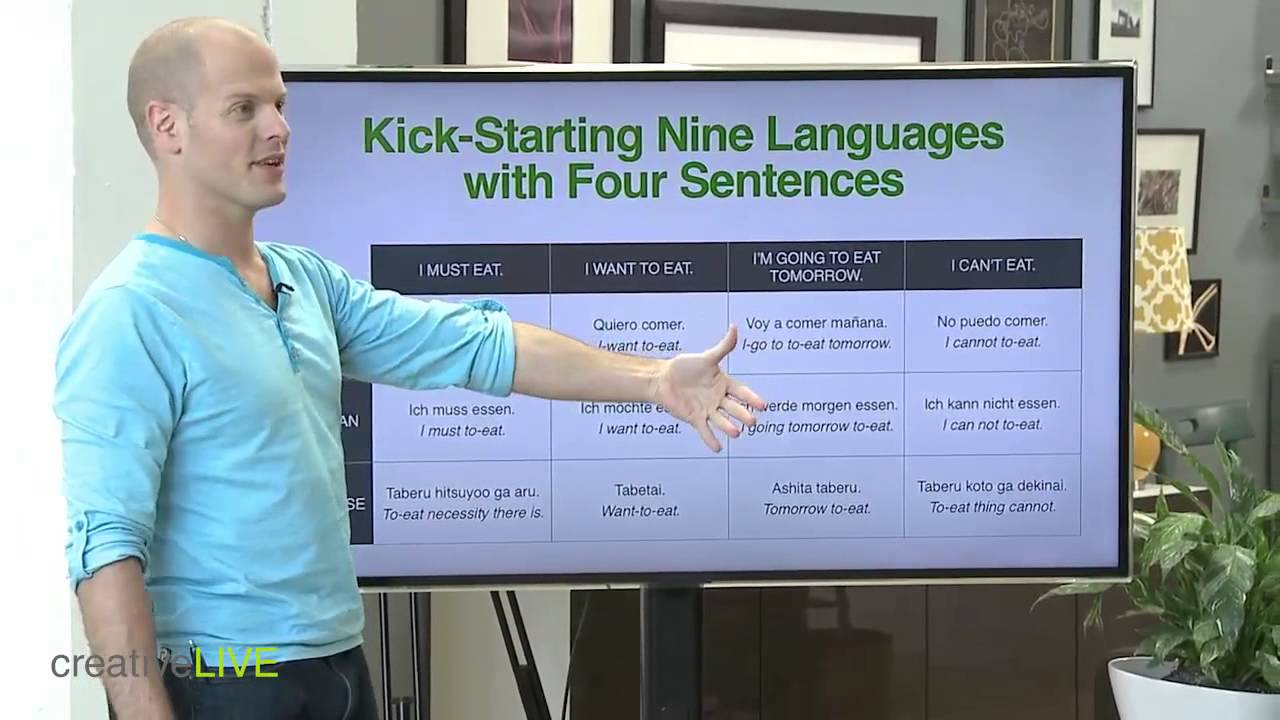
Tim Ferriss about how he learns languages

Complex, not complicated: Diane Larsen Freeman on Complexity Theory in Applied Linguistics (Part 1)

Perkenalan Mentor
Digital Storytelling (Reflection) | Diva Putri Joelkarnaen | 1B Farmasi

Video Pembelajaran Media Jarwo_Imawati, SD Al Falah Darussalam 2_UMSIDA
5.0 / 5 (0 votes)

