Reynolds, Venturi, Efecto Magnus y Cohetes - MECÁNICA DE FLUIDOS I
Summary
TLDRIn this video, we dive into the fascinating world of fluid mechanics, explaining key concepts such as laminar and turbulent flow, the Reynolds number, and the Magnus effect. Using hands-on experiments with river water and simple devices like a Venturi tube, the video demonstrates how fluid behavior, speed, and pressure are interconnected. We also explore the principles behind nozzles, diffusers, and the Mach number, showing their real-world applications, especially in rocket propulsion. The video provides an engaging and educational exploration of fluid dynamics in an easily accessible way.
Takeaways
- 😀 A wind tunnel is being built to demonstrate how fluids behave, using a hands-on approach instead of animations.
- 😀 The first condition for building a wind tunnel is a large airflow, which can be achieved using a powerful fan.
- 😀 The second condition is achieving laminar flow, which is difficult with air, so river water is used as an alternative.
- 😀 Laminar flow is demonstrated with river water, and the flow is almost smooth, resembling crystal-like motion in the water.
- 😀 The Reynolds number is used to determine whether a fluid is in laminar or turbulent flow. A Reynolds number less than 2000 indicates laminar flow.
- 😀 Fluids transition to turbulence when the Reynolds number exceeds 4000, and the transition zone lies between 2000 and 4000.
- 😀 The viscosity and density of the fluid, along with the speed, influence whether the flow will be laminar or turbulent.
- 😀 The venturi tube demonstrates how a fluid's speed increases as its pressure decreases when the fluid is confined to a narrower section.
- 😀 Pressure drops are observed when water passes through pipes of varying diameters, with smaller sections having higher flow speed and lower pressure.
- 😀 The Magnus effect explains how spinning balls (like in football or golf) move in the air due to pressure differences caused by the flow of air around them.
- 😀 The Mach number relates the speed of a fluid to the speed of sound in that fluid. When a fluid reaches Mach 1, it is traveling at the speed of sound.
- 😀 A nozzle increases fluid speed by narrowing the flow, while a diffuser decreases speed by widening the flow, each affecting pressure differently.
- 😀 At supersonic speeds, the design of nozzles and diffusers reverses—nozzles expand the flow to increase speed, while diffusers slow it down.
Q & A
What is the primary goal of building a wind tunnel in this video?
-The primary goal is to demonstrate how fluids behave, specifically in a controlled environment, to observe laminar and turbulent flows firsthand instead of using animations.
Why is air not suitable for this wind tunnel experiment?
-Air is not suitable because achieving laminar flow with air is difficult due to its lower viscosity, so the presenter opts to use water instead, which is easier to manage for this purpose.
What is the difference between laminar and turbulent flow?
-Laminar flow is smooth and orderly, while turbulent flow is chaotic and irregular, characterized by swirling vortices and fluctuations.
What is Reynolds Number, and how does it determine fluid behavior?
-Reynolds Number is a dimensionless number used to predict whether the flow of a fluid will be laminar or turbulent. A Reynolds number below 2,000 indicates laminar flow, above 4,000 indicates turbulent flow, and between these values, it is a transition phase.
What role does the Venturi tube play in the experiment?
-The Venturi tube demonstrates the relationship between the speed and pressure of a fluid. As the fluid speed increases through the narrower sections of the tube, the pressure drops, highlighting how fluid dynamics work.
How does the water's speed and pressure change through the Venturi tube?
-In the Venturi tube, the narrower sections force the water to speed up, which in turn causes the pressure to drop. Conversely, in wider sections, the speed decreases and pressure increases.
What is the Magnus Effect, and how does it relate to spinning balls?
-The Magnus Effect explains why spinning balls, such as in soccer or baseball, curve in the air. It occurs because the ball’s spin alters the airflow, creating differences in pressure on either side of the ball, causing it to move in the direction of lower pressure.
Why do golf balls have dimples, and how does it relate to fluid flow?
-Golf balls have dimples to break up the laminar flow of air around them, which results in a turbulent flow that reduces drag and allows the ball to travel further. Without dimples, the smooth surface would create a drag-inducing laminar flow.
What is the Mach Number, and why is it important in fluid dynamics?
-The Mach Number is the ratio of the speed of a fluid to the speed of sound in that fluid. It is important for understanding the behavior of fluids at different speeds, especially when approaching or exceeding the speed of sound, at which fluid behavior changes significantly.
How do nozzles and diffusers affect fluid flow?
-A nozzle decreases the fluid's cross-sectional area, causing it to speed up and lower in pressure. A diffuser does the opposite, increasing the cross-sectional area, which slows the fluid down and raises its pressure.
Outlines

Dieser Bereich ist nur für Premium-Benutzer verfügbar. Bitte führen Sie ein Upgrade durch, um auf diesen Abschnitt zuzugreifen.
Upgrade durchführenMindmap

Dieser Bereich ist nur für Premium-Benutzer verfügbar. Bitte führen Sie ein Upgrade durch, um auf diesen Abschnitt zuzugreifen.
Upgrade durchführenKeywords

Dieser Bereich ist nur für Premium-Benutzer verfügbar. Bitte führen Sie ein Upgrade durch, um auf diesen Abschnitt zuzugreifen.
Upgrade durchführenHighlights

Dieser Bereich ist nur für Premium-Benutzer verfügbar. Bitte führen Sie ein Upgrade durch, um auf diesen Abschnitt zuzugreifen.
Upgrade durchführenTranscripts

Dieser Bereich ist nur für Premium-Benutzer verfügbar. Bitte führen Sie ein Upgrade durch, um auf diesen Abschnitt zuzugreifen.
Upgrade durchführenWeitere ähnliche Videos ansehen
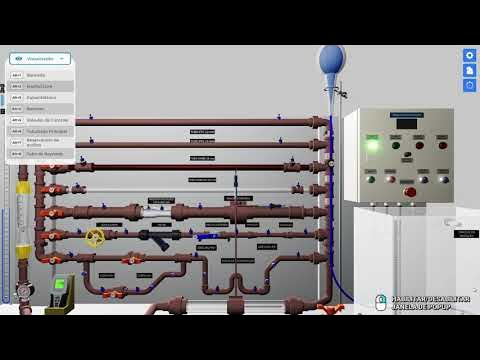
Experimento de Reynolds em laboratório virtual da Algetec

Perfiles de velocidad en tuberías circulares

How liquids flow: laminar, transitional and turbulent flow (simple tutorial)

JENIS JENIS ALIRAN FLUIDA ALIRAN LAMINER, ALIRAN TURBULEN, DAN ALIRAN TRANSISI

Understanding Laminar and Turbulent Flow

Aliran kritis beserta penggunaannya
5.0 / 5 (0 votes)

