Unidad 2: Generadores de vapor
Summary
TLDRThis introductory video explores the fundamentals of steam generators and boilers, explaining their differences, components, and operating principles. It details key boiler parts such as the burner, hearth, heat exchange tubes, and chimney, and examines major classifications including fire-tube and water-tube boilers, along with their advantages and disadvantages. The video also covers draft types and energy-based boiler categories like saturated and superheated steam systems. To reinforce the concepts, a simple homemade steam generator experiment demonstrates how steam can drive a turbine, highlighting steam’s ability to convert thermal energy into mechanical—and potentially electrical—energy.
Takeaways
- 😀 A boiler is a sealed metal container designed to produce steam or heat water under high temperature and pressure.
- 😀 A steam generator is a combination of a boiler and a superheater, designed to extract more heat and produce steam with better properties.
- 😀 Boilers have several key components: burner (for combustion), hearth (where combustion happens), heat exchange tubes (for transferring heat), vapor-liquid separator, chimney (for venting gases), and casing (housing the system).
- 😀 Fire-tube boilers have hot gases circulating inside tubes, with water surrounding them. They are cheaper and more flexible but can be dangerous and are less efficient at high pressures.
- 😀 Water-tube boilers pass water through tubes surrounded by hot gases, making them efficient, quick to start, and safer for high-pressure applications, though they are more expensive.
- 😀 Natural draft boilers rely on density differences between incoming air and hot gases to circulate, while forced draft boilers use a mechanical device to circulate gases.
- 😀 Induced draft boilers use a mechanical device to create a vacuum for gas circulation, and mixed-draft boilers combine both forced and induced draft systems.
- 😀 Boilers can be classified by energy requirements: hot water, superheated water, saturated steam, superheated steam, and thermal fluid boilers, each differing in their operating temperature and application.
- 😀 The video demonstrates a homemade steam generator experiment, built from recycled materials such as a deodorant bottle, copper tube, and a Styrofoam turbine.
- 😀 The experiment uses a heat source (either solid alcohol or a blowtorch) to produce steam, which powers a turbine, showing how steam can generate mechanical energy.
- 😀 The turbine in the experiment can be connected to a generator to convert mechanical energy into electrical energy, demonstrating one of the practical uses of steam generators.
Q & A
What is the primary difference between a boiler and a steam generator?
-A boiler is a closed metal container that produces steam or heat water through the action of heat at a temperature and pressure higher than atmospheric. A steam generator is a combination of a boiler and a superheater, designed to harness more heat and produce steam with better characteristics.
What is the basic operating principle of a boiler?
-The basic operating principle of a boiler involves combustion taking place in a chamber, with the heat from the combustion transferring to the water through heat exchange tubes. The water is then heated to produce steam or hot water.
What are the main parts of a boiler?
-The main parts of a boiler include the burner, the hearth (where the combustion happens), the heat exchange tubes (where heat transfers to the water), the vapor-liquid separator (which separates water droplets from gases), the chimney (for exhaust gases), and the casing (which contains the internal parts).
What are fire-tube boilers and how do they work?
-Fire-tube boilers have multiple smoke tubes where hot gases circulate, and the water is on the outside. The combustion happens in a firebox, with gases passing through the tubes, and the heat transfers to the surrounding water.
What are the advantages and disadvantages of fire-tube boilers?
-Advantages of fire-tube boilers include lower initial costs, greater operational flexibility, easier inspection and cleaning, and lower impurity requirements in feed water. Disadvantages include larger size, slower pressure buildup, higher danger in case of explosion, and limited to lower pressures.
How do water-tube boilers differ from fire-tube boilers?
-Water-tube boilers have water or steam circulating inside the tubes, while hot gases are outside. They are used for high pressures and efficiency, offering faster startup, lower weight per unit power, and better safety compared to fire-tube boilers.
What are the main advantages of water-tube boilers?
-The advantages of water-tube boilers include quick startup, lower weight per unit of power generated, higher efficiency, and safety under high pressures. They are non-explosive and better for high-performance applications.
What are the disadvantages of water-tube boilers?
-The main disadvantages include difficulty in handling large variations in steam consumption, higher costs, and the requirement for high-purity water to prevent scale buildup in hard-to-clean areas of the pipes.
What are the different types of draft systems used in boilers?
-Boilers can have natural draft (where air movement is caused by density differences), forced draft (where a mechanical device forces air into the furnace), induced draft (where a mechanical device creates a vacuum to draw air through), and mixed-draft (a combination of both forced and induced draft systems).
What is the difference between hot water, saturated steam, and superheated steam boilers?
-Hot water boilers produce hot water, saturated steam boilers generate steam with moisture content, and superheated steam boilers produce steam that is almost free of moisture, making it of higher thermodynamic quality.
How does the homemade steam generator experiment demonstrate the use of steam?
-In the homemade experiment, steam produced by heated water powers a turbine made from Styrofoam, spoons, and a plastic cup. The steam turns the turbine, and if connected to a generator, mechanical energy can be converted into electrical energy.
Outlines

Dieser Bereich ist nur für Premium-Benutzer verfügbar. Bitte führen Sie ein Upgrade durch, um auf diesen Abschnitt zuzugreifen.
Upgrade durchführenMindmap

Dieser Bereich ist nur für Premium-Benutzer verfügbar. Bitte führen Sie ein Upgrade durch, um auf diesen Abschnitt zuzugreifen.
Upgrade durchführenKeywords

Dieser Bereich ist nur für Premium-Benutzer verfügbar. Bitte führen Sie ein Upgrade durch, um auf diesen Abschnitt zuzugreifen.
Upgrade durchführenHighlights

Dieser Bereich ist nur für Premium-Benutzer verfügbar. Bitte führen Sie ein Upgrade durch, um auf diesen Abschnitt zuzugreifen.
Upgrade durchführenTranscripts

Dieser Bereich ist nur für Premium-Benutzer verfügbar. Bitte führen Sie ein Upgrade durch, um auf diesen Abschnitt zuzugreifen.
Upgrade durchführenWeitere ähnliche Videos ansehen

PLTU Pusat Listrik Tenaga Uap
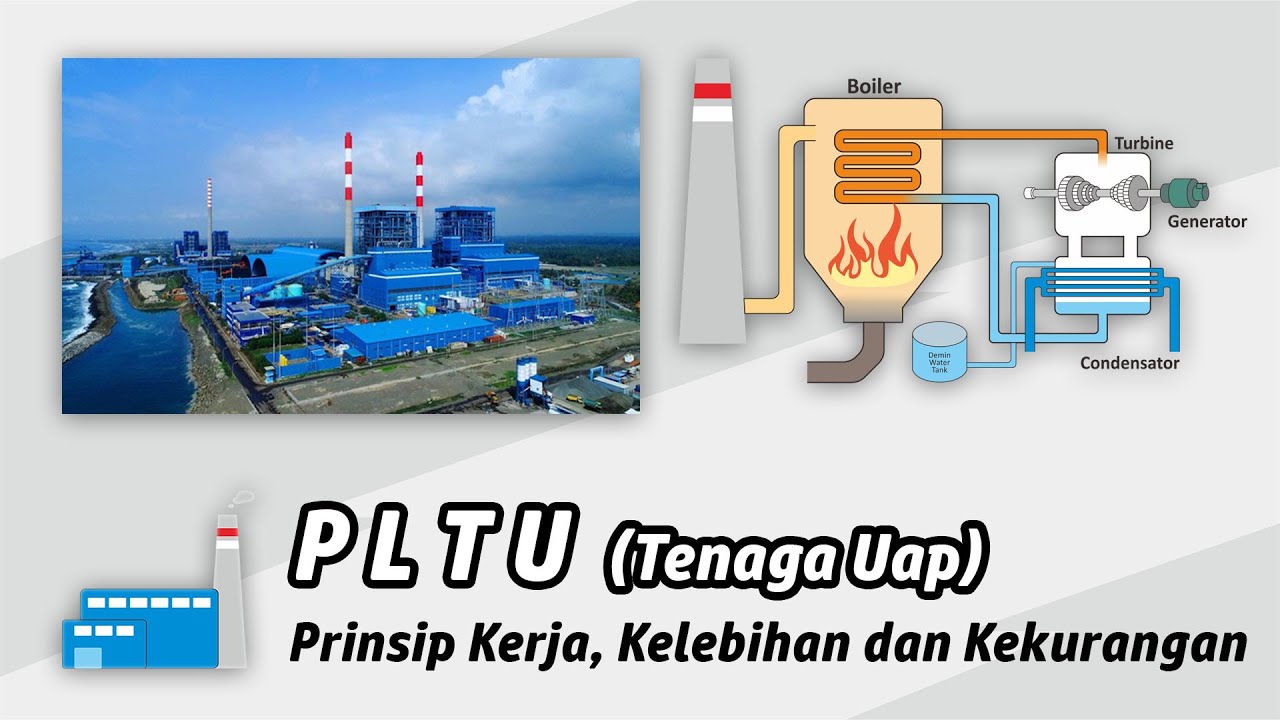
PLTU (Pusat Listrik Tenaga Uap) - Prinsip Kerja, Kelebihan dan Kekurangan

What is a Boiler and How does It Work?

Steam Boiler Fundamentals, Basic and Operation

Types of DC Generators - Separately & Self Excited DC Generator | Shunt, Series & Compound Generator

Ch.1 Electronic Instruments | 12th Vocational Electronics | Full Syllabus - One Shot Video
5.0 / 5 (0 votes)

