Adrian Bejan | Perspective Drawing, from Design in Nature
Summary
TLDRThe lecture discusses various topics, beginning with the concept of heat transfer in electronics and its relation to temperature differences. The speaker uses the example of bifurcating flows between channels to illustrate heat flow. Additionally, the importance of perspective in drawings is highlighted, referencing the Renaissance architect Filippo Brunelleschi’s contributions to creating realistic, three-dimensional drawings. The speaker also compares historical figures like Brunelleschi and Dainci, emphasizing how ideas evolved over time. The lecture intertwines scientific concepts with historical context to offer both technical and artistic insights.
Takeaways
- 😀 Heat transfer through solids is the main focus of the discussion, particularly in relation to electronics cooling.
- 😀 The concept of heat transfer is explained through temperature differences that drive the flow of heat.
- 😀 The flow of water in bifurcated channels is referenced as a prior example to understand heat transfer principles.
- 😀 A visual representation is used with a bar of length L1 and transverse dimension D1, followed by two smaller bars (plates) of dimensions L2 and D2.
- 😀 The speaker emphasizes the importance of perspective when drawing objects, especially in scientific illustrations.
- 😀 Perspective in drawings involves tapering lines that meet at a point on the horizon, which is a technique for creating realistic three-dimensional representations.
- 😀 The speaker introduces the Renaissance concept of perspective and highlights its significance in art and visual representations.
- 😀 Filippo Brunelleschi is identified as the key architect who introduced the technique of perspective in art during the Renaissance.
- 😀 The speaker contrasts the art of the Renaissance with earlier art, which lacked realistic perspectives and seemed 'weird.'
- 😀 Filippo Brunelleschi’s contribution to architecture and perspective is noted, particularly his work on the dome of the Florence Cathedral (Il Duomo).
- 😀 A historical timeline is briefly mentioned, pointing out that Brunelleschi’s work on perspective occurred over a century before the famous artist Leonardo da Vinci.
Q & A
What is the main topic discussed in the transcript?
-The main topic is heat transfer through solids, specifically focusing on cooling electronics, and the theory behind it.
What does the speaker explain about the concept of heat transfer?
-The speaker explains that heat transfer through solids is invisible and is driven by temperature differences.
What is the significance of bifurcation in heat transfer?
-Bifurcation in heat transfer refers to the flow of heat from a larger channel into two smaller channels, which is crucial for understanding how heat spreads in various configurations.
What is the structure of the system the speaker is describing?
-The system consists of a bar with a length L1 and a transversal dimension D1, which is followed by two smaller bars, each with dimensions L2 and D2.
Why does the speaker mention that the bars are actually plates?
-The speaker mentions the bars are actually plates because the drawing is two-dimensional, but in reality, they have a third dimension perpendicular to the board.
What lesson does the speaker want to impart regarding drawing techniques?
-The speaker emphasizes the importance of perspective in drawing, explaining that parallel lines should taper and meet at a point on the horizon to create the illusion of three-dimensionality.
What is the significance of perspective in visual arts, according to the speaker?
-Perspective is crucial in visual arts because it allows for creating realistic, three-dimensional representations of objects on a two-dimensional surface.
How does the speaker connect the topic of perspective to Renaissance art?
-The speaker connects perspective to Renaissance art by referencing Filippo Brunelleschi, who is credited with developing the technique of using vanishing points to create realistic drawings of three-dimensional objects.
What was the architectural contribution of Filippo Brunelleschi?
-Filippo Brunelleschi's architectural contribution was the development of the technique of using perspective to create realistic depictions in art and architecture, including the design of the dome of the Florence Cathedral (Il Duomo).
How does the speaker highlight the historical timeline in the discussion?
-The speaker highlights the historical timeline by mentioning the time gap between Filippo Brunelleschi (1377–1446) and the artist Dainci (1452–1519), emphasizing the evolution of artistic techniques over a century.
Outlines

Dieser Bereich ist nur für Premium-Benutzer verfügbar. Bitte führen Sie ein Upgrade durch, um auf diesen Abschnitt zuzugreifen.
Upgrade durchführenMindmap

Dieser Bereich ist nur für Premium-Benutzer verfügbar. Bitte führen Sie ein Upgrade durch, um auf diesen Abschnitt zuzugreifen.
Upgrade durchführenKeywords

Dieser Bereich ist nur für Premium-Benutzer verfügbar. Bitte führen Sie ein Upgrade durch, um auf diesen Abschnitt zuzugreifen.
Upgrade durchführenHighlights

Dieser Bereich ist nur für Premium-Benutzer verfügbar. Bitte führen Sie ein Upgrade durch, um auf diesen Abschnitt zuzugreifen.
Upgrade durchführenTranscripts

Dieser Bereich ist nur für Premium-Benutzer verfügbar. Bitte führen Sie ein Upgrade durch, um auf diesen Abschnitt zuzugreifen.
Upgrade durchführenWeitere ähnliche Videos ansehen

Temperatura - Clase 4 Termodinámica
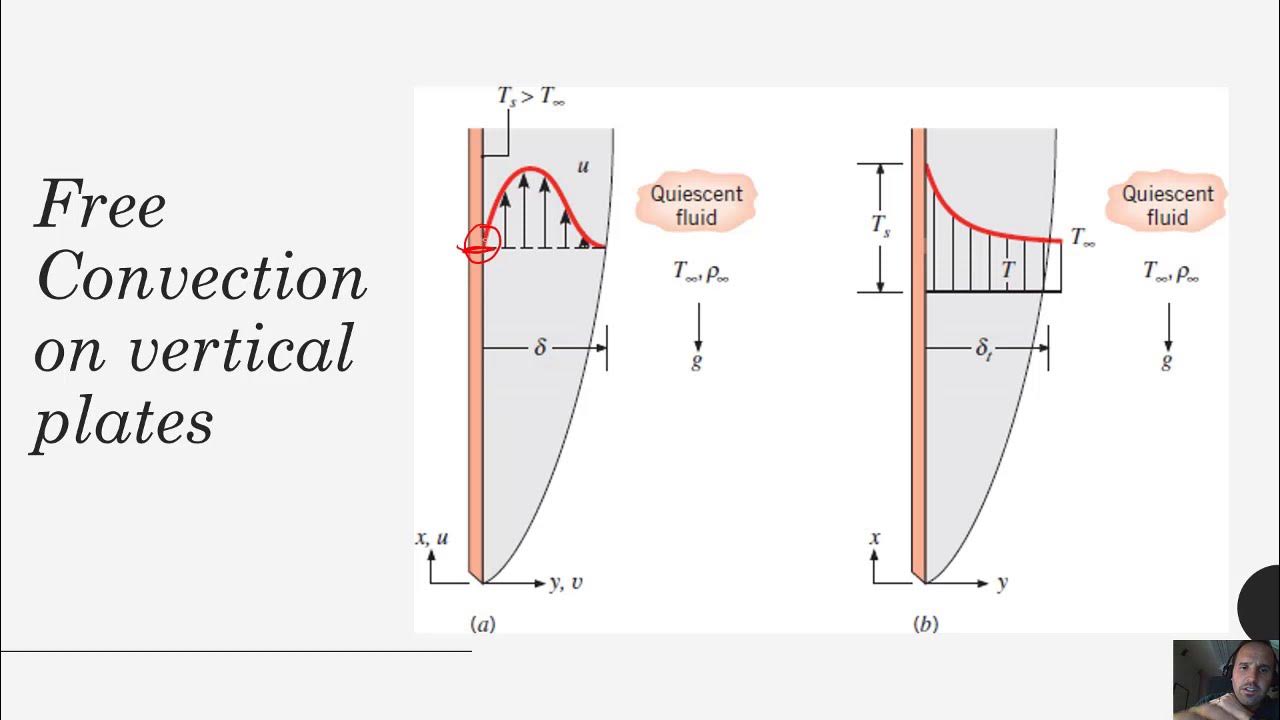
Heat Transfer - Chapter 9 - Conceptual Introduction to Natural (Free) Convection)

Heat Transfer - Chapter 8 - Internal Convection - Hydrodynamic Considerations

PRIMEIRA LEI DA TERMODINÂMICA #1 - TERMOLOGIA - Aula 16 - Prof. Boaro

Calorimetria - Aula 01 (Calor sensível)

FISIKA Kelas 11 - Suhu & Kalor (PART 2) | GIA Academy
5.0 / 5 (0 votes)

