La destacable historia detrás del algoritmo más importante de todos los tiempos
Summary
TLDRThe video explores the groundbreaking Fast Fourier Transform (FFT), an algorithm that revolutionized signal processing, including its role in detecting underground nuclear tests during the Cold War. Initially developed to monitor Soviet nuclear tests, the FFT now underpins technologies like Wi-Fi, radar, and image compression. The narrative delves into the arms race and the missed opportunity of an earlier FFT discovery by mathematician Carl Friedrich Gauss in the 1800s. The video highlights how the FFT transformed various fields, from global security to modern communication, shaping the world in ways we often take for granted.
Takeaways
- 😀 The Fast Fourier Transform (FFT) is one of the most important algorithms of all time, used in a wide range of technologies, from radar to Wi-Fi and 5G.
- 😀 The discovery of FFT had ties to nuclear weapons testing, with scientists trying to detect covert nuclear tests during the Cold War.
- 😀 The development of nuclear weapons after World War II led to the creation of treaties aimed at controlling nuclear tests, like the Baruch Plan and the Partial Nuclear Test Ban Treaty of 1963.
- 😀 The initial discovery of FFT was a critical tool for detecting underground nuclear tests, but it was not widely recognized until much later.
- 😀 The U.S. and the Soviet Union began extensive nuclear testing, including underground tests, which were difficult to detect without the use of advanced scientific tools like FFT.
- 😀 Early scientists, including Gauss, developed the core principles behind FFT, but it was not until the 20th century that the algorithm was fully realized and applied.
- 😀 The issue of detecting nuclear tests through seismic measurements led to the need for a mathematical tool, the FFT, to analyze seismic data and differentiate between nuclear explosions and natural earthquakes.
- 😀 FFT allows for the decomposition of complex signals into simpler components, revealing the frequencies present in a signal, which is essential for detecting nuclear tests from seismic waves.
- 😀 In the 1960s, scientists realized that detecting nuclear explosions required vast computational power, which led to the development of faster algorithms like the Fast Fourier Transform (FFT).
- 😀 The FFT revolutionized signal processing, enabling faster and more efficient analysis of large amounts of data, thus transforming many fields including radar, Wi-Fi, image compression, and communication technologies.
- 😀 The FFT is the basis for many modern algorithms, including image compression (like JPEG), which utilizes FFT to reduce data storage requirements by discarding high-frequency information.
- 😀 If Gauss had published his early findings on FFT, it could have potentially altered the course of history by helping prevent the escalation of the nuclear arms race.
Q & A
What is the Fast Fourier Transform (FFT), and why is it important?
-The Fast Fourier Transform (FFT) is an algorithm that efficiently computes the Fourier Transform of a signal. It is used to decompose complex signals into simpler components (sine and cosine waves) at different frequencies. Its importance lies in its wide-ranging applications, including signal processing, image compression, radar, Wi-Fi, and 5G technology.
How does the FFT relate to nuclear weapons testing?
-The FFT was originally used to detect underground nuclear tests. During the Cold War, both the U.S. and the Soviet Union conducted extensive nuclear tests, and scientists sought ways to monitor and detect hidden detonations. FFT made it possible to analyze seismic data from underground explosions and distinguish them from earthquakes.
What role did FFT play in the development of modern communication technologies like Wi-Fi and 5G?
-FFT is a critical component in the processing of signals for technologies like Wi-Fi and 5G. It enables efficient data transmission by allowing for the analysis and processing of complex signals, which improves the speed and quality of wireless communication.
What historical events might have been different if the FFT had been discovered earlier?
-If the FFT had been discovered earlier, it might have led to the earlier detection of underground nuclear tests, potentially stopping or slowing the nuclear arms race. Additionally, an earlier adoption of FFT could have influenced global peace efforts and the prevention of further nuclear escalation.
How did the FFT help in detecting underground nuclear tests?
-The FFT allowed scientists to analyze seismic signals from underground nuclear tests. By decomposing the seismic data into its frequency components, they could distinguish between natural earthquakes and man-made explosions, even if the explosions were hidden underground.
What was the Baruch Plan, and how did it relate to the development of nuclear weapons?
-The Baruch Plan was a proposal presented by the United States in the aftermath of World War II to control nuclear weapons. It suggested that an international body manage nuclear materials to prevent further proliferation. However, the Soviet Union rejected the plan, leading to the escalation of the nuclear arms race.
What was the main challenge in detecting underground nuclear tests before the discovery of FFT?
-The main challenge was that radiation from underground nuclear tests was contained, making it difficult to detect using traditional methods. Seismic data could be used, but the signals from underground tests were similar to those from natural earthquakes, making accurate detection difficult.
How did the discovery of FFT improve the efficiency of seismic data analysis?
-FFT made it possible to analyze seismic signals much more efficiently by breaking down the signal into its frequency components. This reduced the computational complexity of detecting and analyzing the signals, allowing for faster and more accurate detection of nuclear explosions.
What are some modern uses of FFT beyond nuclear testing?
-In addition to its role in detecting nuclear tests, FFT is widely used in fields such as telecommunications, radar and sonar systems, audio processing, image compression (e.g., JPEG), and even in analyzing the structure of crystals. It is an essential tool for signal processing and data compression in many technologies.
Why was Carl Friedrich Gauss's earlier work on Fourier Transforms significant, and why was it not widely recognized?
-Carl Friedrich Gauss had earlier discovered a form of Fourier analysis, which could have led to the discovery of the FFT. However, his work was unpublished, and the method he used was not widely known. The discovery of the FFT was credited to Joseph Fourier and later, James Coolie and John Tukey, who made the algorithm widely applicable.
Outlines

Dieser Bereich ist nur für Premium-Benutzer verfügbar. Bitte führen Sie ein Upgrade durch, um auf diesen Abschnitt zuzugreifen.
Upgrade durchführenMindmap

Dieser Bereich ist nur für Premium-Benutzer verfügbar. Bitte führen Sie ein Upgrade durch, um auf diesen Abschnitt zuzugreifen.
Upgrade durchführenKeywords

Dieser Bereich ist nur für Premium-Benutzer verfügbar. Bitte führen Sie ein Upgrade durch, um auf diesen Abschnitt zuzugreifen.
Upgrade durchführenHighlights

Dieser Bereich ist nur für Premium-Benutzer verfügbar. Bitte führen Sie ein Upgrade durch, um auf diesen Abschnitt zuzugreifen.
Upgrade durchführenTranscripts

Dieser Bereich ist nur für Premium-Benutzer verfügbar. Bitte führen Sie ein Upgrade durch, um auf diesen Abschnitt zuzugreifen.
Upgrade durchführenWeitere ähnliche Videos ansehen

The Remarkable Story Behind The Most Important Algorithm Of All Time
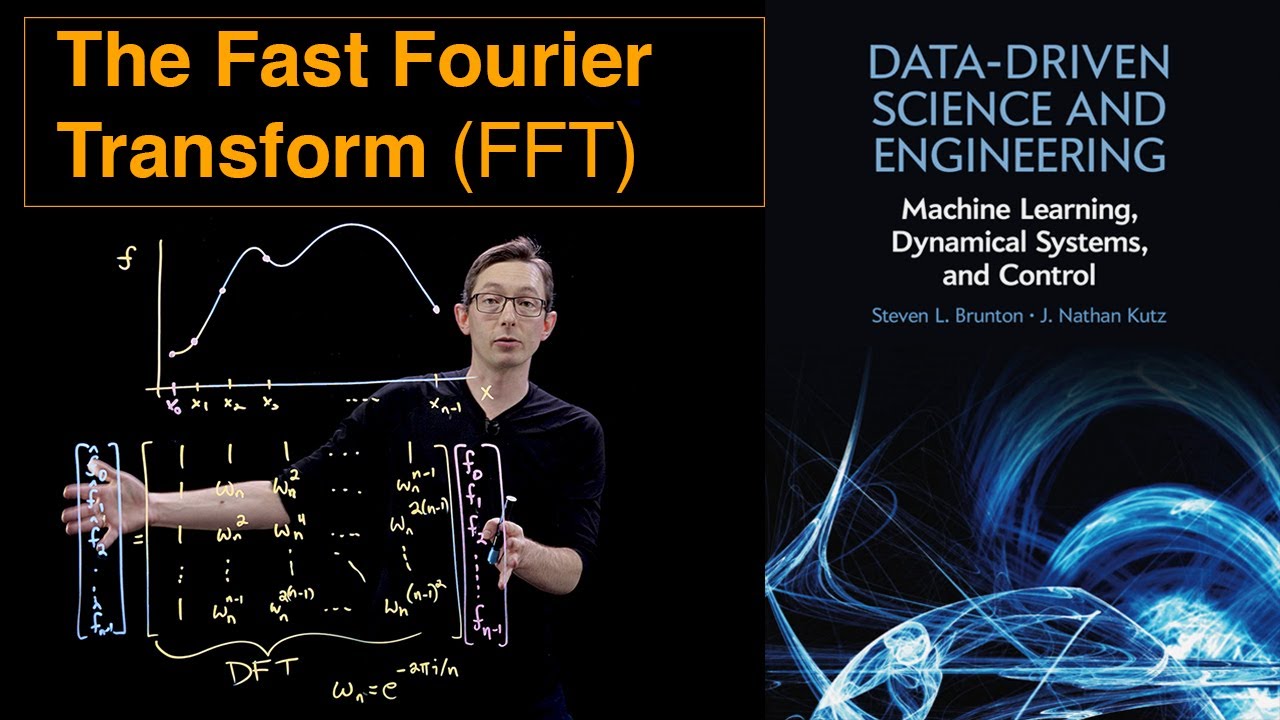
The Fast Fourier Transform (FFT)

The Discrete Fourier Transform (DFT)
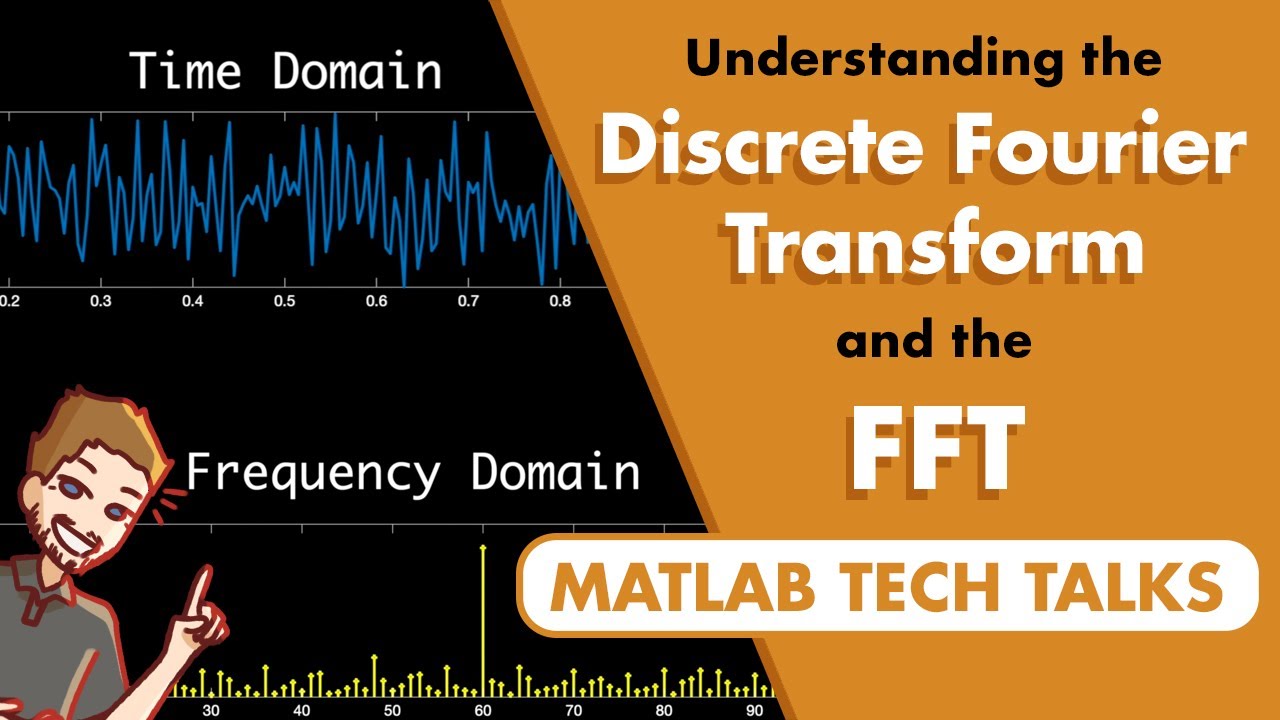
Understanding the Discrete Fourier Transform and the FFT

But what is a convolution?

Relation between Laplace transform, Fourier transform, z-transform, DTFT, DFT and FFT
5.0 / 5 (0 votes)

