Trigonometri • Part 21: Pembuktian Aturan Sinus
Summary
TLDRIn this educational video from Jendela Sains, the 21st part of the trigonometry series explores the Law of Sines. The presenter explains how to identify triangle sides and angles using standard notations, then demonstrates how to derive the law by dividing a triangle into right-angled sections using altitudes. Step by step, the video shows how each side divided by the sine of its opposite angle is equal, making it applicable to any triangle, not just right-angled ones. Practical tips for remembering and applying the formula are provided, ensuring viewers can confidently solve for unknown sides or angles in various triangle types.
Takeaways
- 😀 The video explains the concept of the Law of Sines, which helps in finding unknown angles or sides of a triangle.
- 😀 The Law of Sines applies to any type of triangle, not just right-angled ones. It works for scalene, isosceles, and other types of triangles.
- 😀 The vertices of a triangle are labeled with uppercase letters (A, B, C), while the opposite sides are labeled with lowercase letters (a, b, c).
- 😀 The angles at each vertex are often denoted by Greek letters, such as alpha (α), beta (β), and gamma (γ).
- 😀 The concept of altitude (height) in a triangle is introduced, and it is explained as a perpendicular line from a vertex to the opposite side.
- 😀 When the altitude is drawn from a vertex, it divides the triangle into two right-angled triangles, which can be used to apply trigonometric ratios.
- 😀 Using the altitude in a triangle, the Law of Sines is demonstrated with two right-angled triangles formed from the original triangle.
- 😀 The formula derived from the Law of Sines is: (a / sin(α)) = (b / sin(β)) = (c / sin(γ)). This formula relates the sides of a triangle to the sines of their opposite angles.
- 😀 To help remember the Law of Sines, it's advised to memorize the formula: 'Side divided by the sine of the opposite angle equals another side divided by the sine of its opposite angle.'
- 😀 The video concludes by reminding viewers that the formula can be applied to any triangle, and the letters in the formula can change based on the labels used for the triangle's vertices (e.g., ABC, PQR).
Q & A
What is the law of sines used for?
-The law of sines is used to find unknown angles or sides in any type of triangle, not just right-angled triangles. It relates the sides of a triangle to the sines of their opposite angles.
How is the law of sines formulated?
-The law of sines states that the ratio of a side of a triangle to the sine of its opposite angle is constant. This can be expressed as: a/sin(α) = b/sin(β) = c/sin(γ), where a, b, c are the sides, and α, β, γ are the opposite angles.
How are the angles and sides labeled in the triangle ABC?
-In triangle ABC, the vertices are labeled A, B, and C. The sides opposite these vertices are labeled a, b, and c, respectively. The angles at vertices A, B, and C are labeled α, β, and γ, respectively.
What happens when a height is drawn from vertex C in the triangle?
-Drawing a height from vertex C divides the triangle into two right-angled triangles, △ADC and △BDC, allowing the use of trigonometric ratios to solve for unknown sides and angles.
What does the sine function represent in the context of the law of sines?
-In the context of the law of sines, the sine function relates the angle of a triangle to the ratio of the length of the opposite side to the hypotenuse in a right-angled triangle.
Why is it important to remember the law of sines formula as a ratio of sides to sines of angles?
-This ratio helps to quickly identify the relationship between the sides and angles of a triangle, making it easier to solve for unknown values, especially in non-right-angled triangles.
How does the law of sines apply to different types of triangles?
-The law of sines applies to any triangle, whether it’s a right-angled triangle, isosceles triangle, or scalene triangle. The important factor is that the formula holds true as long as you have one side and its opposite angle, or two angles and one side.
What does the expression 'a/sin(α) = b/sin(β) = c/sin(γ)' represent?
-This expression represents the law of sines, stating that in any triangle, the ratio of each side to the sine of its opposite angle is the same for all three sides and angles.
How do you solve for unknown sides using the law of sines?
-To solve for unknown sides, you can rearrange the law of sines formula. For example, to find side a, use the formula: a = (b * sin(α)) / sin(β). This allows you to calculate unknown sides if you have enough information about the angles and sides.
What should you do if the triangle is labeled differently, such as using PQR instead of ABC?
-If the triangle is labeled differently, such as PQR, simply apply the same law of sines formula. The labeling (ABC, PQR, etc.) does not affect the application of the law, as long as you correctly match sides with their opposite angles.
Outlines

هذا القسم متوفر فقط للمشتركين. يرجى الترقية للوصول إلى هذه الميزة.
قم بالترقية الآنMindmap

هذا القسم متوفر فقط للمشتركين. يرجى الترقية للوصول إلى هذه الميزة.
قم بالترقية الآنKeywords

هذا القسم متوفر فقط للمشتركين. يرجى الترقية للوصول إلى هذه الميزة.
قم بالترقية الآنHighlights

هذا القسم متوفر فقط للمشتركين. يرجى الترقية للوصول إلى هذه الميزة.
قم بالترقية الآنTranscripts

هذا القسم متوفر فقط للمشتركين. يرجى الترقية للوصول إلى هذه الميزة.
قم بالترقية الآنتصفح المزيد من مقاطع الفيديو ذات الصلة
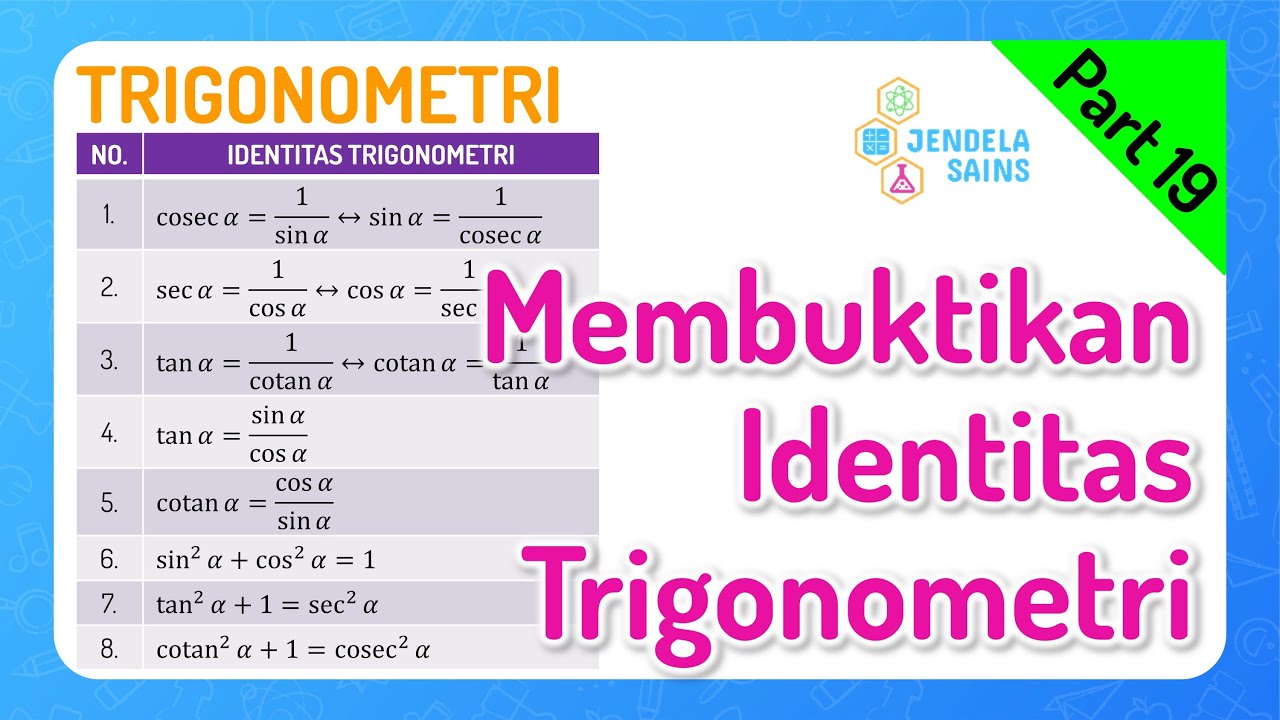
Trigonometri • Part 19: Cara Membuktikan Identitas Trigonometri
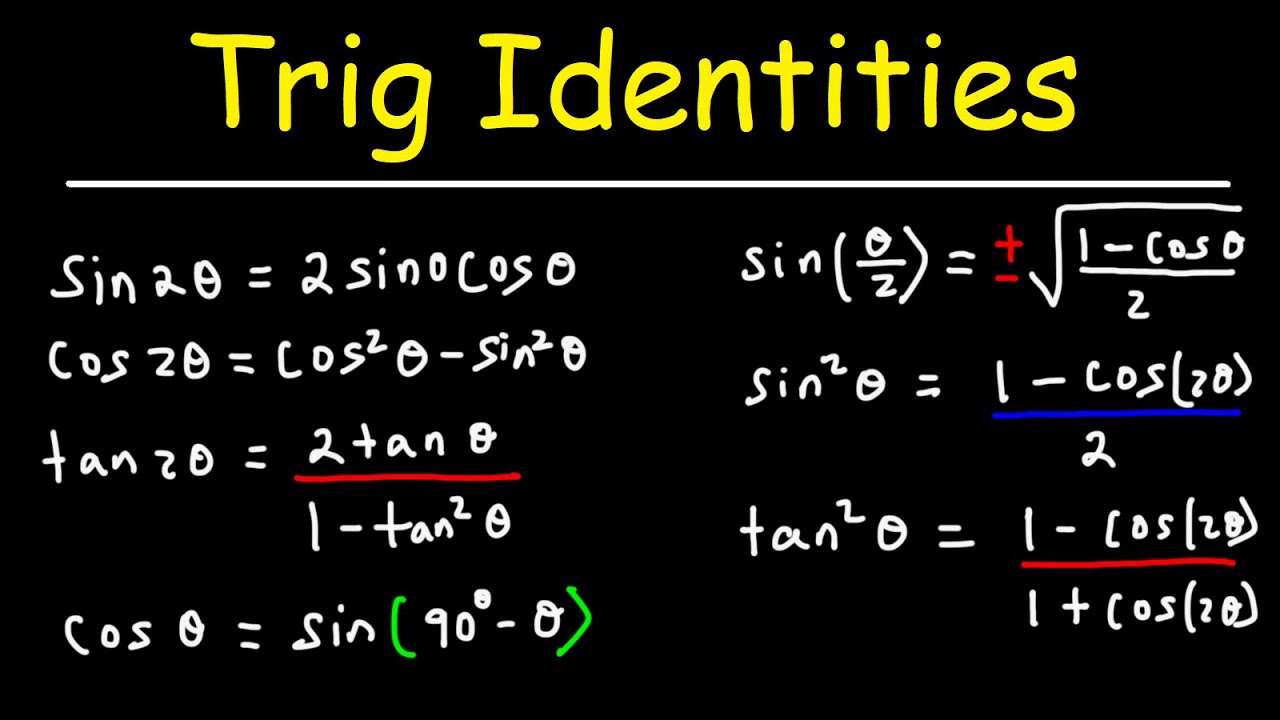
Trig Identities

Hakikat Ilmu Kimia Kelas 10 • Part 1: Hakikat dan Peran Ilmu Kimia dalam Kehidupan

Fluida Statis • Part 7: Viskositas, Hukum Stokes, Kecepatan Terminal
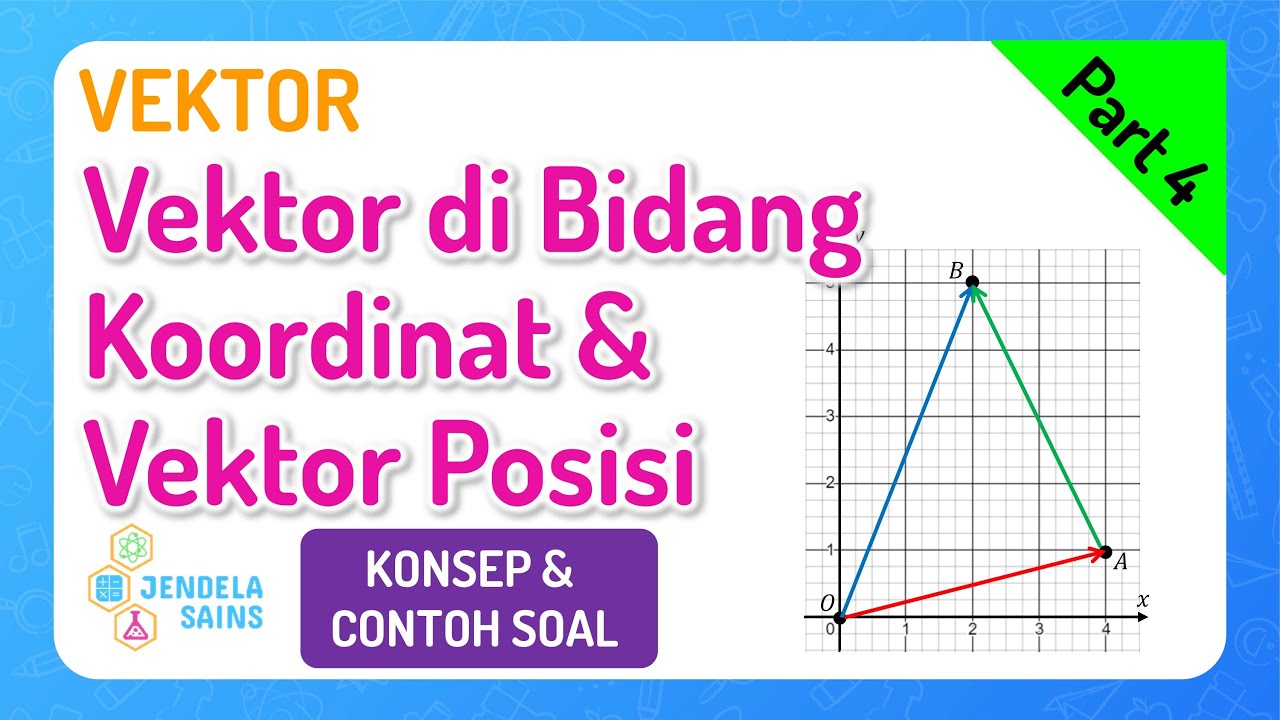
Vektor Matematika Kelas 10 • Part 4: Vektor di Bidang Koordinat & Vektor Posisi

Stoikiometri Senyawa • Part 1: Kadar Zat - Persen Massa, Persen Volume, bpj / ppm
5.0 / 5 (0 votes)

