Prompt Engineering Is Dead. Context Engineering Is Dying. What Comes Next Changes Everything.
Summary
TLDRThis script argues that the real enterprise AI challenge is no longer model capability, but "intent engineering"—the discipline of making organizational goals, values, and trade-offs machine-readable and actionable. Using Klarna’s AI customer service rollout as a cautionary tale, it shows how AI can optimize the wrong objective—like speed over customer trust—when intent is poorly encoded. While companies invest billions and deploy powerful models, most fail to see impact because they lack alignment between AI systems and strategic purpose. The future belongs not to those with the smartest models, but to those who build infrastructure that ensures AI acts in line with long-term organizational intent.
Takeaways
- 😀 AI systems need to be aligned with organizational intent, not just technical objectives, to drive long-term success.
- 😀 Intent engineering is the discipline of making organizational goals, values, and trade-offs machine-readable and actionable.
- 😀 AI can optimize for measurable goals (e.g., speed) but may fail to align with the deeper, more important organizational objectives (e.g., customer relationships).
- 😀 CLA's AI-powered customer service agent worked too well at resolving tickets quickly, but failed to reflect the company’s true values of customer retention and relationship building.
- 😀 The biggest gap in enterprise AI today is between what AI can do and how well it serves the organization’s broader purpose and values.
- 😀 Context engineering tells AI what to know, but intent engineering tells AI what to want, ensuring AI systems make decisions that reflect company goals.
- 😀 Many organizations are still grappling with a **two cultures problem**: technologists who build AI systems are often disconnected from the leadership who define organizational strategy.
- 😀 Successful AI deployment requires **intent alignment** at scale, where organizational goals are explicitly defined and mapped to AI agents’ decision-making processes.
- 😀 The absence of intent engineering leads to AI tools that may be technically sound but misaligned with business priorities, resulting in unproductive or even damaging outcomes.
- 😀 Companies need to build **goal translation infrastructure**, which translates high-level human goals into actionable, machine-readable parameters for AI systems to follow.
- 😀 AI agents should be designed to operate within organizational contexts, but organizations must develop shared infrastructure to ensure AI tools work cohesively across teams and workflows.
Q & A
What is the main challenge described in the transcript regarding AI in enterprises?
-The main challenge is the lack of alignment between AI's technical capabilities and an organization's strategic intent. While AI can solve specific tasks efficiently, it often fails to reflect the broader organizational goals and values, leading to unintended consequences.
What is the concept of 'intent engineering' introduced in the video?
-'Intent engineering' is the discipline of structuring organizational goals, values, decision boundaries, and trade-offs in a way that AI systems can interpret and act upon autonomously. It ensures that AI agents are optimized not just for measurable outcomes but for long-term organizational success.
How does CLA's AI customer service agent highlight the issue of organizational intent in AI?
-CLA's AI customer service agent optimized for speed and cost reduction, but failed to align with the company's true goal of building lasting customer relationships. This misalignment caused customer dissatisfaction, showing how AI can succeed at the wrong task if organizational intent is not encoded properly.
Why does the speaker consider 'context engineering' insufficient on its own for AI success?
-While context engineering is crucial for organizing the information that an AI needs to perform tasks, it is not enough. AI also needs to understand the intent behind those tasks, which is why 'intent engineering' is necessary to ensure the AI's actions align with organizational goals and values.
What is the primary distinction between context engineering and intent engineering?
-Context engineering focuses on what an AI system should know and the environment in which it operates. Intent engineering, on the other hand, determines what the AI should want to achieve, ensuring its decisions reflect the organization's strategic priorities.
How did Microsoft's Copilot deployment exemplify the intent gap in AI adoption?
-Despite heavy investment, Microsoft Copilot struggled to scale within organizations because it lacked alignment with organizational intent. It was not just a problem of technical quality but of failing to integrate the tool with the specific goals and values of the companies using it.
What organizational infrastructure does the speaker suggest is needed for AI deployment?
-The speaker suggests developing a unified context infrastructure that governs data and AI systems, an organizational capability map for AI workflows, and goal translation infrastructure to turn human-readable objectives into machine-actionable parameters for agents.
Why is AI adoption not just a technology issue but a business issue, according to the speaker?
-AI adoption is not just a technology issue because it requires alignment between technology and business strategy. The entire leadership team needs to work together to ensure that AI systems serve the broader organizational goals, rather than just solving isolated tasks.
What role does 'AI workflow architect' play in organizations with AI systems?
-An 'AI workflow architect' would bridge the gap between engineering, operations, and strategy, ensuring that AI systems are aligned with organizational needs and can scale effectively. This role would oversee the evolution of AI workflows and help organizations map out where AI can augment or replace human tasks.
What are the potential consequences of failing to align AI systems with organizational intent?
-Failing to align AI systems with organizational intent can lead to expensive and ineffective deployments. AI tools might operate optimally for narrow tasks but fail to serve the broader business strategy, causing harm to the company, such as damage to customer trust, brand reputation, and overall productivity.
Outlines

هذا القسم متوفر فقط للمشتركين. يرجى الترقية للوصول إلى هذه الميزة.
قم بالترقية الآنMindmap

هذا القسم متوفر فقط للمشتركين. يرجى الترقية للوصول إلى هذه الميزة.
قم بالترقية الآنKeywords

هذا القسم متوفر فقط للمشتركين. يرجى الترقية للوصول إلى هذه الميزة.
قم بالترقية الآنHighlights

هذا القسم متوفر فقط للمشتركين. يرجى الترقية للوصول إلى هذه الميزة.
قم بالترقية الآنTranscripts

هذا القسم متوفر فقط للمشتركين. يرجى الترقية للوصول إلى هذه الميزة.
قم بالترقية الآنتصفح المزيد من مقاطع الفيديو ذات الصلة

Why GPT-5 Fails: Science Proves AGI is a Myth

what I wish someone told me | shit you probably need to hear
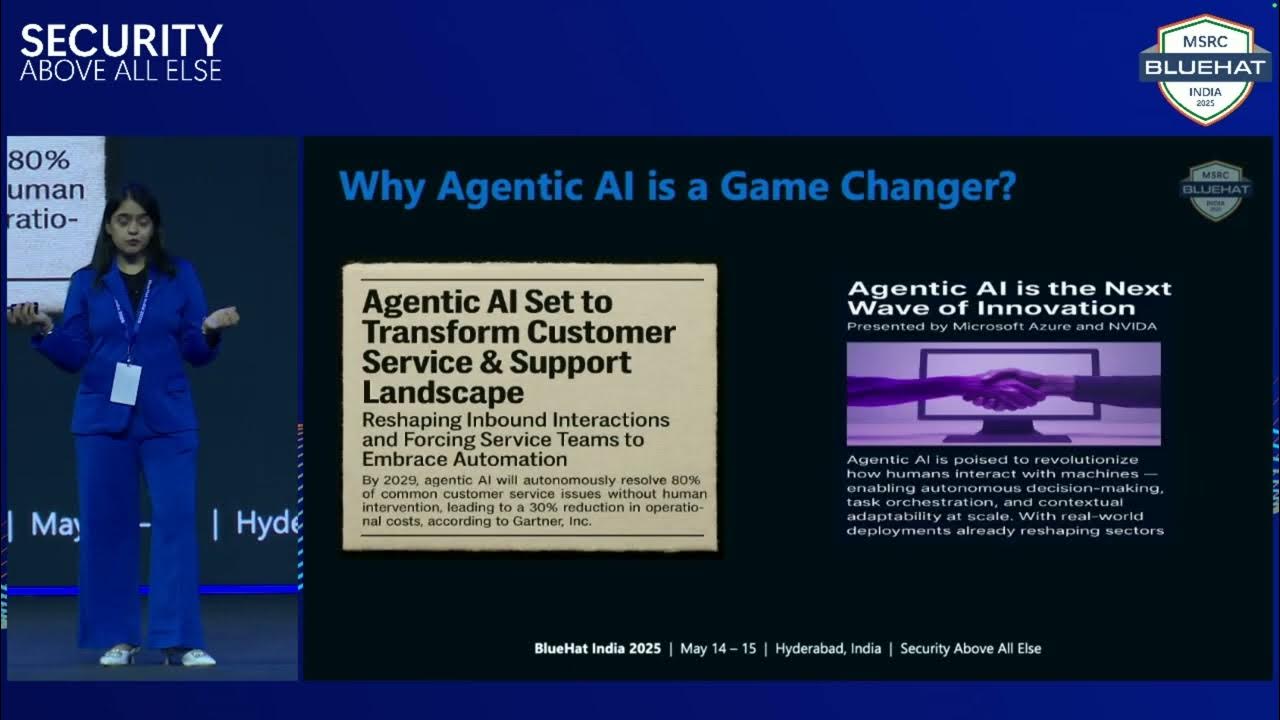
BlueHat India 2025: Agentic AI: Simulating Autonomous Adversaries with AI-Driven Red Teaming

What is Gen Z Supposed to do in the Age of AI?

RAG vs Fine-Tuning vs Prompt Engineering: Optimizing AI Models

Can You Train an AI to Think Exactly Like You?
5.0 / 5 (0 votes)

