Why Silicon Valley and Shenzhen Have Exactly The Opposite Problem | Economics Explained
Summary
TLDRThe video contrasts two of the world's most innovative cities: Silicon Valley, USA, and Shenzhen, China. While Silicon Valley thrives due to venture capital, innovation culture, and a favorable economic environment, Shenzhen struggles with government control, regulatory hurdles, and currency manipulation. Despite China's rapid economic growth, Shenzhen faces challenges like limited foreign investment, a lack of independent tech breakthroughs, and an overregulated market. The video explores how these cities' economies, business cultures, and governmental systems impact global innovation and the future of tech entrepreneurship.
Takeaways
- 😀 Silicon Valley and Shenzhen are major innovation hubs driving their respective economies, the USA and China.
- 😀 Both cities face opposite major problems despite their shared focus on technological advancement.
- 😀 Silicon Valley benefits from venture capital, enabling rapid innovation, but the focus has shifted to fast scaling rather than long-term value creation.
- 😀 The abundance of venture capital has led to inflated valuations and funding of unprofitable or questionable companies in Silicon Valley.
- 😀 Shenzhen was deliberately designed by the Chinese government to mirror Silicon Valley’s success, but it faces significant challenges, including restrictive government policies.
- 😀 Unlike Silicon Valley, Shenzhen’s innovation ecosystem is hindered by government control, which limits the potential for high returns on investments.
- 😀 China’s stock market has underperformed, with the majority of large companies being state-controlled, leading to a lack of investor interest compared to the US.
- 😀 In contrast to Silicon Valley's market-driven approach, Chinese companies are subject to government policies that prioritize political influence over profitability.
- 😀 The regulatory environment in China discourages foreign investment due to restrictions on capital flow and the undervaluation of its currency.
- 😀 China's currency manipulation strategy, while increasing export competitiveness, results in an overvalued and underperforming RMB, further complicating investment prospects in Shenzhen.
Q & A
What are the primary challenges faced by Silicon Valley today?
-Silicon Valley's primary challenge lies in the shift of venture capital focus. Investors are increasingly prioritizing companies that can scale quickly and sell off at a profit, rather than investing in companies with long-term growth potential. This has led to an influx of unprofitable and sometimes fraudulent companies, contributing to a saturated and volatile tech market.
How does venture capital influence innovation in Silicon Valley?
-Venture capital plays a major role in funding innovation in Silicon Valley, but its influence has shifted. Initially, it helped create sustainable, high-impact companies. Now, however, the rush to scale quickly has led to the funding of companies that may not be financially viable in the long term, pushing short-term profits over sustainable innovation.
What is meant by 'economies of agglomeration' in the context of Silicon Valley?
-Economies of agglomeration refer to the benefits that companies and individuals gain by being in close proximity to one another. In Silicon Valley, this means that tech firms, researchers, and investors are clustered together, which fosters innovation, rapid idea exchange, and reduces costs related to communication and logistics.
Why is there excess liquidity in Silicon Valley and how does it affect the tech market?
-Excess liquidity, or 'dry powder,' refers to the abundance of capital that investors have, but it's not always invested wisely. This oversupply of capital has led to inflated valuations and investments in unsustainable companies, much like what happened before the 2008 financial crisis, creating instability in the tech market.
What role does Shenzhen play in global innovation, and how does it compare to Silicon Valley?
-Shenzhen, built as a center for innovation by the Chinese government, is intended to mimic Silicon Valley's success. However, while it has seen some technological advances, such as mobile payments and the rise of TikTok, its innovation ecosystem is hindered by state control, lack of investment freedom, and limited market access, making it less dynamic than Silicon Valley.
What is the primary obstacle to investment in Chinese companies, particularly in Shenzhen?
-The primary obstacle is the high level of state control over Chinese companies. Even private companies are heavily influenced by government policies, which diminishes investor confidence. Investors are also concerned about low returns due to government interference and the lack of a functioning IPO market.
How does the Chinese stock market differ from the US stock market in terms of investment potential?
-The Chinese stock market, particularly the Shanghai Stock Exchange, has a significantly lower free float adjusted market cap than the nominal figure suggests. This means that a large portion of the market is controlled by the government or insiders, limiting the available shares for general investors. In contrast, the US stock market offers a more transparent and accessible investment environment.
What is China's currency paradox, and how does it affect foreign investment?
-China's currency paradox involves the yuan being both overvalued and undervalued at the same time. The Chinese government undervalues the yuan to boost exports but simultaneously restricts the amount of money Chinese citizens can convert and move abroad. This makes it risky for foreign investors to engage with Chinese companies due to the currency instability.
Why do Chinese investors prefer real estate over the stock market for investments?
-Chinese investors tend to prefer real estate because the stock market is seen as unreliable and controlled by the government. The stock market's low returns and high levels of state ownership in major companies discourage investment, while real estate remains a more stable and trusted investment option in China.
How does the difference in regulatory environments between the US and China impact innovation?
-The regulatory environment in the US promotes a culture of innovation by prioritizing market-driven growth and offering freedom for venture capital investment. In contrast, China's regulatory environment, with its government oversight and restrictions on capital flow, stifles true innovation and limits the ability of private companies to thrive.
Outlines

هذا القسم متوفر فقط للمشتركين. يرجى الترقية للوصول إلى هذه الميزة.
قم بالترقية الآنMindmap

هذا القسم متوفر فقط للمشتركين. يرجى الترقية للوصول إلى هذه الميزة.
قم بالترقية الآنKeywords

هذا القسم متوفر فقط للمشتركين. يرجى الترقية للوصول إلى هذه الميزة.
قم بالترقية الآنHighlights

هذا القسم متوفر فقط للمشتركين. يرجى الترقية للوصول إلى هذه الميزة.
قم بالترقية الآنTranscripts

هذا القسم متوفر فقط للمشتركين. يرجى الترقية للوصول إلى هذه الميزة.
قم بالترقية الآنتصفح المزيد من مقاطع الفيديو ذات الصلة

Peradaban Lembah Sungai Indus dan Lembah Sungai Kuning

A rare look inside Chinese smartphone giant, Huawei's headquarters | CNBC Reports

How the Caste System Is Stopping India’s Take-off
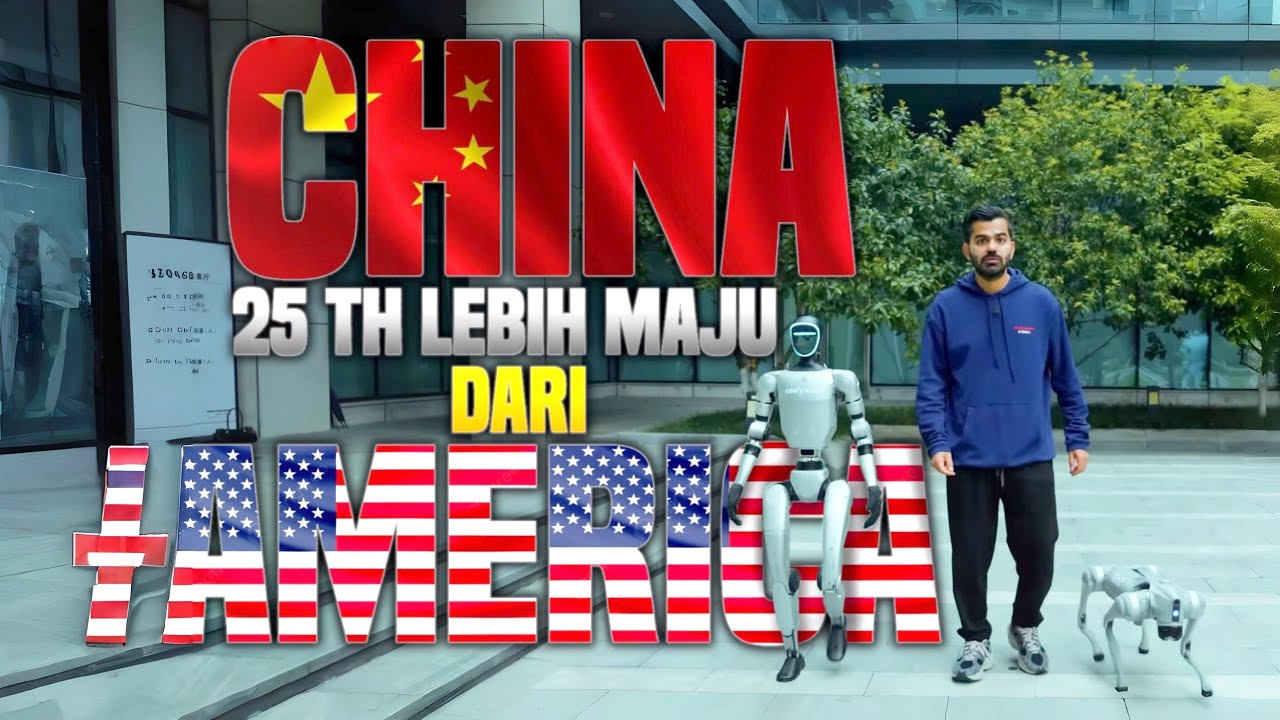
China Mengejutkan Amerika: Robot Humanoid, Mobil Listrik Tercanggih dan Kota Tercanggih di Dunia! 🇨🇳

Lo llaman "el pueblo veneno". Conocé la capital de la basura electrónica.

Was hat KI mit Katzen zu tun? (4/6) | Silicon F***ing Valley | ARTE
5.0 / 5 (0 votes)

