Fertilization part 5
Summary
TLDRThis video explains the process of sperm capacitation, a crucial phase for fertilization. It details how sperm undergoes various changes, including enhanced motility, membrane alterations, and the release of cholesterol, which are necessary for the sperm to penetrate the egg’s protective layers. The role of bicarbonate in activating enzymes like adenylate cyclase and increasing calcium levels is highlighted. Additionally, the interaction between sperm and female reproductive fluids, such as the role of prostate secretions, is discussed, showing how these factors ensure sperm maturation occurs at the right time for successful fertilization.
Takeaways
- 😀 Capacitation enables sperm to fertilize the egg by enhancing its motility, making it hyperactive for successful fertilization.
- 😀 During capacitation, sperm sheds surface molecules like proteins and carbohydrates that cover its membrane, crucial for recognizing egg receptors.
- 😀 The capacitation process involves a negative shift in the sperm's membrane potential, making it more negative than its normal resting potential.
- 😀 A significant change in the sperm membrane occurs as cholesterol is removed, making the membrane more fluid and allowing easier movement of membrane proteins.
- 😀 Bicarbonate ions from the female reproductive tract trigger capacitation by increasing intracellular pH and activating enzymes like adenylate cyclase in sperm.
- 😀 Increased levels of cyclic adenosine monophosphate (cAMP) enhance sperm motility and prepare it for the acrosomal reaction.
- 😀 The acrosomal reaction is triggered by the influx of calcium ions, allowing sperm to penetrate the egg's protective layers.
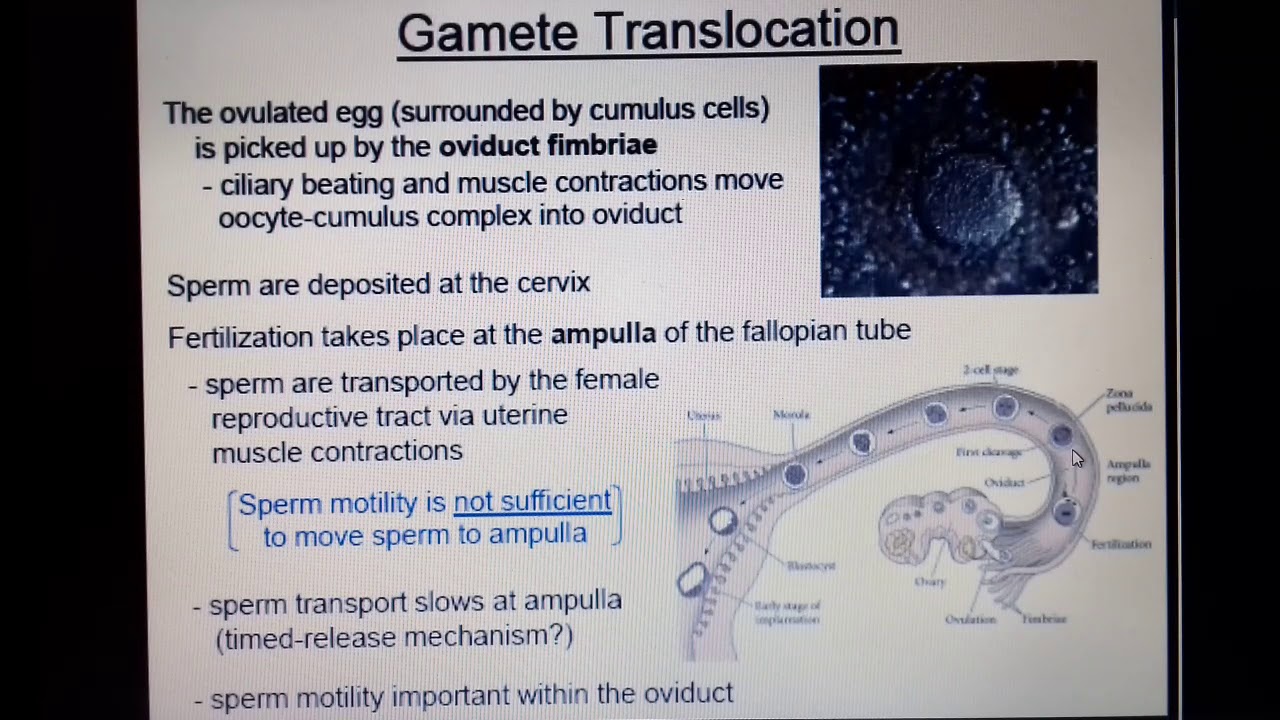
- 😀 In some mammalian species, sperm capacitation begins in the uterus, not the vagina, as sperm bypasses the vagina and cervix.
- 😀 Prostate fluid in semen helps prevent premature capacitation by slowing down sperm maturation, ensuring sperm is not activated too early.
- 😀 An increase in calcium ions during capacitation enhances sperm motility and prepares sperm for egg recognition and fertilization.
Q & A
What is capacitation in sperm?
-Capacitation is a physiological process that sperm undergo to increase their ability to fertilize an egg. It enhances sperm motility and enables them to penetrate the protective layers surrounding the egg, facilitating fertilization.
How does capacitation affect sperm motility?
-During capacitation, sperm undergoes changes that cause hyperactivation of their motility. This is essential for the sperm to swim more vigorously and reach the egg in the fallopian tube.
Why is hyperactivated motility important during fertilization?
-Hyperactivated motility allows sperm to break through the layers surrounding the egg, such as the zona pellucida, and enhances the sperm's ability to reach and fertilize the egg.
What happens to the surface molecules of the sperm during capacitation?
-During capacitation, molecules on the sperm surface, such as proteins and carbohydrates, that were added in the epididymis and semen, are removed. This is crucial for the sperm to effectively interact with the egg's surface receptors.
What role does cholesterol play in sperm capacitation?
-Cholesterol in the sperm membrane helps maintain its rigidity. During capacitation, a significant amount of cholesterol is released, making the membrane more fluid. This allows the sperm to undergo necessary structural changes for fertilization.
How does bicarbonate affect sperm capacitation?
-Bicarbonate, found in the female reproductive tract, enters the sperm cell and increases its intracellular pH. This activates enzymes, including adenylate cyclase, which increases cyclic AMP levels, triggering other changes that lead to capacitation.
What is the effect of bicarbonate on sperm's membrane potential?
-Bicarbonate entry into the sperm causes a hyperpolarization of the sperm membrane potential, making it more negative. This change contributes to sperm activation and prepares it for fertilization.
What is the significance of calcium ion levels in capacitated sperm?
-Calcium ions play a key role in capacitation. Elevated calcium levels inside the sperm trigger important events like the acrosome reaction and hyperactivation of motility, which are essential for successful fertilization.
What is the acrosome reaction and why is it important?
-The acrosome reaction is the release of enzymes from the sperm's acrosome that help it break through the egg's zona pellucida. This reaction is necessary for the sperm to reach the egg's plasma membrane and allow fertilization to occur.
Why do sperm undergo capacitation only in certain parts of the female reproductive tract?
-Sperm undergo capacitation in specific locations like the uterus or fallopian tubes because conditions in the vagina or cervix are not conducive to capacitation. For example, certain proteins and ions that trigger capacitation are only present in the uterus.
Outlines

هذا القسم متوفر فقط للمشتركين. يرجى الترقية للوصول إلى هذه الميزة.
قم بالترقية الآنMindmap

هذا القسم متوفر فقط للمشتركين. يرجى الترقية للوصول إلى هذه الميزة.
قم بالترقية الآنKeywords

هذا القسم متوفر فقط للمشتركين. يرجى الترقية للوصول إلى هذه الميزة.
قم بالترقية الآنHighlights

هذا القسم متوفر فقط للمشتركين. يرجى الترقية للوصول إلى هذه الميزة.
قم بالترقية الآنTranscripts

هذا القسم متوفر فقط للمشتركين. يرجى الترقية للوصول إلى هذه الميزة.
قم بالترقية الآن



5.0 / 5 (0 votes)

