Bab 9: Kebijakan Fiskal dan Perpajakan - Pengantar Ilmu Ekonomi
Summary
TLDRThis video explains the concept of fiscal policy and taxation as essential tools used by governments to influence economic growth and stability. It describes how fiscal policy works alongside monetary policy through government spending, taxation, and budgeting to manage inflation, unemployment, and economic cycles. The script highlights the ideas of economist John Maynard Keynes and introduces five key fiscal policy instruments, including taxation, government expenditure, deficit financing, public debt, and budgeting. It also explores the three main types of fiscal policy—balanced, expansionary, and contractionary—showing how governments use them to stimulate growth, control inflation, and maintain economic balance.
Takeaways
- 📊 Fiscal policy is a government financial strategy aimed at influencing the economy through spending, revenue, and taxation.
- 🏦 Fiscal policy works alongside monetary policy, which is controlled by the central bank through money supply and interest rates.
- 🎯 The goal of fiscal policy is to achieve healthy economic growth (2–3% per year), maintain natural unemployment (4.7–5.8%), and keep inflation around 2%.
- 💡 John Maynard Keynes emphasized that governments should use fiscal policy to balance economic expansion and contraction cycles.
- 💰 Taxation is a key fiscal instrument: increasing taxes reduces consumption and production, while decreasing taxes boosts purchasing power but may cause inflation.
- 🏗️ Government spending includes investments in infrastructure, education, and public services to stimulate economic activity.
- 📉 Deficit financing occurs when government expenditures exceed revenue, requiring funds from other sources.
- 💳 Public debt can be used to finance deficits through loans from institutions like the World Bank or by issuing bonds to the public.
- 🧾 Budgeting is a fiscal tool to monitor economic fluctuations, including principles like annual budgets, balanced budgets, and managed compensatory budgets.
- ⚖️ Fiscal policies can be balanced (neutral), expansionary (stimulate growth), or contractionary (slow growth to control inflation).
- 🔑 Overall, fiscal policy is an essential component of general economic policy, primarily concerning government revenue and expenditure management.
Q & A
What is fiscal policy?
-Fiscal policy is a government financial strategy aimed at influencing the economy through government spending and taxation.
How does fiscal policy relate to monetary policy?
-Fiscal policy works alongside monetary policy, which is controlled by the central bank using money supply and interest rates to influence economic activity.
What are the main objectives of fiscal policy?
-The objectives are to promote healthy economic growth (2–3% per year), maintain natural unemployment levels (4.7–5.8%), control inflation (~2%), and ensure the business cycle remains in the expansion phase.
Who introduced the concept of modern fiscal policy?
-John Maynard Keynes, an English economist, introduced the idea that governments should influence economic activity to balance expansion and contraction phases.
What happens to government budgets during economic downturns and expansions according to Keynesian theory?
-During low economic activity, governments run budget deficits, and during high economic activity, they run budget surpluses.
What are the five main instruments of fiscal policy?
-They are: taxation policy, government spending policy, deficit financing, public debt policy, and budgeting policy.
How does taxation influence the economy?
-Raising taxes reduces public purchasing power and production, while lowering taxes increases spending and consumption. Excessive tax cuts, however, can cause inflation.
What is government spending policy?
-Government spending policy involves allocating funds to public services and infrastructure such as schools, universities, roads, and railways, prioritizing urgent and important needs.
What is deficit financing and how is it used?
-Deficit financing occurs when government spending exceeds revenue. The government then collects additional funds from various sources to cover the gap.
What are the types of fiscal policy?
-There are three main types: balanced fiscal policy (stable spending, minimal economic impact), expansionary fiscal policy (stimulates growth, ends recessions), and contractionary fiscal policy (slows growth, controls inflation).
What is public debt policy?
-Public debt policy involves borrowing funds from institutions like the World Bank or the public via bonds when deficit financing is insufficient to influence government spending.
What is the role of budgeting in fiscal policy?
-Budgeting is used to assess economic fluctuations and implement principles such as annual budgets, balanced budgets, cyclical budgets, and fully managed compensatory budgets.
Outlines

此内容仅限付费用户访问。 请升级后访问。
立即升级Mindmap

此内容仅限付费用户访问。 请升级后访问。
立即升级Keywords

此内容仅限付费用户访问。 请升级后访问。
立即升级Highlights

此内容仅限付费用户访问。 请升级后访问。
立即升级Transcripts

此内容仅限付费用户访问。 请升级后访问。
立即升级浏览更多相关视频

The Difference Between Fiscal and Monetary Policy
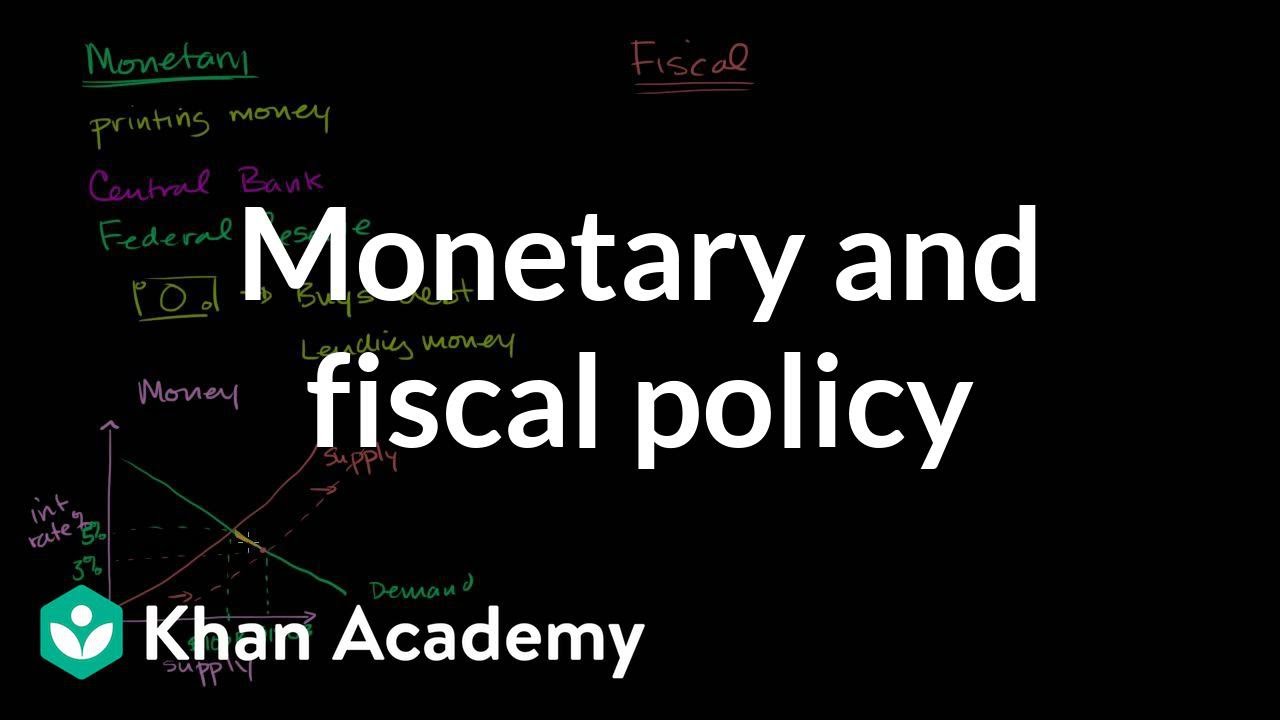
Monetary and fiscal policy | Aggregate demand and aggregate supply | Macroeconomics | Khan Academy

KEBIJAKAN FISKAL - Kebijakan Moneter dan Kebijakan Fiskal Part 2

Manfaat dan Dampak Kebijakan Ekonomi
Kebijakan Moneter dalam Ekonomi Islam

Memahami kebijakan fiskal dan moneter secara sederhana #kuliahsatumenit
5.0 / 5 (0 votes)

