Bagaimana Sains Menjelaskan Gunung Berapi Erupsi
Summary
TLDRVolcanoes are among Earth's most powerful natural phenomena, capable of both destruction and creation. This video explores how volcanoes form from the Earth's layered structure, where intense heat generates magma that rises through cracks to the surface, triggering eruptions and sometimes earthquakes. It explains the materials expelled, such as lava and volcanic ash, and highlights their dual role in destruction and soil fertility. The video also categorizes volcanic eruptions into six types—Hawaiian, Strombolian, Vulcanian, Plinian, Surtsean, and phreatic/phreatomagmatic—illustrating each with real-world examples, from Hawaii and Indonesia to Japan and the Philippines, revealing the dynamic and transformative power of volcanoes.
Takeaways
- 🌋 Volcanic eruptions are among the most powerful natural phenomena, capable of destroying cities, forests, and affecting global climate.
- 🔥 The Earth's structure consists of the inner core, outer core, mantle, and crust, with the inner core reaching temperatures up to 6,000°C.
- 🌡️ Heat from the Earth's core causes convection currents in the mantle, melting rock to form magma.
- 💨 Magma rises because it is less dense than surrounding rock, creating fractures in the Earth's crust called volcanic vents.
- 🌱 Volcanic eruptions produce ash and lava; while destructive, they also enrich the soil with nutrients, making it fertile for agriculture.
- 🌋 Lava cools rapidly upon reaching the surface, forming new land, mountain slopes, and volcanic islands.
- 🏝️ Indonesia, located at the meeting point of three tectonic plates, has one of the highest numbers of active volcanoes in the world.
- 🔥 There are several types of volcanic eruptions, each with distinct characteristics: Hawaiian, Strombolian, Vulcanian, Plinian, Surtsean, Phreatic, and Phreatomagmatic.
- 💥 Explosive eruptions like Plinian and Vulcanian can send ash and gas high into the atmosphere, disrupt climate, and threaten human civilization.
- 🌊 Surtsean eruptions occur underwater, creating new islands, while phreatic and phreatomagmatic eruptions involve interactions between water and magma, producing steam-driven explosions.
- ⏱️ The intensity and style of eruptions vary depending on magma viscosity, gas content, and interaction with water, highlighting the diverse nature of volcanic activity.
Q & A
What are some immediate destructive effects of a volcanic eruption?
-A volcanic eruption can destroy cities, devastate forests, kill thousands of people, and even affect the global climate for years.
How can volcanic eruptions be constructive to the environment?
-Volcanic eruptions can form new land, create fertile soils rich in minerals, and contribute to the creation of new islands.
What are the main layers of the Earth involved in volcanic activity?
-The main layers are the inner core, outer core, mantle, and crust. Magma forms in the mantle due to high temperatures and convection currents.
How does magma reach the Earth's surface?
-Magma rises because it is lighter than surrounding rock. Pressure can weaken the crust, creating cracks or vents, allowing magma to erupt as lava.
What is volcanic ash and what are its benefits and dangers?
-Volcanic ash is fine particles ejected during eruptions. It can harm humans and structures, but contains nutrients like potassium, phosphorus, and magnesium that enrich the soil.
What are the characteristics of lava during an eruption?
-Lava can reach up to 1,200°C and burns anything in its path. When exposed to cooler air, water, or soil, it quickly cools and solidifies into igneous rock, forming new land.
Why is Indonesia considered a highly volcanic region?
-Indonesia sits at the convergence of three major tectonic plates in the Pacific Ring of Fire, making it home to one of the highest numbers of active volcanoes in the world.
What distinguishes a Hawaiian eruption from other types of eruptions?
-Hawaiian eruptions have very fluid magma with low silica content, producing slow-flowing lava rather than explosive activity, often forming new islands.
What is a Plinian eruption and why is it significant?
-Plinian eruptions involve very viscous magma with high gas content, causing massive explosions that can shoot ash 20–40 km into the atmosphere, disrupt global climate, and threaten civilizations. Example: Mount Tambora 1815.
How do phreatic and phreatomagmatic eruptions differ?
-Phreatic eruptions involve water turning into steam without new magma, causing explosions of vapor, ash, and old rock. Phreatomagmatic eruptions involve hot magma interacting with water, creating more explosive eruptions with new volcanic material.
What causes volcanic earthquakes?
-Volcanic earthquakes occur when rising magma increases pressure, causing rocks to shift and crack, generating vibrations in the surrounding area.
What types of eruptions can form new islands?
-Hawaiian eruptions can gradually build islands with flowing lava, while Surtsean eruptions occur underwater, where explosions of steam and magma create new land above the sea surface.
Outlines

此内容仅限付费用户访问。 请升级后访问。
立即升级Mindmap

此内容仅限付费用户访问。 请升级后访问。
立即升级Keywords

此内容仅限付费用户访问。 请升级后访问。
立即升级Highlights

此内容仅限付费用户访问。 请升级后访问。
立即升级Transcripts

此内容仅限付费用户访问。 请升级后访问。
立即升级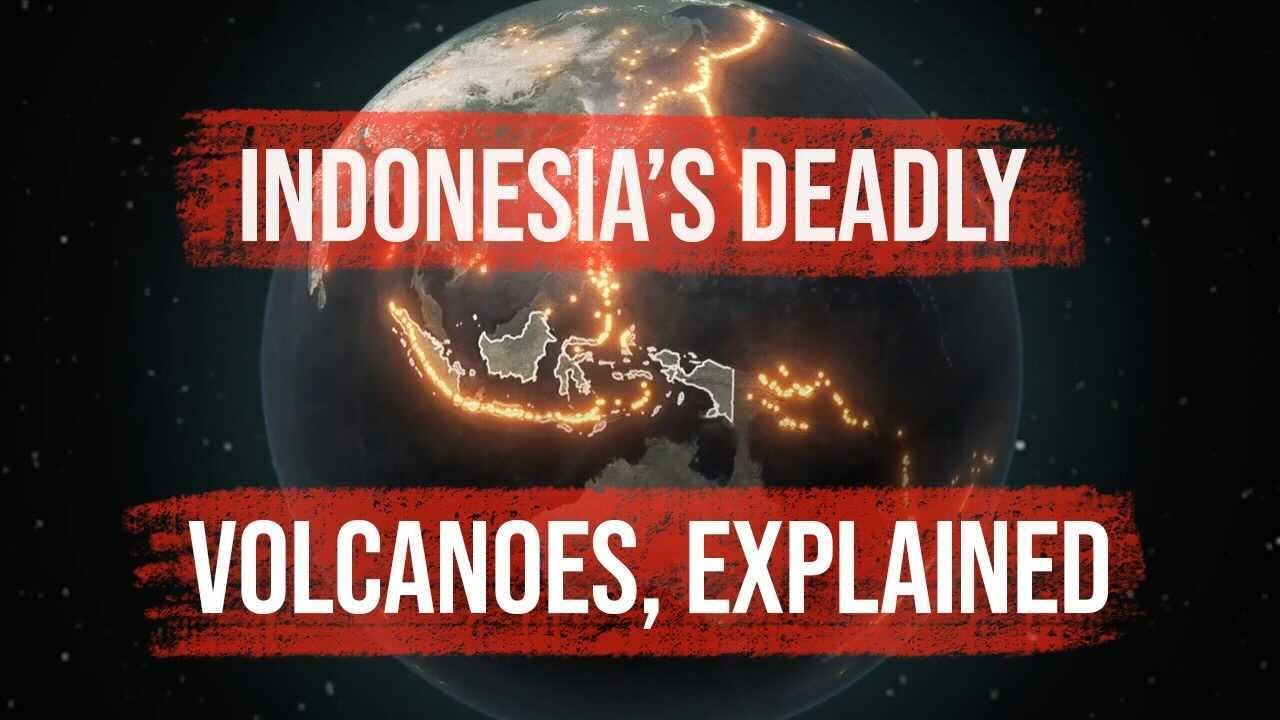



5.0 / 5 (0 votes)

