Agama Bukan Hanya Ibadah, Tapi Jalan Menuju Akhlak Mulia
Summary
TLDRThis video explores the essence of religion as more than ritual—highlighting it as a moral compass guiding both our relationship with God and with others. It emphasizes that true faith manifests in ethical behavior, integrity, and compassion, not just formal worship. Drawing on Quranic verses and the teachings of Prophet Muhammad, the script stresses that religion should cultivate noble character, honesty, social responsibility, and respect for others. Viewers are encouraged to reflect on whether their religious practice genuinely shapes their morality and daily actions, transforming faith into a lived experience that nurtures personal virtue and a just, compassionate society.
Takeaways
- 📖 Religion is more than rituals; it is a path toward noble character and moral conduct.
- 🌟 True religion guides both vertical (relationship with God) and horizontal (relationship with humans and nature) aspects of life.
- 🕌 Obedience to God's law should stem from awareness and understanding, not mere rote practice.
- 💡 Religion has historically been a source of moral guidance, shaping civilizations through ethics and character.
- 🤝 Moral behavior is the essence of religion; acts of worship are meaningful only when reflected in daily life.
- 📜 The Qur'an emphasizes justice, kindness, honesty, patience, and social responsibility alongside ritual obligations.
- 💬 Noble character is demonstrated through honesty, fairness, trustworthiness, generosity, forgiveness, humility, and dedication to good deeds.
- 👨🏫 The Prophet Muhammad serves as the exemplary model, teaching and embodying ethical conduct in all social interactions.
- -
- 🏛️ Akhlak (moral character) is essential for building civilized societies based on mutual respect, truth, and integrity.
- -
- 🛤️ Understanding and practicing religion must lead to moral awareness and action, making religion a lived path, not just a symbol.
- -
- 🌱 True religious practice integrates worship, morality, and noble character to form a generation that is both intelligent and virtuous.
Q & A
What is the main theme of the video transcript?
-The main theme is understanding religion not merely as ritual worship, but as a guide toward moral excellence and noble character, integrating both vertical (relationship with God) and horizontal (relationship with others and the environment) dimensions.
How does the transcript define the role of religion in human life?
-Religion is presented as a source of moral guidance and a system of values that shapes ethical behavior, social responsibility, and personal character, beyond the fulfillment of formal rituals.
Why is awareness of obedience to Allah emphasized in the transcript?
-Awareness of obedience ensures that religious practice is meaningful and transformative. Without conscious adherence, worship becomes mere formalism rather than a source of enlightenment and moral guidance.
What is meant by 'religion as a source of morality' in the transcript?
-It means that religion provides foundational principles for ethical behavior, guiding honesty, justice, compassion, self-control, and social responsibility in everyday life.
How does the transcript link morality to historical religious guidance?
-It mentions that from Prophet Adam to Prophet Muhammad, divine revelation shaped human civilization based on ethics and good conduct, highlighting that moral guidance is integral to religion throughout history.
According to the transcript, how does Islam view the relationship between worship and moral behavior?
-Islam views moral behavior as inseparable from religion. Worship alone is not sufficient; true religiosity is demonstrated through ethical actions, honesty, fairness, and care for others.
What role does noble character (akhlak mulia) play in daily life according to the transcript?
-Noble character is the practical implementation of faith, reflected in trustworthiness, generosity, humility, forgiveness, and consistent pursuit of good, influencing personal behavior and social interactions.
Why does the transcript emphasize the example of Prophet Muhammad?
-Prophet Muhammad serves as the ideal model, demonstrating how to embody religion through moral actions, respect for neighbors, fulfilling promises, and avoiding injustice even toward adversaries.
What warning does the transcript give about religious knowledge without moral practice?
-It warns that one may become an expert in religious knowledge or ritual worship, but without moral practice and noble behavior, such knowledge remains incomplete and ineffective.
How does moral and ethical behavior affect society according to the transcript?
-Moral and ethical behavior fosters civilized communities, promotes mutual respect, truthfulness, and discourages deceit, thereby creating a society grounded in justice and compassion.
What is the ultimate purpose of religion as presented in the transcript?
-The ultimate purpose is to guide individuals toward a life of moral integrity, conscious obedience to divine laws, and the cultivation of noble character that benefits both personal and social life.
How does the transcript suggest we ensure our worship leads to noble character?
-By consciously practicing moral and ethical principles in daily life—being honest, fair, responsible, compassionate, and committed to good deeds—so that worship translates into meaningful action and moral excellence.
Outlines

此内容仅限付费用户访问。 请升级后访问。
立即升级Mindmap

此内容仅限付费用户访问。 请升级后访问。
立即升级Keywords

此内容仅限付费用户访问。 请升级后访问。
立即升级Highlights

此内容仅限付费用户访问。 请升级后访问。
立即升级Transcripts

此内容仅限付费用户访问。 请升级后访问。
立即升级浏览更多相关视频

Peran Agama Dalam Berbagai Aspek Kehidupan Manusia || Al Ustadz H. Nur Ashim, M.Si.

Eps 923 | SEJAK KAPAN ISLAM DIPALSUKAN PARA HABIB GUS DAN KIAI? SEJARAH KERUSAKAN TAUHID

Science can't Replace god. Justru Sains menerangi jalan untuk menemukan Tuhan!
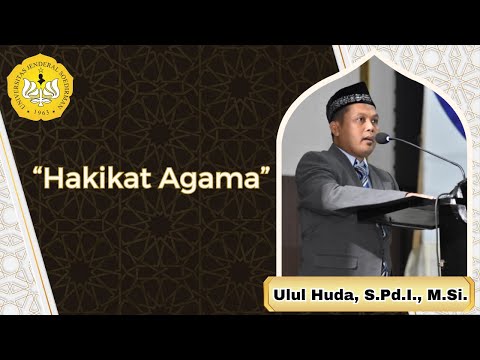
HAKIKAT AGAMA Oleh Ulul Huda, S.Pd.I., M.Si.

Sudahkah Anda Beragama? | M. Quraish Shihab Podcast

3MC - Episode 42 - What are the 10 Commandments?
5.0 / 5 (0 votes)

