Sony a7 V Review: The End Game
Summary
TLDRIn this in-depth review, Gerald Undone explores the Sony a7 V, highlighting its major upgrades over the a7 IV, including a faster 33MP sensor, full-frame 4K60 video, improved rolling shutter, advanced stabilization, and a fully articulating high-resolution screen. He praises its exceptional battery life and thermal performance, while noting minor quirks like limited H.265 frame rates, HDMI restrictions, and faint zebras. Gerald emphasizes the a7 V's superior image quality, dynamic range, and autofocus capabilities, making it an excellent hybrid camera for both photography and videography. Overall, he recommends it as a top-tier, reliable, and versatile option in Sony's full-frame lineup.
Takeaways
- 😀 The Sony a7 V represents a significant upgrade over the a7 IV, especially in sensor speed, video capabilities, and overall performance.
- 😀 The new 33MP sensor has nearly double the readout speed, drastically reducing rolling shutter and enabling high-quality full-frame 4K60 video.
- 😀 A new “Angle of View Priority” mode allows full-frame 4K60 without cropping, at the cost of reduced in-camera noise reduction.
- 😀 The camera delivers strong dynamic range (~14 stops) with more natural noise processing, preserving detail better than the a7 IV.
- 😀 Burst shooting reaches up to 30 fps at full 14-bit RAW, which is impressive, though buffer depth is limited at maximum speed.
- 😀 The new BIONZ XR2 processor improves efficiency, resulting in about 23% better battery life and excellent overall performance.
- 😀 Thermal performance is exceptional, with real-world tests showing over 6 hours of continuous 4K60 recording without overheating.
- 😀 Autofocus is highly advanced with AI subject tracking, though slightly weaker than the a7 IV in extreme low-light scenarios but much stronger in overexposed conditions.
- 😀 Image stabilization has improved significantly, with Dynamic Active mode delivering near gimbal-like smoothness for handheld shooting.
- 😀 The camera includes meaningful usability upgrades like a fully articulating tilt screen, dual USB-C ports, and improved display resolution.
- 😀 Despite improvements, long-standing Sony issues remain, including codec limitations (no 30p in H.265), HDMI quirks, and missing pro video tools like waveforms.
- 😀 The absence of Open Gate and internal RAW video is noted, but the reviewer argues Open Gate is overrated and not essential for most users.
- 😀 The a7 V offers performance close to flagship models like the Alpha 1 II at less than half the price, making it highly competitive.
- 😀 Overall, the camera is one of the best hybrid options available and a top recommendation, especially for users already invested in the Sony ecosystem.
- 😀 The reviewer concludes that modern cameras across brands are all very capable, meaning users are unlikely to make a bad choice regardless of system.
Q & A
What are the main upgrades of the Sony A7 V compared to the A7 IV?
-The A7 V introduces two major upgrades compared to the A7 IV: a new, high-resolution tilting screen from the Alpha 1 II and A9 III, and dual USB-C ports, with one supporting high-speed data transfer (10 Gbps) and power delivery, while the other supports USB 2.0 speeds.
How does the sensor performance of the Sony A7 V improve over the A7 IV?
-The A7 V's sensor is faster, reducing the rolling shutter effect significantly. It has a 14.1ms readout time, nearly twice as fast as the A7 IV's 27ms. This results in less jello effect during fast pans and enables oversampled 4K60 video in full-frame mode.
What is the significance of the new '4K angle of view priority' setting on the A7 V?
-The '4K angle of view priority' setting allows users to maintain a full-frame field of view while shooting in 4K60, but it does so by turning off high ISO noise reduction. This is beneficial for those who prefer to retain the full frame, even at the cost of some extra noise in low-light situations.
How does the burst shooting performance of the A7 V compare to the A7 IV?
-The A7 V offers an impressive 30 frames per second burst rate, compared to the A7 IV’s 10fps. It supports full subject tracking, blackout-free shooting, and can maintain high image quality even at this rapid speed. The burst duration is also more efficient, with the A7 V shooting 40 frames of lossless RAW at 30fps, compared to the A7 IV's shorter buffer duration.
What improvements have been made to the autofocus system in the A7 V?
-The A7 V retains the same 759-point autofocus system as the Alpha 1 Mark II, but now includes enhanced AI processing for better subject tracking, especially in complex conditions. It also features improvements in tracking during overexposure, where it can maintain focus even up to 7 stops overexposed.
How has Sony improved the battery life in the A7 V?
-The A7 V features a new BIONZ XR2 processor, which makes the camera more energy-efficient. Despite the camera being much faster, the battery life has improved by 23%, offering over 600 shots with the viewfinder. It can also sustain long video sessions, like over six hours of 4K60 recording with USB-C power connected, without overheating.
What are the thermal management capabilities of the A7 V during extended recording?
-The A7 V offers exceptional thermal performance, achieving over six hours of 4K60 recording at 72°F (22°C) without overheating. This is a significant improvement over the A7 IV, which overheated after just an hour of 4K60 recording. The A7 V is one of the best-performing hybrid cameras in terms of heat management.
Does the A7 V support Open Gate recording or internal raw video?
-No, the A7 V does not support Open Gate recording or internal raw video. However, the review suggests that Open Gate is often overrated for most users, as cropping or zooming in post-production can achieve similar results without the quality and performance trade-offs associated with Open Gate.
What is the main advantage of the A7 V's stabilization system?
-The A7 V features enhanced stabilization, rated at 7.5 stops. It offers three stabilization modes: Standard, Active, and Dynamic Active. Dynamic Active provides nearly gimbal-like stabilization, making it effective for handheld shooting, even while walking or jogging.
What is the significance of the 'vertical mode' introduced on the A7 V?
-The A7 V introduces a 'vertical mode' that automatically rotates the interface and flags 9x16 content. This is particularly useful for creators producing vertical videos, as it streamlines the process of shooting and editing 9x16 content without additional adjustments in post-production.
Outlines

此内容仅限付费用户访问。 请升级后访问。
立即升级Mindmap

此内容仅限付费用户访问。 请升级后访问。
立即升级Keywords

此内容仅限付费用户访问。 请升级后访问。
立即升级Highlights

此内容仅限付费用户访问。 请升级后访问。
立即升级Transcripts

此内容仅限付费用户访问。 请升级后访问。
立即升级浏览更多相关视频
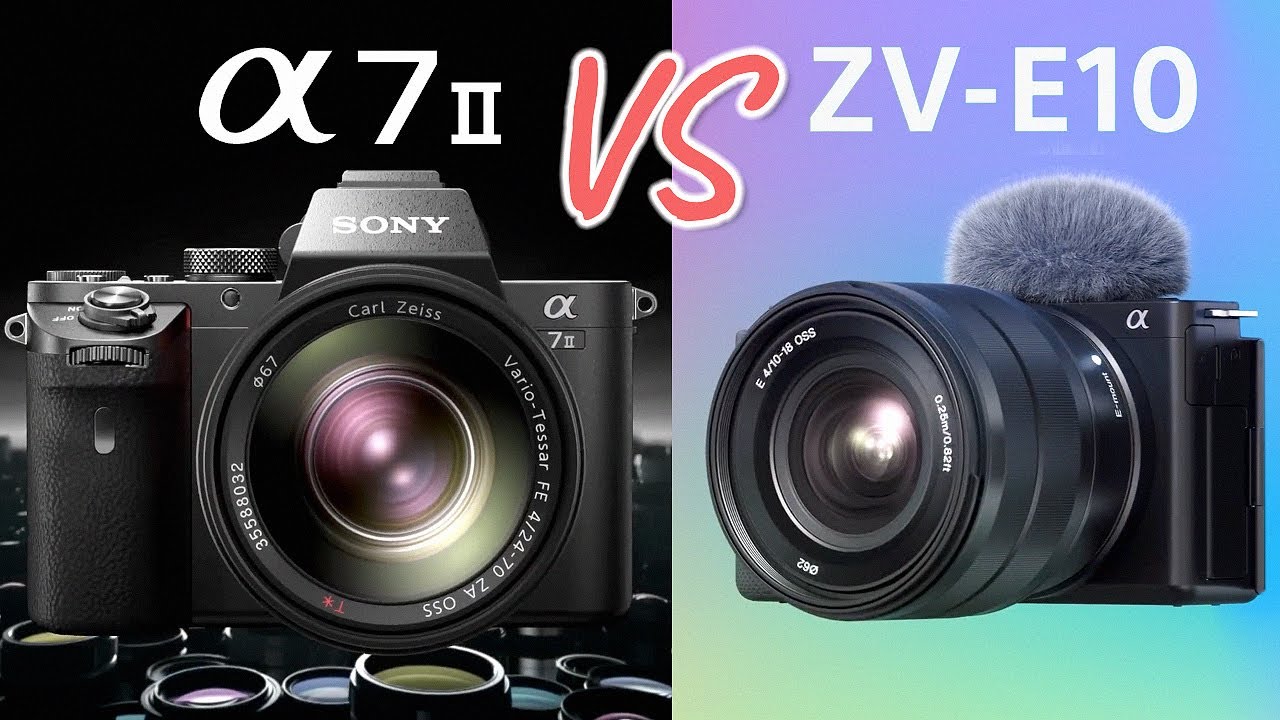
เปรียบเทียบกล้อง Sony ZV E10 VS Sony A7II วิดีโอตัวไหนดีกว่ากัน By Mr Gabpa

Sony FX3 II - Upcoming Cinema Camera !

Sony ZV-E10 II vs Sony ZV-E10 - Do You NEED to Upgrade?

Motion Blur Is Awesome –Slow Shutter Street Photography

Canon R10 Review - Watch Before You Buy

Sony A7ii Auto Focus Guide and Focusing Tips
5.0 / 5 (0 votes)

