HiT cz.2- Nowy ład światowy. Rozdział 3. Temat 1.
Summary
TLDRThe transcript explores the geopolitical changes following the collapse of the Soviet Union, discussing the shifting global power dynamics between the U.S. and Russia, and the rise of new political ideologies. It highlights key political thinkers like Francis Fukuyama, Samuel Huntington, and Zbigniew Brzezinski, each offering differing views on the future of global relations. The discussion also touches on significant events, including the Gulf War, the global spread of technology, and the concept of a 'global village,' emphasizing the rapid pace of information and goods exchange in the post-Cold War era.
Takeaways
- 🌍 The collapse of the Soviet Union ended the bipolar world order, leaving the United States as the sole superpower.
- 🇷🇺 Russia remained a nuclear power but could not compete globally due to internal economic and social challenges.
- 🇨🇳 China was a potential superpower but became somewhat isolated after the Tiananmen Square massacre.
- 🗽 The U.S. faced the challenge of deciding whether to act as a global mentor promoting democracy or as a global enforcer maintaining order by force.
- 📚 Francis Fukuyama theorized the 'end of history,' suggesting liberal democracy would dominate politically and reduce ideological conflicts.
- ✝️ Samuel Huntington predicted that future conflicts would arise from civilizational and religious differences rather than ideological ones.
- 🌐 Zbigniew Brzeziński emphasized the strategic use of U.S. influence in Eurasia to maintain global stability and security.
- 🤝 Gorbachev and U.S. President George H.W. Bush met in Malta, agreeing on ending the Cold War and promoting European self-determination.
- ⚔️ The Gulf War (1990–1991) demonstrated U.S. military dominance, with coalition forces liberating Kuwait from Saddam Hussein’s invasion.
- 🇵🇱 Poland participated in the Gulf War with a small contingent, gaining recognition, debt relief, and assistance in creating the GROM special unit.
- 💻 Post-Cold War globalization led to rapid technological advancements, faster information flow, and interconnected global trade.
- 📰 The 1990s saw a transformation in media and communication, allowing instant access to news and information worldwide, unlike previous decades.
Q & A
What major global change occurred after the collapse of the Soviet Union?
-The bipolar world order ended, leaving the United States as the sole global superpower while Russia became a weaker regional power.
Why was Russia unable to maintain its status as a superpower after the Soviet Union collapsed?
-Russia faced internal political conflicts, economic difficulties, and social and military challenges that weakened its global influence.
Why did China not immediately become a global superpower after the Cold War?
-China was partially isolated internationally after the Tian’anmen Square crackdown, which limited its credibility and influence at the time.
What was Francis Fukuyama’s main idea about the post-Cold War world?
-Fukuyama argued that liberal democracy had triumphed and could mark the 'end of history,' meaning fewer ideological conflicts and wars.
How did Samuel Huntington’s theory differ from Fukuyama’s?
-Huntington believed future conflicts would arise from cultural and religious differences rather than political ideologies, leading to a 'clash of civilizations.'
What was Zbigniew Brzeziński’s vision for the global order?
-He proposed that the United States should build a stable political and security system in Eurasia, which could eventually function independently of U.S. leadership.
What was Mikhail Gorbachev’s proposal for a new world order?
-Gorbachev advocated for a system based on international cooperation, the United Nations, peaceful conflict resolution, and the reduction of arms races.
What was the significance of the Malta Summit in 1989?
-It symbolically marked the end of the Cold War, with U.S. President George H. W. Bush and Soviet leader Gorbachev agreeing on peaceful relations and self-determination for European nations.
Why was no formal agreement signed at the Malta Summit?
-The agreements were informal and based on mutual understanding, yet they were still implemented in practice.
What triggered the Gulf War in 1990?
-Iraq, led by Saddam Hussein, invaded and annexed Kuwait, a small but oil-rich country.
How did the international community respond to Iraq’s invasion of Kuwait?
-The United Nations condemned the invasion, imposed sanctions, and a U.S.-led coalition prepared for military intervention.
What was Operation Desert Storm?
-It was a U.S.-led military campaign that began with airstrikes and followed with a ground invasion, ultimately liberating Kuwait from Iraqi control.
What role did Poland play in the Gulf War?
-Poland contributed around 319 personnel, mainly in support roles, provided intelligence, and helped in operations that assisted coalition forces.
What benefit did Poland receive for its support in the Gulf War?
-The United States forgave a significant portion of Poland’s debt, totaling over 16.5 billion dollars.
What is globalization as described in the script?
-Globalization is the process of increased global interconnectedness through faster movement of people, goods, and information, driven by technological advancements like the internet.
How did the spread of the internet change access to information?
-Information became instantly accessible worldwide, unlike in the past when people relied on scheduled news broadcasts or newspapers.
What is meant by the term 'global village'?
-It refers to the idea that people around the world are interconnected and can easily communicate, share information, and trade regardless of distance.
Outlines

此内容仅限付费用户访问。 请升级后访问。
立即升级Mindmap

此内容仅限付费用户访问。 请升级后访问。
立即升级Keywords

此内容仅限付费用户访问。 请升级后访问。
立即升级Highlights

此内容仅限付费用户访问。 请升级后访问。
立即升级Transcripts

此内容仅限付费用户访问。 请升级后访问。
立即升级浏览更多相关视频
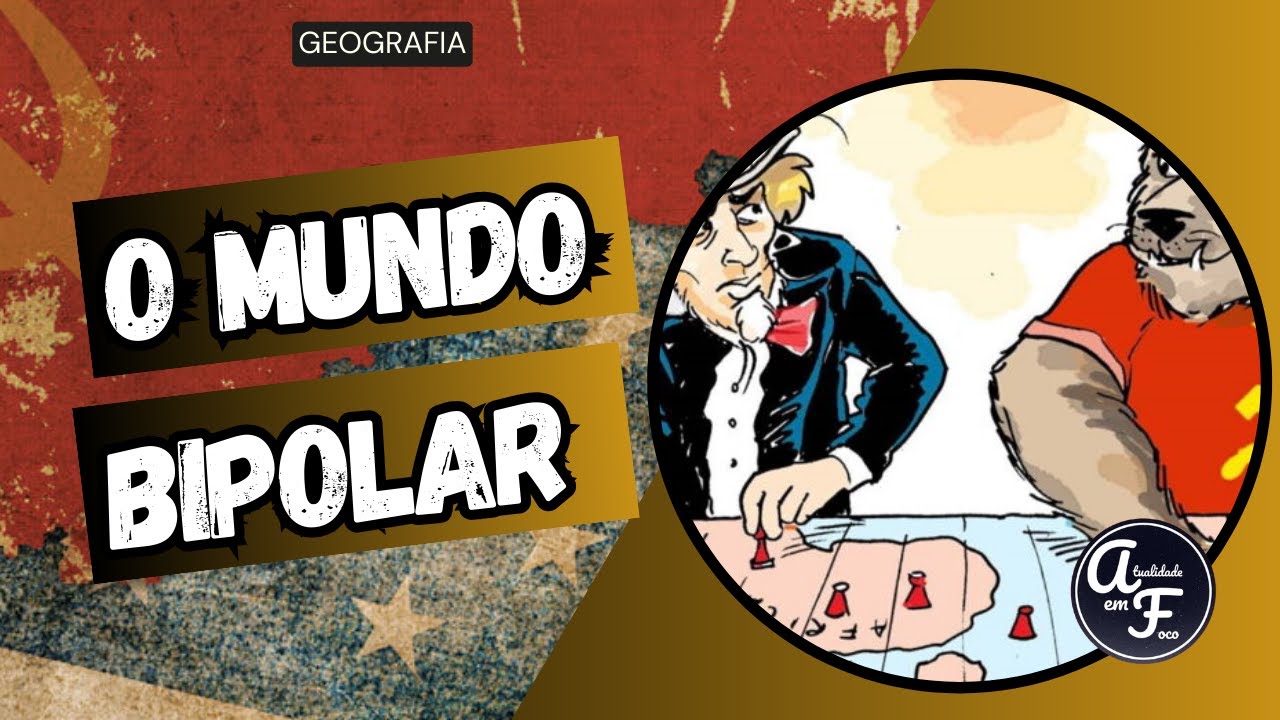
O MUNDO BIPOLAR (GEOGRAFIA)
A Guerra Fria

Uni Soviet Bubar Karena Demokrasi? Sampai Dianggap Bencana Geopolitik Terbesar! | LearningByGoogling

Why the Global Game is Finally Resetting | Prof. Jiang Xueqin

Historian explains collapse of the Soviet Union | Serhii Plokhy and Lex Fridman

America Attack Iran: Third World War की तरफ बढ़ी दुनिया?| B 2 Bomber | RJ Raunacc
5.0 / 5 (0 votes)

