Parkinson disease - physiology, pathology, clinical manifestations, diagnosis, treatment
Summary
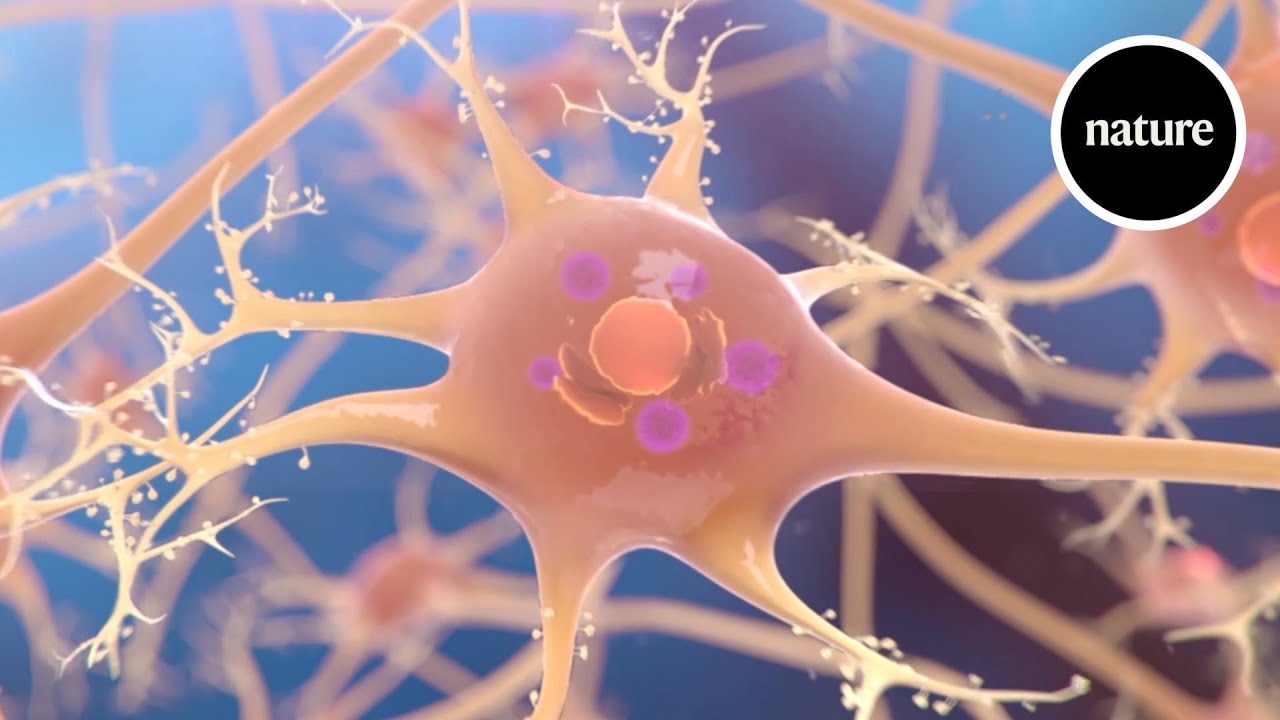
TLDRParkinson's disease is a progressive neurodegenerative disorder caused by the loss of dopamine-producing neurons in the substantia nigra. Characterized by motor symptoms such as bradykinesia, tremors, rigidity, and postural instability, it also involves genetic factors, including mutations in genes like SCNA, LRRK2, and PARK7. Diagnosis is based on clinical symptoms and tests like the L-dopa test and DAT scan. Treatment focuses on dopamine replacement therapy and deep brain stimulation. As the disease progresses, it leads to non-motor symptoms and can affect cognitive functions, ultimately requiring lifelong management.
Takeaways
- 🧠 Parkinson's disease is a progressive neurodegenerative disorder caused by the loss of dopamine-producing neurons in the substantia nigra.
- 📜 Signs of Parkinson's disease were observed in ancient literature, such as Homer's *Odyssey*, long before it was formally described by Dr. James Parkinson.
- ⚙️ The basal ganglia, including the striatum, globus pallidus, subthalamic nucleus, and substantia nigra, play a critical role in initiating and regulating movement.
- ☕ The substantia nigra consists of the pars reticulata, which sends inhibitory signals via GABA, and the pars compacta, which produces dopamine for the nigrostriatal pathway.
- 🧬 Genetic mutations contribute to Parkinson's disease, with autosomal dominant types involving SCNA and LRRK2 genes, and autosomal recessive types involving PARK7, PINK1, and PARK2 genes.
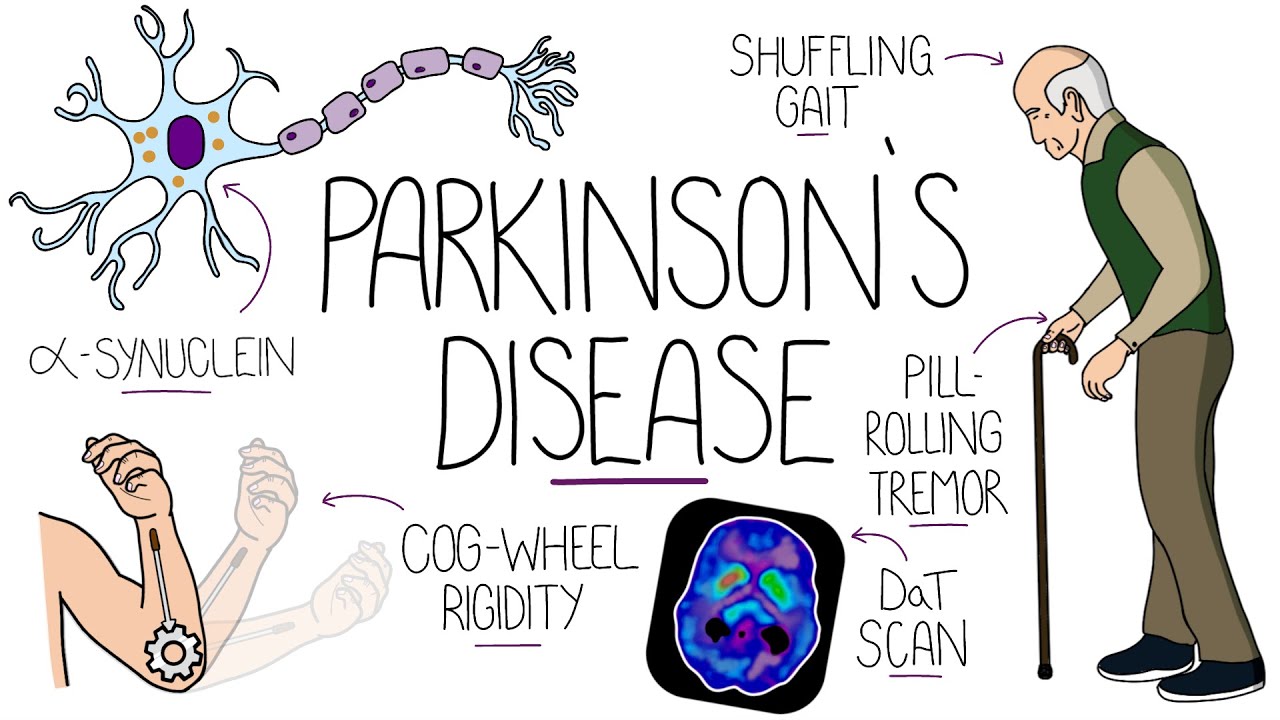
- 🧪 Loss of dopamine in the nigrostriatal pathway leads to parkinsonism, including bradykinesia, hypokinesia, akinesia, resting tremor, rigidity, and postural instability.
- 😐 Non-motor symptoms of Parkinson's disease include sleep disturbances, constipation, erectile dysfunction, hallucinations, and dementia in later stages.
- 🔍 Diagnosis relies on clinical features, ruling out other conditions, the L-dopa test, and specialized imaging like DAT scans.
- 💊 Treatment primarily aims to restore dopamine levels using medications like levodopa and dopamine agonists, with deep brain stimulation as an option for advanced cases.
- 📉 As Parkinson's disease progresses, the substantia nigra appears paler due to the loss of melanin-rich neurons, and dopamine deficiency impairs voluntary movement.
- ✋ Motor symptoms such as tremor, rigidity, and bradykinesia significantly impact daily activities, including walking, writing, and facial expression.
- 🧩 Lewy bodies, composed of misfolded alpha-synuclein, are hallmark pathological features of Parkinson's disease.
Q & A
What is Parkinson's disease and who first described it?
-Parkinson's disease is a progressive neurodegenerative condition characterized by the gradual loss of dopamine-producing neurons in the substantia nigra. It was first described by Dr. James Parkinson.
Which ancient text contains early descriptions of Parkinson-like symptoms?
-Homer's Odyssey describes King Nestor showing tremors, stiffness, and slowness in movement with age, reflecting early descriptions of Parkinson-like symptoms.
What role does the basal ganglia play in movement?
-The basal ganglia help execute learned motor plans, fine-tune movement, control unwanted motor activity, regulate muscle tone, and maintain posture by modulating signals from the motor thalamus to the motor cortex.
What are the two parts of the substantia nigra and their functions?
-The pars reticulata receives signals from the striatum and sends inhibitory GABA signals to the thalamus to stabilize movement. The pars compacta contains dopamine-producing neurons that project to the striatum via the nigrostriatal pathway to initiate movement.
How does dopamine deficiency affect movement in Parkinson's disease?
-Loss of dopamine-producing neurons in the pars compacta weakens signals in the nigrostriatal pathway, impairing the initiation and control of voluntary movements, making even simple tasks difficult.
What genetic mutations are associated with Parkinson's disease?
-Autosomal dominant mutations include SCNA (alpha-synuclein) and LRRK2. Autosomal recessive mutations include PARK7 (DJ-1), PINK1, and PARK2 (parkin). Mutations in GBA1, affecting glucocerebrosidase, also increase Parkinson's risk.
What are the main motor symptoms of Parkinson's disease?
-The main motor symptoms, collectively called parkinsonism, are bradykinesia (slowness of movement), resting tremor, rigidity, and postural instability.
How do bradykinesia, hypokinesia, and akinesia differ?
-Bradykinesia is slowness of voluntary movement. Hypokinesia is a reduced range of movement, such as shuffling gait or micrographia. Akinesia is the complete inability to initiate movement, leading to frozen episodes.
What are the types of rigidity seen in Parkinson's disease?
-Lead-pipe rigidity is smooth, constant resistance to passive movement, while cogwheel rigidity is jerky due to superimposed tremors on underlying stiffness.
What non-motor symptoms can appear in Parkinson's disease?
-Non-motor symptoms include sleep disturbances, constipation, erectile dysfunction, hallucinations, and dementia, especially as the disease progresses to affect the cerebral cortex.
How is Parkinson's disease diagnosed?
-Diagnosis is primarily clinical, based on the triad of bradykinesia, tremor, and rigidity. Tests include the L-dopa test, where symptom improvement after levodopa indicates Parkinson's, and DAT scans to observe dopamine activity in the striatum.
What are the main treatment options for Parkinson's disease?
-Treatment focuses on increasing dopamine levels using medications like levodopa and dopamine agonists. Deep brain stimulation can also be used to deliver electrical signals to the basal ganglia and improve motor symptoms.
Outlines

此内容仅限付费用户访问。 请升级后访问。
立即升级Mindmap

此内容仅限付费用户访问。 请升级后访问。
立即升级Keywords

此内容仅限付费用户访问。 请升级后访问。
立即升级Highlights

此内容仅限付费用户访问。 请升级后访问。
立即升级Transcripts

此内容仅限付费用户访问。 请升级后访问。
立即升级浏览更多相关视频
Understanding Parkinson's Disease (Including Direct and Indirect Pathways)

Parkinson's disease - an Osmosis Preview
Putting it all together - Pathophysiology of Parkinson's disease | NCLEX-RN | Khan Academy
Doença de Parkinson | Fisiopatologia Rápida e Fácil do Flavonoide
CONHEÇA A FUNÇÃO DOS NÚCLEOS DA BASE.
Understanding Parkinson's disease
5.0 / 5 (0 votes)

