This AI Is Beating Doctors At Their Own Game
Summary
TLDRThe transcript explores the rise of AI in radiology, focusing on CheXNet, an AI system trained to detect pneumonia in chest X-rays. It highlights concerns among radiologists about AI replacing them, while also emphasizing how AI could augment their roles and improve efficiency in healthcare. Experts like Dr. Matt Lundgren and Dr. Constance Lehmann discuss the potential of AI to enhance diagnostic accuracy and expand access to medical care. However, some caution that the AI hype may be overstated, with AI being viewed more as a tool to support clinicians than replace them entirely.
Takeaways
- 😀 AI algorithms like ChexNet are capable of diagnosing pneumonia from chest X-rays with impressive accuracy.
- 😀 ChexNet is trained using deep learning to identify patterns in medical images, helping it to diagnose diseases in new X-rays.
- 😀 AI has sparked concerns among radiologists about the possibility of being replaced by machines in the future.
- 😀 Some radiologists, like Dr. Matt Lundgren, see AI as a tool to augment their work rather than replace them entirely.
- 😀 Despite AI's accuracy, human oversight is crucial, as AI algorithms can make mistakes that still require clinician judgment.
- 😀 The development of AI in radiology is part of a broader push to integrate AI into healthcare to improve efficiency and accessibility.
- 😀 Dr. Constance Lehmann emphasizes that AI can enhance the work of radiologists, helping them analyze large amounts of data more efficiently.
- 😀 A survey of Canadian medical students revealed a fear that AI could reduce the demand for radiologists in the future.
- 😀 The AI revolution in radiology is not imminent, according to experts like Dr. Paul Chang, who caution against hype surrounding its capabilities.
- 😀 AI's potential to revolutionize healthcare includes improving accessibility, reducing costs, and saving critical time in emergency care.
- 😀 There is a current 'gold rush' in AI health technologies, with many startups promising breakthroughs, though not all applications will be successful.
Q & A
What is CheXNet and what task is it designed to perform?
-CheXNet is a deep learning algorithm trained to analyze chest X-rays and diagnose pneumonia, performing the same task as radiologists.
How does CheXNet compare to human doctors in diagnosing pneumonia?
-In a Stanford study analyzing 50 chest X-rays, CheXNet performed at a level comparable to or better than six radiologists in detecting pneumonia.
What is deep learning and how is it used in medical imaging?
-Deep learning is a type of machine learning where algorithms learn patterns from large datasets. In medical imaging, it is used to identify diseases by training on thousands of labeled images.
Why did Geoffrey Hinton suggest radiologists might be replaceable?
-He argued that since AI algorithms are becoming highly accurate at interpreting medical images, the traditional role of radiologists in image analysis could be automated.
What role do radiologists currently play in patient care?
-Radiologists analyze medical images, provide diagnostic reports, consult with other physicians, and contribute to treatment decisions beyond just identifying patterns.
What concerns exist about using AI in medical diagnosis?
-One major concern is that AI systems can make mistakes, and determining responsibility for errors—whether it lies with clinicians or healthcare systems—remains a challenge.
How do some doctors view AI in radiology—as a replacement or a tool?
-Many doctors see AI as a tool that augments their capabilities rather than replacing them, helping improve efficiency, accuracy, and access to care.
What are some potential benefits of AI in healthcare according to researchers?
-AI could make radiology more accessible, reduce costs, speed up diagnoses, and improve patient outcomes, especially in emergency situations.
Why are some medical students concerned about AI in radiology?
-Surveys show that many students believe AI could reduce job demand or even replace radiologists, creating uncertainty about career prospects.
What is the significance of AI systems analyzing large datasets like mammograms?
-AI systems can process hundreds of thousands of images continuously, improving their accuracy and efficiency in detecting risk factors such as breast density.
What does Dr. Constance Lehmann mean by calling AI her 'student'?
-She views AI as a continuously learning system that improves over time, similar to a student, but with the ability to work nonstop and process vast amounts of data.
Why does Dr. Paul Chang describe much of the AI boom as 'hype'?
-He believes that many startups overpromise revolutionary changes, and that the field is going through a typical hype cycle where not all innovations will succeed.
What is the likely future role of AI in radiology according to experts?
-Experts suggest AI will be integrated into clinical workflows to support radiologists, enhancing their work rather than fully replacing them.
How might AI improve emergency medical care?
-AI can quickly analyze medical images and provide prioritized diagnoses, helping doctors make faster decisions in critical situations.
Outlines

此内容仅限付费用户访问。 请升级后访问。
立即升级Mindmap

此内容仅限付费用户访问。 请升级后访问。
立即升级Keywords

此内容仅限付费用户访问。 请升级后访问。
立即升级Highlights

此内容仅限付费用户访问。 请升级后访问。
立即升级Transcripts

此内容仅限付费用户访问。 请升级后访问。
立即升级浏览更多相关视频

Pulmonary Patterns in Vet X-Rays – Are You Interpreting Them Correctly? (Part 1)

Chest X-ray Interpretation | How to Read a CXR | OSCE Guide | UKMLA | CPSA | PLAB 2

AI With Zero Coding | Disease Detection with Google Teachable Machine (Full Project)

Pneumonia causes, symptoms, diagnosis, treatment, pathology

How to Read a Chest X-Ray: Mediastinal Lines, Stripes & Interfaces
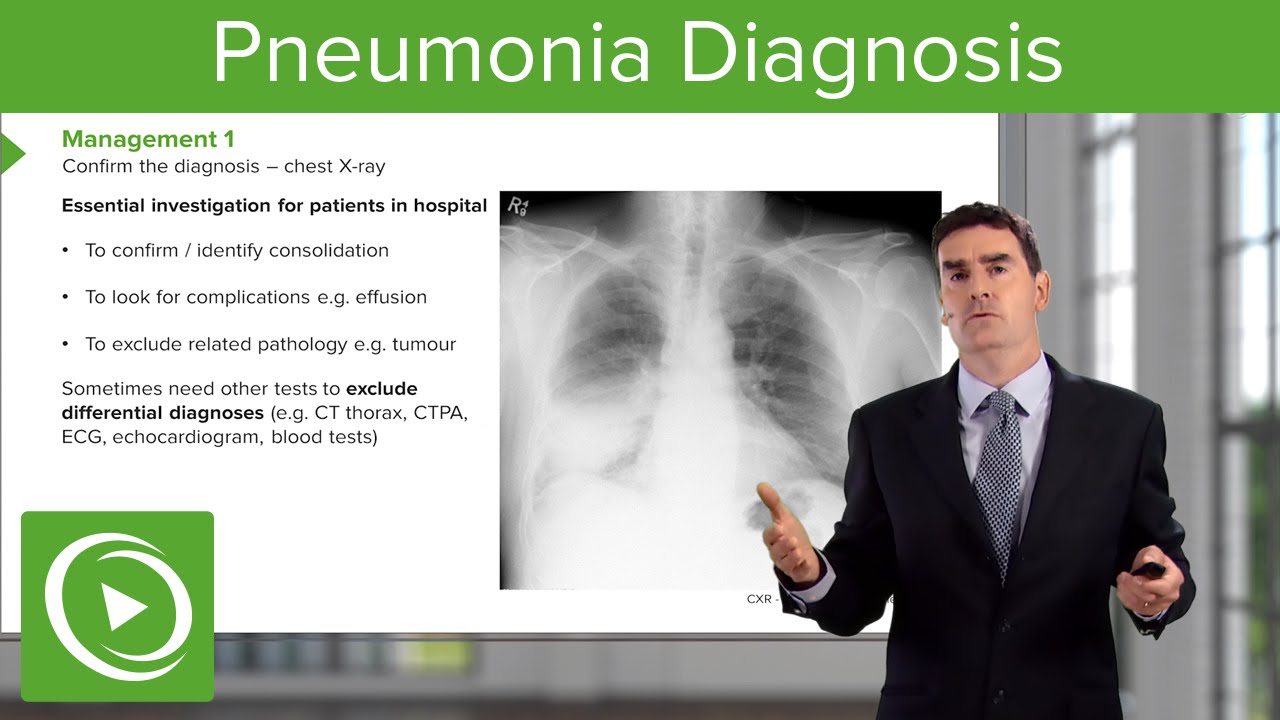
Pneumonia: Diagnosis & Principles of Management – Respiratory Medicine | Lecturio
5.0 / 5 (0 votes)

