Konsep Medan Listrik
Summary
TLDRThis video explains the concept of electric fields, starting with Coulomb's Law and the forces between interacting charges. It covers the basics of electric fields, their direction, and how they are influenced by different charge interactions. The script elaborates on how to calculate electric fields using Coulomb's Law, the importance of test charges, and the relationship between field strength and distance. The video also explains the principle of superposition when dealing with multiple charges and demonstrates how to calculate the total electric field when charges are placed at various positions. The discussion includes visualizations of electric field lines and their behavior under different conditions.
Takeaways
- 😀 Coulomb's Law explains how electric charges interact with each other, producing forces that either attract or repel.
- 😀 When two charges of opposite signs (positive and negative) interact, they attract each other, while like charges repel each other.
- 😀 An electric field is the cause of the attractive or repulsive forces between charges, and it exists around any charged object.
- 😀 Electric fields from positive charges point outward, while electric fields from negative charges point inward.
- 😀 The electric field at a point can be measured by using a test charge, which helps determine the field strength and direction.
- 😀 The relationship between the electric force and the electric field is given by the equation F = E × q, where F is the force, E is the electric field, and q is the test charge.
- 😀 The electric field of a charge can be calculated using the formula E = k * |Q| / r², where k is Coulomb's constant, Q is the source charge, and r is the distance from the charge.
- 😀 Electric field lines visually represent the direction and magnitude of the electric field. They emerge from positive charges and terminate at negative charges.
- 😀 The number of electric field lines increases with the strength of the charge. As charges get closer, the field lines become denser.
- 😀 When multiple charges are involved, the total electric field at a point is the vector sum of the fields due to each charge.
- 😀 To find the total electric field from multiple charges, the contributions from each charge must be added, considering both their magnitudes and directions, often involving vector addition and trigonometry.
Q & A
What is an electric field and how is it related to Coulomb's law?
-An electric field is a region around a charge where it exerts force on other charges. It is related to Coulomb's law because the force experienced by a test charge in the field is determined by the interaction between charges according to Coulomb's formula.
What is the purpose of a test charge in measuring an electric field?
-A test charge is used to measure the strength and direction of an electric field at a specific point without significantly disturbing the existing field created by the source charges.
How do electric field lines indicate the strength and direction of a field?
-The direction of the field lines shows the direction a positive test charge would move: outward from positive charges and inward toward negative charges. The density of the lines indicates the strength of the field: closer lines represent stronger fields.
What is the mathematical expression for the electric field due to a single point charge?
-The electric field × due to a point charge Q is given by: E = k * Q / r^2, where k is Coulomb's constant, r is the distance between the charge and the point of interest, and the direction is along the line connecting the charge and the point.
How is the total electric field calculated when multiple charges are present?
-The total electric field is the vector sum of the fields produced by each individual charge. Components along the x and y axes are summed separately, then the resultant field is found using the Pythagorean theorem.
How do you determine the direction of the resultant electric field when multiple charges are involved?
-The direction is determined by the vector sum of the individual fields, taking into account the direction and sign of each component. Angles between the field vectors can be used to resolve them into x and y components for easier summation.
What is the significance of decomposing the electric field into x and y components?
-Decomposing into components allows for precise vector addition when charges are not aligned along a single straight line, making it possible to calculate the magnitude and direction of the resultant field accurately.
How does the distance between charges affect the strength of the electric field?
-The strength of the electric field is inversely proportional to the square of the distance between the source charge and the point where the field is measured. The closer the point is to the charge, the stronger the field.
Why is it important to assign a consistent sign convention when calculating electric fields?
-Consistent sign convention ensures accurate vector addition. For example, choosing right or upward as positive allows for systematic calculations of the resultant field, avoiding confusion when combining multiple vectors.
Can electric fields from multiple charges cancel each other out?
-Yes, electric fields from multiple charges can partially or completely cancel if the vectors are in opposite directions and have equal magnitudes, resulting in a weaker net field or even zero field at a point.
What role do angles play in calculating the resultant electric field from non-collinear charges?
-Angles between the source charges and the point of interest are used to resolve each field into components. Correct use of angles allows proper vector addition to determine the magnitude and direction of the resultant field.
Outlines

此内容仅限付费用户访问。 请升级后访问。
立即升级Mindmap

此内容仅限付费用户访问。 请升级后访问。
立即升级Keywords

此内容仅限付费用户访问。 请升级后访问。
立即升级Highlights

此内容仅限付费用户访问。 请升级后访问。
立即升级Transcripts

此内容仅限付费用户访问。 请升级后访问。
立即升级浏览更多相关视频

FISIKA Kelas 12 - Hukum Coulomb & Medan Listrik | GIA Academy

fisdas 2 Materi 1 Muatan dan Hukum Coulomb

Fisika Dasar 2A - Gaya dan Medan Listrik
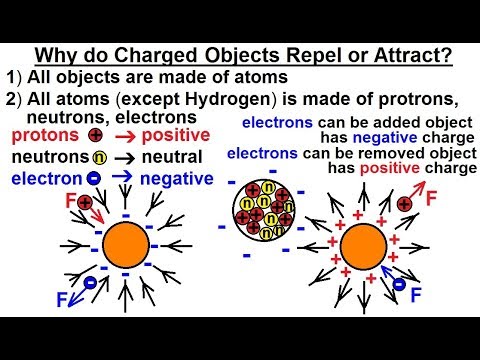
Physics - E&M: Ch 35.1 Coulumb's Law Explained (1 of 28) Why do Charged Objects Repel or Attract?

FORÇA ELÉTRICA (LEI DE COULOMB) - Teoria e Exercícios

Medan, Beda Potensial dan Energi Listrik
5.0 / 5 (0 votes)

